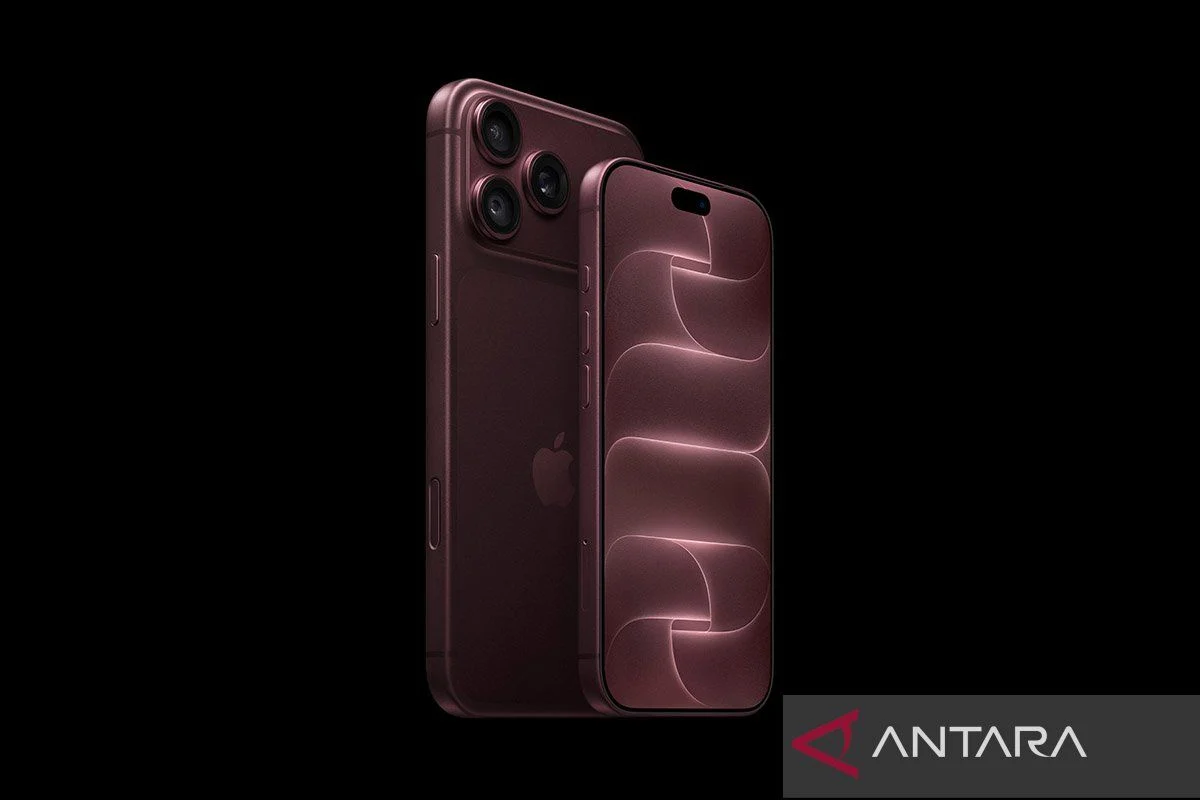
Apple Inc. officially unveiled its highly anticipated flagship smartphone lineup, the iPhone 18 Pro and iPhone 18 Pro Max, during a special media event broadcast globally from Apple Park in Cupertino, California, on September 9, 2026. The introduction of these next-generation high-end devices immediately captured the attention of the global tech community, primarily due to groundbreaking hardware innovations, including a revolutionary variable aperture camera system, a cutting-edge 2-nanometer A20 Pro chip, and unprecedented leaps in energy efficiency and computational photography.
Following the global announcement, Apple scheduled pre-orders to commence on September 12, 2026, with the official first-wave retail launch slated for September 18 across key international markets. However, notable omissions in the initial launch phase have left consumers in Southeast Asia’s largest economy waiting. Indonesia was conspicuously absent from the first wave of releases, echoing historical trends where local regulatory approvals and telecommunications certification processes dictate a staggered timeline for domestic availability.
For prospective buyers across the archipelago, navigating the impending launch requires careful strategic planning. Industry analysts and consumer advocates advise a measured approach before committing funds to Apple’s latest hardware. To help consumers make informed decisions, market researchers and retail specialists have outlined ten critical factors to evaluate before purchasing the iPhone 18 Pro or iPhone 18 Pro Max once they officially land in Indonesia.
1. Differentiating Between the iPhone 18 Pro and iPhone 18 Pro Max
The foundational decision for any prospective buyer lies in choosing between the two form factors: the standard Pro and the larger Pro Max variant. Both models share identical internal architectures, boasting the exact same high-performance processing chips, graphics engines, and core camera technology. The fundamental divergences are limited to physical dimensions, display screen real estate, and battery endurance.
The iPhone 18 Pro features a compact 6.3-inch OLED display, tailored for users who prefer single-handed operation and a pocket-friendly footprint. Conversely, the iPhone 18 Pro Max scales up to a sprawling 6.9-inch display, appealing to media consumers and mobile professionals who demand maximum viewing space. This physical scale directly translates to longevity; Apple’s official specifications indicate that the iPhone 18 Pro supports up to 34 hours of continuous video playback, whereas the larger Pro Max battery extends this capability to an impressive 43 hours. Consequently, buyers must weigh daily portability against sustained off-grid endurance.
2. Navigating Currency Fluctuations and Projected Pricing Structures
Pricing remains a primary friction point for international consumers, particularly in markets subject to import tariffs, value-added taxes, and currency exchange volatility. In the United States, baseline pricing begins at $1,199 for the iPhone 18 Pro and $1,299 for the iPhone 18 Pro Max. At current exchange rates, these baseline figures roughly translate to Rp21.1 million and Rp22.9 million, respectively.
However, financial experts emphasize that direct currency conversions are fundamentally misleading. Official retail prices within Indonesia traditionally incorporate localized import duties, luxury goods taxes, logistics overhead, and authorized distributor margins. Historical precedent suggests that final retail figures set by authorized resellers in Jakarta and other major Indonesian metropolitan areas will likely exceed direct US conversions. Consumers are strongly advised to budget beyond the baseline US retail figures to avoid unexpected financial strain upon domestic release.
3. The Technological Leap in Camera Capabilities
For mobile photographers, content creators, and digital artists, the camera suite serves as the most compelling justification for an upgrade. Apple has transitioned its Pro lineup to a sophisticated 48-megapixel Fusion primary camera system, introducing a mechanical variable aperture to the iPhone ecosystem for the very first time.
This mechanical innovation grants users physical control over light intake, directly manipulating depth of field without relying entirely on computational software blurring. Furthermore, Apple has integrated advanced manual override features into the native camera application, including precise shutter speed adjustments, granular white balance calibration, and real-time histogram monitoring. This evolution shifts the focus from raw pixel counts to professional-grade optical versatility, making the device a viable tool for independent filmmakers and mobile journalists operating in the field.
4. Evaluating Real-World Utility of the A20 Pro Processor
Under the hood, both the iPhone 18 Pro and Pro Max are driven by the new A20 Pro system-on-chip, manufactured using an advanced 2-nanometer semiconductor process node. The silicon architecture features a 6-core central processing unit, a 7-core graphics processing unit, and a dual 16-core Neural Engine designed to accelerate on-device artificial intelligence workloads and complex machine learning tasks.
To sustain peak performance under heavy loads, Apple has incorporated a significantly enlarged vapor chamber thermal management system. Despite these impressive technological metrics, technology analysts recommend a pragmatic assessment of personal usage habits. Consumers whose daily workflows are limited to messaging, social media browsing, web navigation, and casual streaming will likely exhaust only a fraction of the A20 Pro’s potential. Conversely, power users engaged in 4K video editing, heavy 3D gaming, or local AI processing will immediately benefit from the thermal stability and computational speed.
5. Strategic Selection of Internal Storage Capacity
Apple continues to offer a tiered storage lineup for the iPhone 18 Pro series, spanning capacities of 256 GB, 512 GB, 1 TB, and a massive 2 TB ceiling. While the allure of maximum storage is undeniable, the corresponding price escalations require deliberate financial calculation.
For average users who primarily rely on cloud storage services, streaming platforms, and standard messaging applications, the entry-level 256 GB configuration provides ample headroom. On the other hand, professional creators who routinely capture Apple ProRes video, store extensive offline media libraries, or handle large raw photo files should carefully evaluate the higher tiers. Purchasing a 1 TB or 2 TB variant purely for prestige, without a concrete data storage requirement, represents an unnecessary capital expenditure.
6. Understanding the Staggered International Release Timeline
A crucial reality for Indonesian consumers is the country’s exclusion from Apple’s initial distribution rollout. While regional neighbors such as Malaysia, Singapore, and Vietnam secured first-wave allocation with retail availability beginning September 18, 2026, Indonesia’s domestic launch schedule remains unconfirmed by official corporate channels.
Historically, the delay between global announcements and authorized domestic distribution spans several weeks or even months, pending the completion of domestic telecommunications certification (TKDN requirements) and bureaucratic clearance. Industry observers caution buyers against relying on unverified gray-market imports or black-market channels, recommending instead that consumers monitor official announcements from Apple Authorized Resellers within the country.
7. Assessing the Necessity of an Immediate Upgrade
The debut of a flagship smartphone generation predictably triggers a wave of consumer desire, often fueled by aggressive marketing campaigns and tech media enthusiasm. However, financial advisors and consumer psychologists advocate for a critical assessment of utility before replacing existing hardware.
Consumers whose current devices—whether an iPhone 15, 16, or earlier generation—continue to perform daily tasks reliably, maintain adequate battery health, and support essential software updates face no urgent necessity to transition. Because the technological leaps in the iPhone 18 Pro are heavily concentrated in specific areas such as the variable aperture optics, thermal processing, and advanced AI execution, everyday utility for casual operators may not justify the considerable financial outlay.
8. Prioritizing Authorized Channels and Warranty Security
When the iPhone 18 Pro series eventually clears regulatory hurdles and officially debuts in Indonesia, selecting the correct purchasing channel will be paramount. Securing devices through authorized distributors guarantees full access to official local warranties, authentic replacement parts, and reliable after-sales customer service.
Purchasing devices through unofficial grey-market channels to bypass domestic delays frequently exposes buyers to severe risks, including voided manufacturer warranties, incompatible regional hardware configurations, and a lack of recourse should hardware failures occur. Long-term device ownership relies heavily on robust domestic support infrastructure, making patience a financially safer strategy than pursuing early gray-market acquisition.
9. Clarifying the Nomenclature: The Absence of a Standard iPhone 18
Market confusion frequently arises during annual product cycles regarding the specific models introduced by manufacturers. It is essential for buyers to note that Apple’s September 2026 event focused exclusively on the premium tier, debuting the iPhone 18 Pro and iPhone 18 Pro Max.
Apple has historically separated its product timelines, with baseline non-Pro models and alternative form factors traditionally slated for subsequent release cycles, projected by industry analysts to arrive in 2027. Consequently, discussions surrounding the "new iPhone 18" currently refer entirely to the high-end Pro iterations, and consumers waiting for a standard, more affordably priced base model must exercise extended patience.
10. Aligning Technical Specifications with Personal Lifestyles
Ultimately, the decision to invest in the iPhone 18 Pro or iPhone 18 Pro Max must be anchored in personal utility rather than technological novelty. The inclusion of a variable aperture lens, a 2-nanometer processor, enhanced neural processing units, and extended battery endurance represent remarkable engineering feats, yet their true value is unlocked only when matched with the user’s daily requirements.
For mobile professionals, professional photographers, and heavy multimedia producers, the flagship devices offer transformative capabilities. For everyday users whose digital lives require basic communication and media consumption, waiting for broader market availability or retaining functional legacy hardware remains the most logical course of action. In a market defined by delayed local distribution and substantial premium pricing, informed deliberation remains the consumer’s most effective tool.