The global transition toward renewable energy and the urgent mandate to mitigate carbon emissions have catalyzed a seismic shift in the automotive industry, placing electric vehicles (EVs) at the forefront of Indonesia’s economic and environmental agenda. As the nation seeks to leverage its vast nickel reserves and burgeoning manufacturing capacity, the adoption of EVs has transitioned from a niche pursuit to a national strategic priority. During the latest episode of AutoBizz on CNBC Indonesia, aired on July 31, 2026, industry leaders and market experts convened to dissect the infrastructure, consumer psychology, and economic incentives currently shaping the archipelago’s path toward electrification.
The Pillars of EV Adoption: Infrastructure and Ecosystem Integration
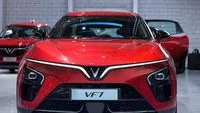
For the average Indonesian consumer, the decision to pivot from internal combustion engine (ICE) vehicles to electric alternatives is not merely an environmental choice but a logistical and financial calculation. Antonio Zara, CEO of VinFast Southeast Asia, emphasizes that market penetration is fundamentally tethered to the robustness of the supporting ecosystem. According to Zara, the "range anxiety" often cited by prospective buyers is effectively neutralized only when charging infrastructure becomes ubiquitous—not just in public spaces, but within the domestic sphere.
The accessibility of home-charging solutions, coupled with a dense network of Stasiun Pengisian Kendaraan Listrik (SPKLU), serves as the primary benchmark for consumer confidence. VinFast, as a newcomer aggressively expanding its footprint in Southeast Asia, identifies that hardware availability is only half the battle. The other half lies in the seamless integration of charging technology into the daily routines of urban commuters. As Indonesia urbanizes, the integration of smart-grid technology and residential charging ports is becoming a non-negotiable requirement for real estate developers and municipal planners alike.
The Battery Dilemma: Consumer Concerns and Technological Trust
While infrastructure remains a critical barrier, the core of the EV value proposition—and arguably its most significant point of friction—is the battery. Bebin Djuana, a prominent automotive observer, notes that Indonesian consumers are increasingly sophisticated in their evaluation of EV components. The battery is no longer viewed as a black box; rather, it is scrutinized for its longevity, replacement cost, and degradation rate.
"The Indonesian market is highly pragmatic," Djuana explains. "Before committing to a high-ticket electric vehicle, consumers are intensely focused on the lifecycle of the battery. They want to know the warranty terms, the technological lifespan, and the secondary market value of the vehicle once the battery’s peak efficiency begins to wane."
This scrutiny has forced manufacturers to innovate not only in chemistry—moving toward Lithium Iron Phosphate (LFP) or Nickel Manganese Cobalt (NMC) variants—but also in service models. Battery leasing programs and comprehensive long-term warranties are emerging as the industry standard to mitigate the perceived risk of ownership. Manufacturers that provide transparent, localized support for battery maintenance are consistently outperforming those that rely on centralized, imported service models.
Chronology of Indonesia’s Electrification Roadmap
The current momentum is the culmination of years of targeted regulatory frameworks. The journey began in earnest with Presidential Regulation (Perpres) No. 55 of 2019, which laid the foundation for the Battery-Based Electric Motor Vehicle (KBLBB) program.
- 2019: The issuance of Perpres 55/2019 signaled the government’s intent to position Indonesia as a global hub for EV battery production, leveraging domestic nickel resources.
- 2021-2022: The government introduced fiscal incentives, including luxury tax exemptions and import duty reductions, to lower the barrier to entry for early adopters.
- 2023: The Ministry of Industry launched a subsidy program for two-wheeled electric vehicles, aimed at mass-market adoption in the country’s most popular vehicle segment.
- 2024-2025: Increased foreign direct investment (FDI) from global players—including BYD, Hyundai, and VinFast—saw the establishment of localized assembly plants, reducing the reliance on imported completely built-up (CBU) units.
- 2026 (Present): The focus has shifted from initial market entry to infrastructure scalability and the development of a secondary battery recycling industry.
Economic Incentives and the Role of Fiscal Stimulus
The transition to EVs is heavily subsidized by fiscal policy designed to equalize the price gap between ICE and electric models. Government-backed stimulus packages, including tax holidays for manufacturers and value-added tax (VAT) incentives for consumers, have played a vital role in stimulating demand.
However, Bebin Djuana points out that fiscal incentives are only a "bridge" to mass adoption. "While incentives provide the initial spark, long-term sustainability depends on the competitive pricing of vehicles. Manufacturers must balance aggressive marketing strategies with the inherent cost of high-technology components. We are seeing a healthy competition where brands are using financing options and loyalty programs to lower the total cost of ownership (TCO) for the average consumer."
Data from the Indonesian Automotive Industry Association (GAIKINDO) suggests that EV sales have seen a consistent year-on-year growth trajectory. While the market share of EVs remains in the single digits compared to total vehicle sales, the growth rate is exponential, particularly in the premium and fleet-operator segments.
Broader Implications for the Indonesian Economy
The transition to an electric fleet has implications that extend far beyond the automotive sector. By prioritizing EVs, Indonesia is effectively attempting to decouple its energy sector from volatile global fossil fuel prices. Furthermore, the push for local battery production—facilitated by state-owned enterprises like Indonesia Battery Corporation (IBC)—aims to integrate the nation into the global EV supply chain at the highest value-added level.
There are, however, significant challenges. The electrical grid in many parts of the country requires substantial upgrades to handle the concurrent demand of mass EV charging. Additionally, the development of a circular economy—specifically the ability to recycle lithium-ion batteries—remains a nascent industry that requires significant investment in research and development.
Analysis: Future Outlook and Strategic Challenges
As the market matures, the competition between legacy manufacturers and EV-native brands will likely intensify. The "winner" in the Indonesian market will be the entity that can solve the "Trilemma" of EV ownership: affordable pricing, accessible charging, and reliable long-term battery support.
From an analytical perspective, the Indonesian government’s strategy of using domestic resources as leverage to attract manufacturing FDI is a high-stakes, high-reward approach. By requiring companies to commit to local content requirements (TKDN), the government is ensuring that the transition to green energy also serves as a catalyst for industrial modernization.
The dialogue between Antonio Zara and Bebin Djuana highlights a consensus: the appetite for electric vehicles in Indonesia is genuine and growing, but it is not unconditional. Consumers are becoming more discerning, and the infrastructure is being tested against the realities of a developing nation. The next five years will be critical in determining whether Indonesia can successfully transition its transportation sector, transforming from a consumer of imported technology to a producer and innovator in the global electric mobility space.
In conclusion, while the path toward a fully electrified transport network is fraught with logistical and economic hurdles, the convergence of government will, private sector investment, and a shifting consumer mindset provides a compelling foundation for the future. As Indonesia navigates this transition, the focus will inevitably shift from "why switch?" to "how can we make the switch easier for everyone?" The answers to that question will define the nation’s economic and environmental landscape for the decades to come.