The waters of the Java Sea near the remote Masalembo islands have once again proven to be a treacherous maritime corridor following the tragic capsizing of the motor vessel KM Virgo Transport 8. The maritime disaster, which occurred on Sunday, September 13, 2026, resulted in at least six confirmed fatalities, sending shockwaves through Indonesia’s national transportation and logistics sectors. In the wake of the tragedy, the Indonesian National Police (Polri) swiftly mobilized its elite Disaster Victim Identification (DVI) units, establishing dedicated crisis posts in major regional hubs to manage the grim and delicate task of identifying the recovered victims and supporting grieving families.
The incident highlights ongoing safety concerns within the archipelago’s domestic shipping industry, prompting coordinated multi-agency responses from search and rescue authorities, police medical divisions, and transportation watchdogs. As search operations continue in the unpredictable currents of the Java Sea, the focus has shifted toward uncovering the root causes of the disaster, determining accountability, and ensuring that every victim is accounted for with dignity and scientific precision.
Chronology of the Disaster in the Java Sea
According to preliminary reports released by maritime authorities, KM Virgo Transport 8 was navigating through the notoriously challenging waters surrounding the Masalembo island chain when disaster struck on Sunday afternoon. The Masalembo area, situated at the crossroads of major shipping lanes in the central Java Sea, is historically recognized by mariners for its extreme weather volatility, strong cross-currents, and rapid meteorological shifts.
While the exact sequence of events leading to the capsizing remains under active investigation by the National Transportation Safety Committee (KNKT) and maritime police, initial indicators suggest that the vessel encountered severe sea conditions characterized by high waves and sudden squalls. The vessel lost stability, ultimately overturning before the crew could issue a comprehensive distress signal or execute a controlled evacuation.
Nearby commercial vessels and local fishermen in the vicinity of the accident site were the first to respond to drifting debris and calls for help, alerting the National Search and Rescue Agency (Basarnas). Rapid deployment vessels from Basarnas, supported by the Indonesian Navy (TNI AL) and marine police units, rushed to the coordinates to conduct search and rescue operations. Despite battling adverse weather and high swells, rescue teams managed to rescue a number of survivors, while recovering six bodies from the sea. The survivors were rushed to the nearest medical facilities for trauma care and evaluation, while the deceased were transported to designated ports for forensic processing.
Mobilization of National Police DVI Operations
In response to the rising death toll and the logistical challenge of repatriating victims to their respective hometowns, the Indonesian National Police activated a comprehensive DVI response. Brigadier General Dr. Sumy Hastry Purwanti, the Head of the Police Medical and Health Center (Biddokkes), formally announced the mobilization of regional DVI teams on Tuesday, September 15, 2026.
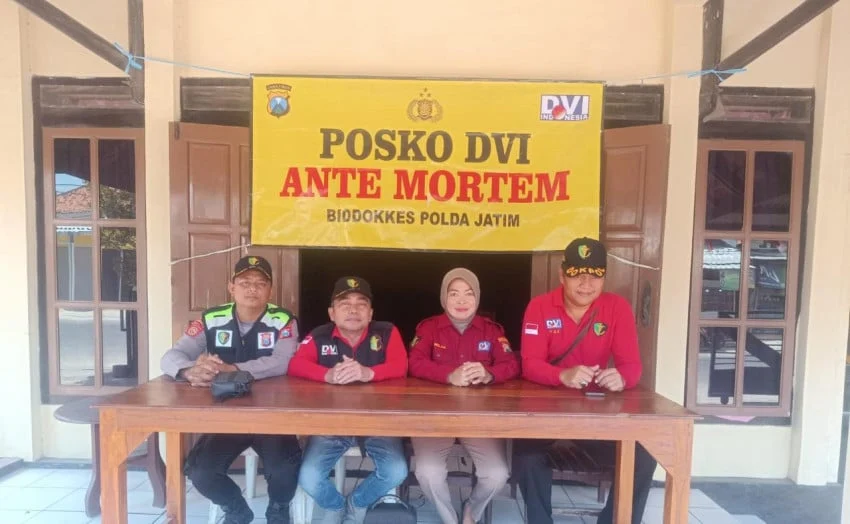
Expressing deep condolences on behalf of the national police leadership, Brigadier General Hastry confirmed that specialized DVI command centers had been established in Surabaya, East Java, and Banjarmasin, South Kalimantan. These two strategic locations were chosen due to their proximity to the departure and destination ports of the ill-fated vessel, as well as the home addresses of many passengers and crew members.
"The national police will continuously assist in the search and recovery operations alongside the Indonesian DVI team. DVI personnel are embedded within every regional police headquarters under the direction of the respective Heads of Medical and Health Services. Following the tragic capsizing of KM Virgo Transport 8, all designated members are fully prepared to contribute their expertise," stated Brigadier General Hastry.
The establishment of Post-Mortem and Ante-Mortem posts in Surabaya and Banjarmasin marks a critical phase in the handling of the disaster. Forensic pathologists, odontologists, fingerprint experts, and DNA specialists have been deployed to these facilities to conduct rigorous scientific examinations. These specialized procedures are essential not only for confirming the identities of the deceased with absolute legal certainty but also for ensuring that remains are correctly returned to their families for traditional burial rites.
Collaboration with Families and Forensic Protocols

The success of any DVI operation relies heavily on the collection of accurate ante-mortem data—information gathered from families regarding the physical characteristics of the missing persons before the accident occurred. Brigadier General Hastry issued a direct appeal to the families of the victims, urging them to come forward and cooperate closely with the DVI task force stationed at the crisis posts.
"We strongly urge families to share any pertinent information, ranging from medical and dental records to recent photographs, distinctive physical marks, tattoos, and descriptions of personal belongings or clothing worn at the time of departure. Furthermore, personal effects and property recovered from the victims will serve as invaluable evidentiary markers for our field teams during the identification process," Hastry explained.
The ante-mortem protocol involves gathering DNA buccal swabs from biological relatives to facilitate familial DNA profiling, which is often the definitive method used when visual identification is impossible due to prolonged exposure to water. The DVI teams are working hand in hand with Basarnas and local hospitals to streamline the chain of custody for both biological samples and personal effects, maintaining international standards of disaster victim identification established by Interpol.
Broader Safety Debates and the Question of Vessel Age
Beyond the immediate human tragedy and forensic recovery efforts, the sinking of KM Virgo Transport 8 has reignited a fierce national debate regarding maritime safety regulations, vessel maintenance standards, and fleet modernization in Indonesia. The maritime sector serves as the economic lifeblood of the world’s largest archipelagic nation, connecting thousands of islands through a vast network of passenger and cargo ferries. However, accidents involving domestic vessels continue to pose persistent challenges to regulatory bodies.
In the aftermath of the accident, transportation think tanks and industry experts weighed in on the potential factors contributing to the disaster. Notably, discussions have centered around the structural integrity and operational lifespan of domestic transport ships. The Indonesian Transportation Society (MTI) released an official statement emphasizing that the chronological age of a vessel should not automatically be used as a premature verdict or the sole explanation for maritime accidents.
According to MTI representatives, an older vessel, when subjected to rigorous, scheduled maintenance, rigorous dry-dock inspections, and strict adherence to cargo capacity limits, can remain entirely seaworthy. Conversely, younger vessels can fall victim to catastrophic failures if operational protocols, weather warnings, and maintenance schedules are compromised. This nuanced perspective underscores the complexity of marine accident investigations, which must look beyond surface-level assumptions to evaluate human error, loading practices, regulatory oversight, and meteorological phenomena.
Implications for Indonesian Maritime Transport
The tragedy in the Java Sea serves as a sobering reminder of the inherent risks associated with domestic maritime transit, particularly during transitional weather seasons characterized by unpredictable maritime conditions. The incident is expected to trigger intensified safety audits across regional ports, with particular scrutiny placed on vessels operating along the high-traffic Java-Kalimantan and Java-Sulawesi sea lanes.
Furthermore, the coordinated response between the National Police, Basarnas, and health authorities demonstrates improvements in institutional readiness during mass casualty events. The seamless integration of DVI protocols into maritime disaster management highlights Indonesia’s evolving capacity to handle complex forensic operations across vast geographical distances.
As the investigation progresses, maritime regulators face mounting pressure to enforce stricter adherence to real-time weather advisories issued by the Meteorology, Climatology, and Geophysical Agency (BMKG). Ensuring that commercial vessels heed sailing bans and weather warnings before embarking on trans-archipelagic voyages will be paramount in preventing future tragedies.
For the families of the victims in Surabaya, Banjarmasin, and across the wider maritime community, the coming days will be defined by the solemn closure provided by the DVI teams. As forensic experts complete their painstaking work, the nation mourns those lost aboard KM Virgo Transport 8, while maritime stakeholders reflect on the collective responsibility required to secure Indonesia’s watery highways.