In an era where operational costs directly dictate the sustainability of small and medium-sized enterprises (SMEs), the choice of logistics and personal transport has become a critical strategic decision. For entrepreneurs, delivery service operators, and field workers, the high monthly commitment of financing a brand-new motorcycle often creates unnecessary strain on cash flow. Consequently, the secondary market for underbone motorcycles—commonly referred to as "bebek"—has emerged as a vital hub for sourcing reliable, cost-effective transport solutions. With a budget under IDR 5 million (approximately USD 320), business owners can acquire durable, fuel-efficient vehicles that are engineered for high-frequency daily usage.
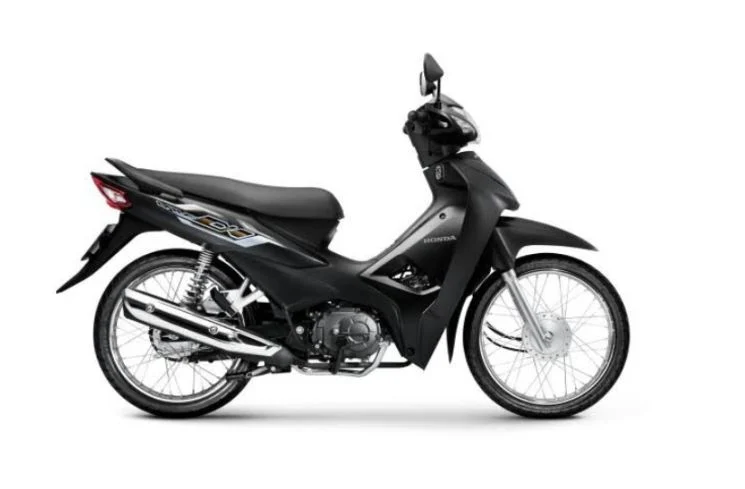
The underbone motorcycle, characterized by its structural chassis design and exposed engine, has been the backbone of Southeast Asian mobility for decades. Unlike modern automatic scooters that prioritize convenience over raw durability, these manual-clutch or semi-automatic transmission bikes are built for high-torque performance and ease of repair. As economic conditions fluctuate, the trend toward purchasing pre-owned, robust utility vehicles has surged, reflecting a pragmatic shift in consumer behavior toward asset management that favors longevity and low maintenance costs over aesthetic obsolescence.
The Economic Case for Pre-Owned Utility Vehicles
The financial implications of purchasing a used motorcycle extend beyond the initial acquisition price. When a small business opts for a used unit in the IDR 3 million to IDR 5 million range, it bypasses the interest-heavy schemes typical of new vehicle financing. Furthermore, the simplicity of the mechanical systems in older, carbureted underbone motorcycles allows for localized maintenance. Most mechanics in suburban and rural areas are intimately familiar with the engine architectures of the mid-2000s Japanese models, ensuring that downtime remains minimal and spare parts remain affordable.
From a macroeconomic perspective, the resilience of these older motorcycle models highlights a period in automotive engineering where longevity was prioritized. Many of the models produced between 2004 and 2011 were designed to handle varying road conditions, from paved urban infrastructure to gravel rural paths, making them versatile assets for businesses involved in delivery, field sales, or daily commuting.
Detailed Review of Top Five Reliable Underbone Models
1. Honda Supra X 125 (2005–2010 Generation)
The Honda Supra X 125 remains the benchmark for reliability in the underbone segment. Equipped with a 124.8 cc SOHC engine capable of producing 10.1 PS of power, this model was designed to handle significant payloads without compromising engine integrity. Its fuel consumption, averaging between 45 and 50 kilometers per liter, makes it an ideal candidate for long-range daily operations. In the secondary market, this model typically commands a price of IDR 3.5 million to IDR 5 million. Its enduring popularity is evidenced by the continued availability of both original and aftermarket replacement parts, ensuring that a decade-old unit can be restored to optimal performance with relatively little capital.
2. Honda Supra Fit (2004–2007 Generation)
For the most budget-conscious operators, the Honda Supra Fit stands out as an exceptionally frugal choice. Featuring a 100 cc engine, this model focuses on maximum fuel efficiency, often exceeding 50 kilometers per liter under optimal conditions. While its power output is lower than the 125 cc counterparts, its lightweight construction and proven mechanical design make it an excellent tool for inner-city navigation and light delivery tasks. Priced between IDR 2 million and IDR 4.5 million, it represents one of the lowest entry points for a reliable, brand-name vehicle.
3. Yamaha Vega R (2005–2010 Generation)
The Yamaha Vega R is frequently cited by professional field workers for its responsive torque in lower RPM ranges. This characteristic is particularly advantageous for riders who frequently stop and start or navigate congested urban traffic with cargo. The engine is known for its durability, and because Yamaha utilized many shared components across its 110 cc lineup during this period, sourcing parts remains a seamless process. Market prices generally hover between IDR 3 million and IDR 5 million, making it a competitive alternative to Honda’s dominant market share.
4. Suzuki Smash (2007–2011 Generation)
Suzuki’s engineering approach with the Smash series was centered on chassis rigidity. The motorcycle features a frame capable of absorbing the stresses of heavy usage over extended periods. With a 110 cc engine that is notoriously "tahan banting" (tough), the Smash is a favorite among those operating in rugged environments. Currently available in the secondary market for approximately IDR 4.7 million to IDR 4.8 million, it offers a compelling value proposition for businesses that prioritize structural integrity and long-term mechanical reliability over speed.
5. Yamaha Jupiter Z (2004–2010 Generation)
Rounding out the list is the legendary Yamaha Jupiter Z. This model is often lauded for its balance between performance and fuel economy. With an engine displacement between 110 cc and 115 cc, it delivers a punchy ride, reaching 40 to 45 kilometers per liter. Its popularity in the used market, where it typically trades between IDR 2.5 million and IDR 4.2 million, is bolstered by its stable transmission and ease of handling, making it a reliable workhorse for growing businesses that require a blend of agility and power.
Strategic Inspection and Due Diligence
While these models are renowned for their longevity, prospective buyers must exercise rigorous due diligence. The age of these vehicles implies that they have likely undergone multiple years of service; therefore, a comprehensive inspection is non-negotiable.
Key Inspection Checklist:
- Legal Documentation: Verification of the BPKB (Vehicle Ownership Document) and STNK (Vehicle Registration Certificate) is the primary step. Buyers must ensure that the chassis and engine numbers on the frame match the physical documents exactly. Any discrepancy in this regard presents a significant legal risk.
- Mechanical Integrity: During a test ride, focus on the transmission—shifting should be smooth and the clutch (if applicable) should not slip. Listen for unusual metallic knocking sounds in the engine, which could indicate excessive wear on internal components like the piston or connecting rod.
- Structural Inspection: Inspect the frame for signs of rust, cracks, or previous welding work. Since these bikes are often used for hauling, structural fatigue in the sub-frame is a potential concern.
- Electrical and Safety Systems: Check the functionality of the battery, headlight, brake lights, and indicators. While these are relatively inexpensive to replace, they serve as indicators of the previous owner’s maintenance habits.
Broader Market Implications
The sustained demand for these older underbone motorcycles reveals a significant segment of the economy that operates outside the luxury or high-performance vehicle narrative. For many, a motorcycle is not a hobby or a status symbol; it is an essential piece of capital equipment. When viewed through this lens, the secondary motorcycle market is a critical component of local economic development.
Industry analysts observe that as inflation impacts the pricing of new vehicles, the gap between new and used market values continues to widen, driving more consumers toward the pre-owned segment. This shift has also fostered a robust informal economy of mechanics, parts suppliers, and specialized workshops that sustain the lifecycle of these vehicles long after they leave the showroom floor.
In conclusion, for business owners and operational managers, the decision to invest in a pre-owned underbone motorcycle is a sound financial strategy. By selecting proven, reliable models such as the Honda Supra X 125 or the Yamaha Jupiter Z, and by conducting thorough inspections prior to purchase, businesses can secure durable assets that support productivity while preserving essential capital. In a volatile economic landscape, these resilient machines remain more than just a means of transport; they are reliable partners in the pursuit of operational success.