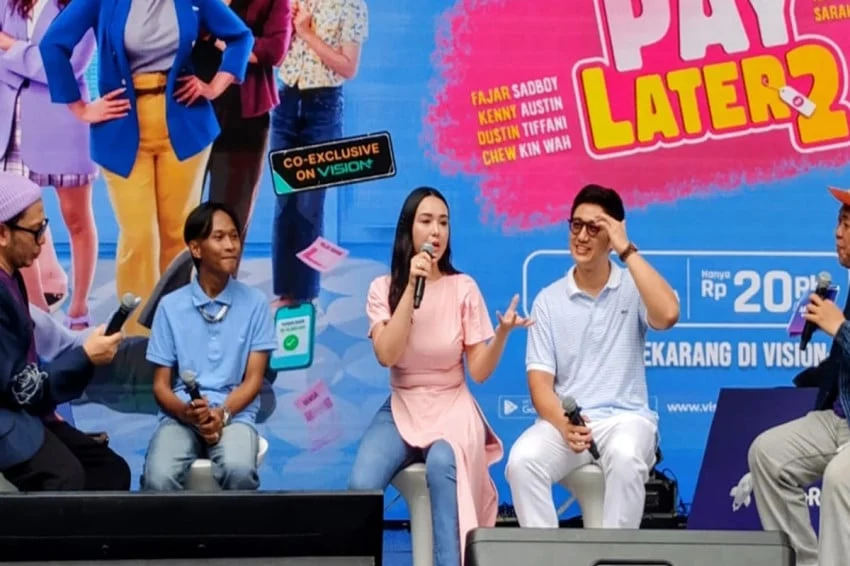
The second season of the Vision+ original series Pay Later has officially captivated audiences, promising a more intricate and expansive narrative than its predecessor. During the highly anticipated Meet and Greet event held at the MoraRepublic Rocket Weekend 2026, situated in the scenic Hutan Kota GBK, Jakarta, on Saturday, November 28, 2026, the series’ lead actress, Amanda Manopo, provided fresh insights into the evolution of the show’s plot. Alongside co-stars Fajar Sadboy and Kenny Austin, Manopo highlighted that the current season departs from the singular focus of the first installment, opting instead for a multi-layered storytelling approach that delves deeper into the lives of supporting characters.
A Shift in Narrative Direction
When the first season of Pay Later premiered, the narrative was primarily centered on the character of Tika, portrayed by Amanda Manopo. The show tackled the pervasive social phenomenon of "pay later" consumerism, exploring how impulsive financial decisions can unravel the personal and professional lives of young urban professionals. However, the production team has evidently shifted gears for the second season.
According to Manopo, the current season serves as a broader exploration of the social ecosystem surrounding Tika. "Season two is not just about the dynamics of the family anymore," Manopo explained during the event. "We have branched out to explore other personal arcs, particularly the romantic journey of Umar." This strategic pivot suggests that the creators are attempting to broaden the show’s appeal by humanizing its side characters, moving away from the purely cautionary tale format to a more character-driven drama.
The Evolution of Character Arcs
Fajar Sadboy, whose portrayal of Umar has become a fan favorite, plays a pivotal role in this expansion. In the first season, Umar served as a comedic and relatable figure, often navigating the struggles of the gig economy. In the second season, however, the writers have granted his character significant emotional growth.
"We asked ourselves, is it always going to be about Tika? Does Umar have to be alone forever?" Manopo remarked. "There is a romantic journey for him now. It makes the story feel much more diverse and multidimensional." This change reflects a broader trend in Indonesian streaming content, where character-driven series are increasingly favoring ensemble casts over traditional protagonist-centric narratives. By investing time in Umar’s pursuit of love, the series adds a layer of vulnerability that balances the high-stress financial dilemmas the characters face in the workplace.
The Impact of Pay Later Culture in Indonesia
The series, Pay Later, is set against the backdrop of an evolving Indonesian financial landscape. The rise of "Buy Now, Pay Later" (BNPL) services has been exponential in Southeast Asia, particularly in Indonesia, where digital financial inclusion is a government priority. According to reports from the Financial Services Authority (OJK), the total outstanding receivables for BNPL services have seen consistent double-digit growth annually.
While the series is a work of fiction, it mirrors real-world concerns regarding financial literacy among Gen Z and Millennials. The show serves as a cultural mirror, reflecting the tension between the ease of digital credit and the long-term consequences of debt. By focusing on the personal lives—and romantic endeavors—of characters who are burdened by such financial pressures, the show manages to ground complex economic issues in relatable human experiences. The success of season one, which prompted this second season, underscores the audience’s hunger for content that addresses contemporary lifestyle issues through a lens of entertainment.
Event Context: MoraRepublic Rocket Weekend 2026
The choice of the MoraRepublic Rocket Weekend 2026 as the venue for the cast appearance was significant. The event, which brings together various segments of the creative industry, served as an ideal platform for Vision+ to engage with its target demographic. By hosting the meet and greet in a public, vibrant space like Hutan Kota GBK, the production team fostered a direct connection between the actors and the fanbase.

The atmosphere at the event was electric, as fans gathered to interact with Manopo, Austin, and Sadboy. These promotional events are crucial for streaming platforms in the competitive Indonesian market. In an era where viewers are flooded with choices from international platforms like Netflix and Disney+, domestic originals must rely on strong community engagement and star power to retain viewership. The presence of Amanda Manopo, a household name in Indonesian television, serves as a significant draw, ensuring that the series maintains high visibility in a crowded digital landscape.
Broader Industry Implications
The transition of Pay Later from a niche series about financial debt to a more character-focused drama indicates a maturation in the production of local streaming content. As the industry moves past the initial phase of "binge-worthy" content, there is a clear move toward long-term narrative development.
Analysts within the Indonesian media sector have noted that the success of series like Pay Later 2 depends heavily on the "stickiness" of the characters. By diversifying the storylines, the creators are effectively increasing the show’s longevity. If the audience connects with Umar’s romantic struggles as much as they did with Tika’s financial woes, the series establishes a foundation for potential future seasons or even spin-offs.
Furthermore, the integration of real-world social issues—such as the prevalence of digital debt—with character-driven storytelling represents a sophisticated approach to narrative design. It allows the series to be both informative and entertaining, a delicate balance that is essential for sustainable viewership in the streaming age.
Looking Ahead
As the second season continues to roll out, the primary challenge for the creative team will be maintaining the pacing of these multiple story arcs. With the narrative now "branched out," the producers must ensure that the transition between Tika’s professional challenges and Umar’s personal life remains seamless.
The feedback from the audience during the meet and greet sessions has been largely positive, suggesting that the shift in direction has been well-received. Fans are particularly keen to see how the romantic developments for Umar will impact his relationship with his coworkers and his overall financial stability—a thematic link that keeps the core premise of the show intact.
In conclusion, the second season of Pay Later is more than just a continuation of a story about debt; it is an ambitious expansion of a narrative universe. By embracing the complexity of its supporting characters, the show has successfully positioned itself as a more mature and nuanced production. As Amanda Manopo and the rest of the cast continue to promote the series, the focus remains on the human element—the joys, heartbreaks, and financial realities of modern urban life in Indonesia. Whether this evolution will lead to continued commercial success remains to be seen, but early indicators suggest that the audience is ready to follow these characters on their more diverse and complicated journeys.
The series stands as a testament to the growth of local streaming platforms, proving that when high-quality acting meets relatable, evolving storytelling, domestic productions can hold their own against global competitors. With the momentum gained from the MoraRepublic Rocket Weekend, it is highly likely that Pay Later 2 will remain a staple in the Indonesian streaming conversation throughout the coming months.