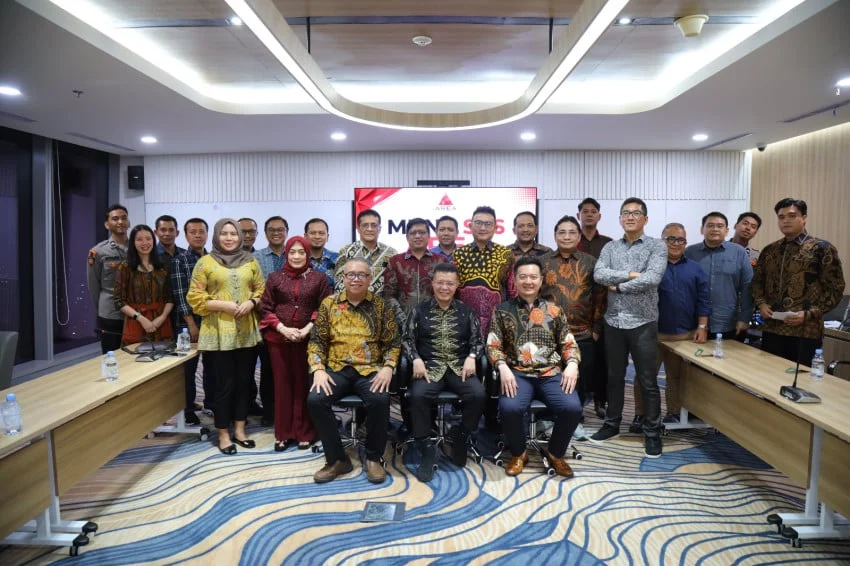
JAKARTA – The Association of Real Estate and Agents Indonesia (AREA Indonesia) has decisively reaffirmed its unwavering commitment to serve as a pivotal professional organization, dedicated to unifying all stakeholders across Indonesia’s vast property and housing sectors. This strategic reaffirmation follows the successful conclusion of its Special National Deliberation (Munasus) held at the prestigious World Capital Tower in Jakarta on Thursday, July 23, 2026. The landmark event culminated in the establishment of a new executive board, slated to lead the organization through the crucial 2026-2031 period, underpinned by a fervent spirit of collaboration aimed at bolstering the property industry’s competitiveness and actively supporting the government’s ambitious 3 Million Homes Program.
The Munasus was not merely a routine organizational gathering but a strategic convocation designed to usher in a new era for AREA Indonesia. Delegates, representing a broad spectrum of the property landscape, gathered to chart a course that prioritizes synergy over fragmentation, recognizing the complex, multi-faceted nature of Indonesia’s housing challenges. The central tenet articulated during the deliberation was that the industry’s collective strength, when channeled through a unified platform, holds the key to unlocking greater societal and national benefits.
During the pivotal Munasus proceedings, participants reached a unanimous decision, electing a new leadership team through acclamation. Mr. Indra Utama was confirmed as the President, Mr. Ruly Muliarto assumed the role of Secretary General, and Mr. Nico Purnomo was appointed as the Treasurer General. This new executive board has been entrusted with the mandate to implement AREA Indonesia’s strategic vision for the 2026-2031 term, with a primary focus on strengthening cross-sectoral collaboration to cultivate a robust, professional, and highly competitive property industry. The unified election underscores the broad consensus within the organization regarding its future direction and the capabilities of its chosen leaders.
President Indra Utama, in his address during the Munasus, underscored the distinct positioning of AREA Indonesia within the national economic framework. "AREA Indonesia was not established to compete with organizations representing developers, property agents, building material industries, banking institutions, property management firms, appraisers, consultants, or any other professional associations," Utama articulated. His statement firmly positioned the organization as an enabler rather than a rival. "We are here to consolidate strengths, foster synergy, and serve as a collaborative bridge across the entire Indonesian property ecosystem, thereby delivering greater benefits to the community and the nation as a whole." This vision of a cohesive ecosystem is central to the organization’s renewed mandate and its operational philosophy for the coming years.
The Urgent Need for Collaboration: Indonesia’s Housing Landscape
The imperative for such a unifying body stems from the formidable challenges inherent in providing decent, high-quality, and affordable housing for Indonesia’s rapidly growing population. Experts and policymakers consistently highlight that these issues are too expansive and complex to be resolved by any single organization or sector acting in isolation. President Utama reiterated this sentiment, emphasizing the critical need for an integrated approach involving the government, private sector developers, financial institutions, academic researchers, media, various professional associations, and the broader community. This multi-stakeholder synergy, he stressed, is indispensable for accelerating housing provision across the archipelago.
Indonesia, as Southeast Asia’s largest economy, faces a significant housing backlog, estimated to be in the millions of units. Projections from the Ministry of Public Works and Housing (PUPR) often cite figures ranging from 7 to 11 million units, primarily impacting low-income communities and young families in urban and peri-urban areas. Rapid urbanization, with millions migrating to cities annually, exacerbates demand, placing immense pressure on existing infrastructure and housing supply. Furthermore, demographic shifts, including a burgeoning young population, translate into a continuous need for new housing units, making the property sector a critical engine for both social stability and economic growth.
The property sector’s contribution to Indonesia’s Gross Domestic Product (GDP) is substantial, typically ranging between 12-15% annually, directly and indirectly supporting millions of jobs from construction to finance and marketing. However, the sector is also susceptible to macroeconomic fluctuations. Recent tightening of monetary policy by Bank Indonesia (BI), including increases in the BI Rate, has introduced headwinds, particularly for the middle-income housing market. Higher interest rates translate into more expensive mortgages, potentially dampening consumer purchasing power and slowing down market absorption, as hinted by the recent market slowdown in the middle-class segment. These factors collectively underscore the volatile yet vital nature of the industry and the necessity for robust, collaborative frameworks.
Government’s 3 Million Homes Program: A National Priority
At the heart of AREA Indonesia’s collaborative agenda is its explicit support for the government’s ambitious 3 Million Homes Program. This national initiative, a cornerstone of Indonesia’s long-term development strategy, aims to significantly reduce the housing backlog and ensure access to affordable and decent housing for all citizens. The program typically involves various government subsidies, land provision schemes, and partnerships with private developers to accelerate housing delivery, particularly for the low-income segment (Masyarakat Berpenghasilan Rendah/MBR).
However, achieving such an ambitious target requires overcoming substantial hurdles, including land acquisition complexities, infrastructure development costs, regulatory bottlenecks, and securing adequate financing. The role of professional organizations like AREA Indonesia becomes paramount in these circumstances. By fostering a unified approach, AREA Indonesia can act as a crucial liaison between the private sector and government agencies, helping to streamline processes, advocate for favorable policies, and mobilize resources more effectively. Its commitment to the 3 Million Homes Program signals a direct alignment with national development priorities, positioning the organization as a strategic partner in fostering inclusive growth.
AREA Indonesia’s Vision and Eight-Point Mission for 2026-2031
The newly elected leadership for the 2026-2031 period has articulated a comprehensive vision: to establish AREA Indonesia as the foremost property and real estate professional organization, dedicated to building an industry ecosystem that is professional, competent, integral, and globally competitive. Crucially, this vision also positions AREA Indonesia as a strategic partner to the government in achieving decent housing for all and promoting sustainable development practices across the nation.
To realize this ambitious vision, AREA Indonesia has meticulously crafted an eight-point mission, each designed to address specific aspects of industry development and societal contribution:
- Enhancing Human Resource Competence: This mission focuses on elevating the skills and expertise of professionals within the property sector through structured education programs, continuous training initiatives, and rigorous professional certification processes. This is vital for ensuring high standards of service and ethical conduct, and for adapting to evolving market demands.
- Strengthening Professional and Transparent Industry Governance: By advocating for and implementing robust governance frameworks, AREA Indonesia aims to foster an environment of professionalism and transparency. This includes promoting best practices, ethical guidelines, and accountability mechanisms to build trust among stakeholders and protect consumer interests.
- Supporting the 3 Million Homes Program: As highlighted earlier, this mission underscores the organization’s direct contribution to national housing goals, leveraging its collective expertise and network to facilitate the program’s success.
- Encouraging Digital Transformation: Recognizing the global shift towards digitalization, AREA Indonesia aims to drive the adoption of innovative technologies across the property value chain. This includes promoting proptech solutions, data analytics, and digital platforms to enhance efficiency, accessibility, and transparency in transactions and operations.
- Expanding National and International Cooperation: This mission seeks to forge stronger ties with local and global industry associations, educational institutions, and governmental bodies. Such collaborations are essential for knowledge exchange, benchmarking best practices, attracting foreign investment, and promoting Indonesian property on the international stage.
- Developing Professional Certification Institutions: By establishing and empowering robust certification bodies, AREA Indonesia aims to standardize professional qualifications and ensure that practitioners meet stringent competency requirements, thereby enhancing the credibility and reliability of the industry workforce.
- Contributing to Economic Growth through Sustainable Property Development: This mission emphasizes the property sector’s role as a key economic driver while promoting environmentally responsible and socially inclusive development practices. It involves advocating for green building standards, sustainable urban planning, and projects that deliver long-term value for communities and the environment.
- Becoming a Strategic Partner for Government in Sustainable Development: Beyond the 3 Million Homes Program, this mission broadens AREA Indonesia’s role to encompass wider sustainable development goals, collaborating with government on policy formulation, urban planning, and infrastructure development that supports resilient and livable cities.
Inferred Industry and Government Responses
The proactive stance taken by AREA Indonesia is likely to be met with positive reception from various quarters. Government officials, particularly from the Ministry of Public Works and Housing (PUPR), would logically welcome such a unifying initiative. A spokesperson, if asked, might emphasize the critical role of multi-stakeholder partnerships in addressing the housing deficit and achieving sustainable urban development goals. The government’s capacity to deliver on its vast housing programs is significantly enhanced by coordinated private sector involvement, making AREA Indonesia a valuable ally.
Similarly, other established industry associations, even those not directly part of AREA Indonesia, would likely acknowledge the benefits of a broader, unifying platform. While AREA Indonesia aims not to compete, its focus on collaboration and standardization could lead to greater synergy across the entire ecosystem. Financial institutions, crucial for funding property development and mortgages, would also view such initiatives favorably. A more professional, transparent, and collaborative property sector presents lower risks and greater opportunities for investment, potentially leading to more innovative financing products and increased accessibility for homebuyers. Academics and urban planning experts would likely commend the emphasis on competence building, digital transformation, and sustainable development, seeing it as a progressive step towards a more resilient and equitable urban future for Indonesia.
Broader Implications and Future Outlook
The establishment of AREA Indonesia’s new leadership and its renewed strategic direction carries significant implications for Indonesia’s property sector, economy, and society.
Economic Impact: A professionalized and unified property sector is better positioned to attract both domestic and foreign investment. Improved governance, standardized practices, and enhanced transparency can de-risk investments, stimulate growth, and create more jobs across the value chain. The property sector’s direct and indirect contributions to GDP are expected to be amplified through more efficient project execution and increased market confidence.
Social Impact: By actively supporting the 3 Million Homes Program and focusing on affordable housing, AREA Indonesia can directly contribute to improving the living standards of millions of Indonesians. Enhanced human resource competence and ethical practices will also lead to better quality housing, more reliable transactions, and greater consumer protection, fostering trust in the property market.
Industry Professionalization: The emphasis on education, training, and certification is a crucial step towards elevating the professional standards of the entire industry. This will not only improve service quality but also enhance the credibility of Indonesian property professionals on a regional and global scale. The development of professional certification institutions will create a benchmark for excellence, encouraging continuous improvement and accountability.
Digital Transformation and Innovation: By actively promoting digital transformation, AREA Indonesia is preparing the industry for future challenges and opportunities. The adoption of proptech can streamline processes, reduce costs, improve market access, and provide valuable data for better decision-making, positioning Indonesia as a leader in digital real estate innovation within Southeast Asia.
Global Competitiveness: Expanding national and international cooperation, combined with a focus on integrity and competence, will bolster Indonesia’s standing in the global property market. It will facilitate knowledge transfer, encourage foreign direct investment, and potentially open avenues for Indonesian property firms to participate in international projects.
The Munasus at World Capital Tower marks a definitive turning point for AREA Indonesia. With a clear vision, a robust eight-point mission, and a leadership team committed to fostering collaboration, the organization is poised to play an instrumental role in shaping the future of Indonesia’s property and housing sectors. Its strategic alignment with national development goals, particularly the 3 Million Homes Program, underscores its potential to drive not just economic growth but also significant social progress, contributing to a more prosperous and equitable Indonesia for years to come. The journey towards a truly unified, professional, and globally competitive property ecosystem has officially begun, setting a precedent for collective action in addressing complex national challenges.