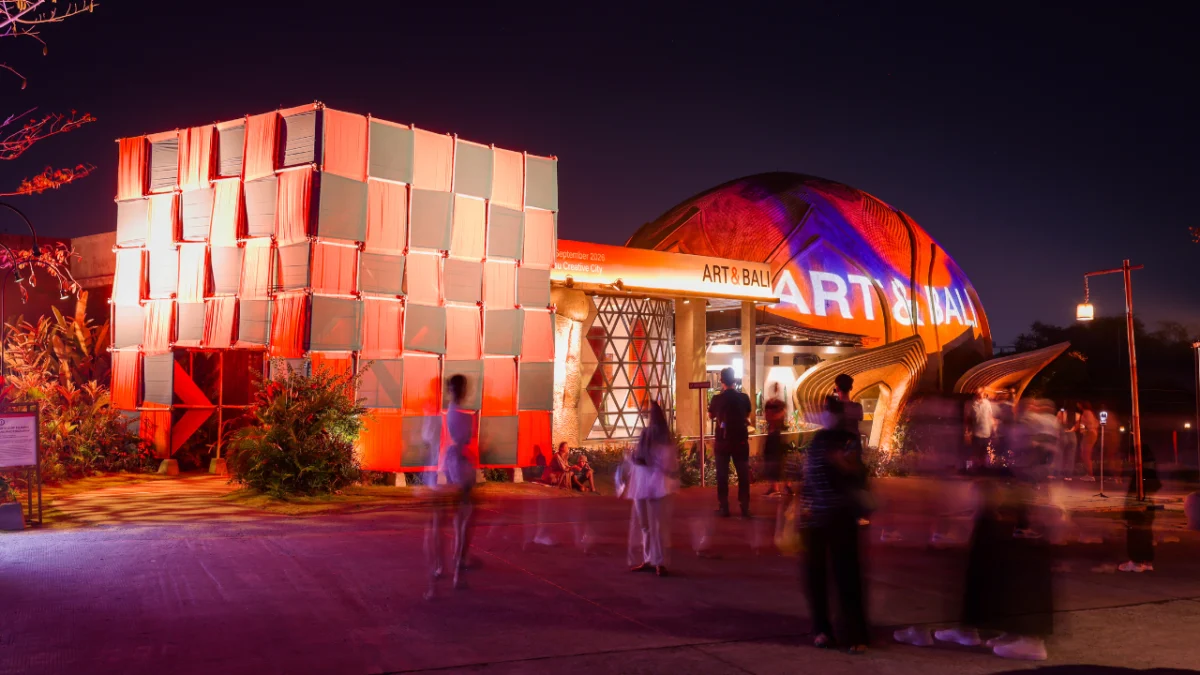
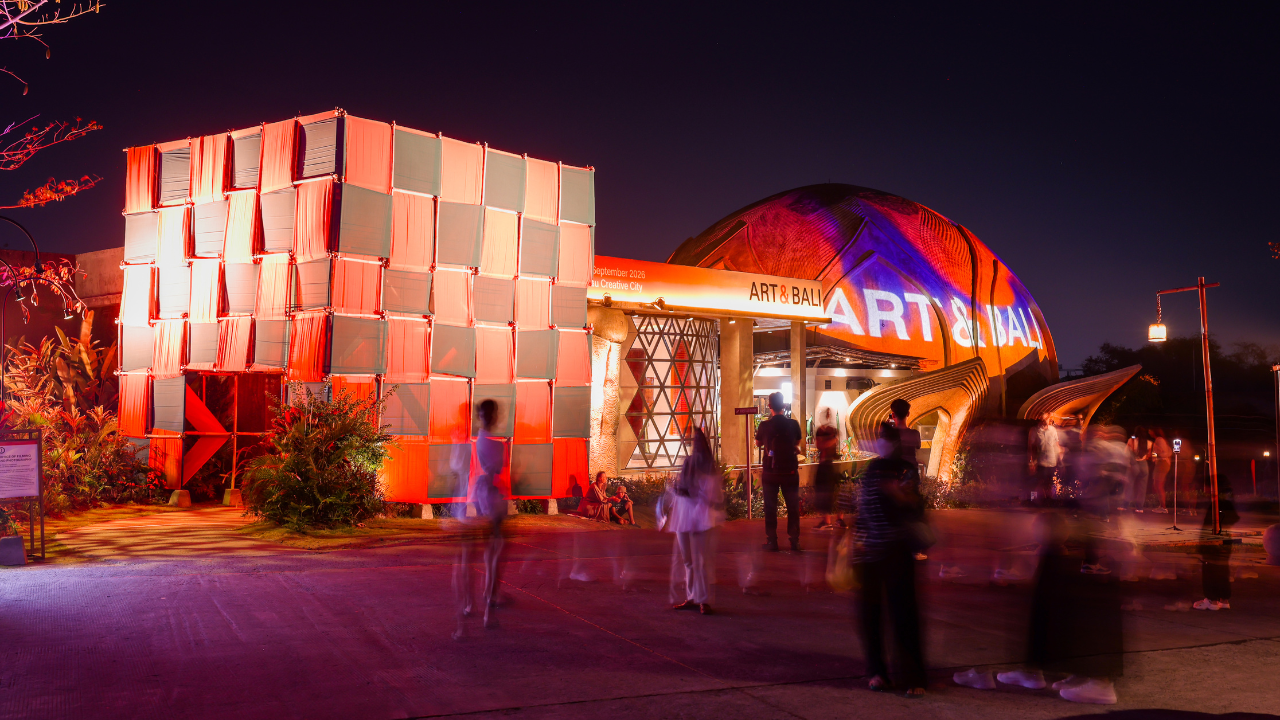
The island of Bali has once again cemented its status as a premier global melting pot for artistic innovation and creative industries with the return of Art&Bali 2026. Staged for the second consecutive year within the sprawling 44-hectare expanse of the Nuanu Creative City, this year’s edition has drawn international acclaim for its ambitious scope. Operating under the guiding theme Bridging Dichotomies, the festival serves as a dynamic nexus where contemporary fine art, high fashion, traditional craftsmanship, material culture, and intellectual discourse converge into a unified landscape.
Running from September 11 to September 13, 2026, the primary weekend events activated the futuristic and eco-conscious district of Nuanu, welcoming an international cohort of participants. The grand-scale event successfully brought together 23 esteemed galleries and experimental art spaces alongside more than 300 visionary artists hailing from Indonesia, Malaysia, Singapore, Spain, Italy, Switzerland, and the United States. Through an extensive curation of site-specific installations, immersive presentations, avant-garde performances, and public forums, the festival transformed the Balinese landscape into an interactive forum for cross-cultural dialogue and creative experimentation.
The Genesis and Evolution of Art&Bali in Nuanu Creative City
The selection of Nuanu Creative City as the permanent home for Art&Bali underscores a deliberate shift in how artistic ecosystems are developed in Southeast Asia. Conceived as a hub for sustainable living, education, and art, Nuanu provides an ideal physical and philosophical backdrop for a festival that seeks to dissolve traditional boundaries. By integrating state-of-the-art facilities with natural Balinese topography, the location allows artists to push the limits of scale, medium, and interactivity.
Over the past two years, Art&Bali has evolved from a regional showcase into a globally recognized fixture on the international art calendar. The event addresses a critical modern need: creating physical spaces of encounter in an increasingly digitalized art market. By fostering direct interactions between established blue-chip galleries, emerging independent artist collectives, global curators, and passionate collectors, the festival has stimulated regional art economies while elevating the profile of Indonesian contemporary art on the world stage.
What The Body Remembers: Honoring Ancestral Craft and Somatic Memory
Among the most celebrated highlights of Art&Bali 2026 is the landmark exhibition titled What The Body Remembers. Running through November 29, 2026, at the Labyrinth Art Gallery within Nuanu Creative City, the exhibition represents a monumental cross-cultural collaboration between 26 pioneering designers and creators from India and Indonesia.
Co-curated by renowned fashion visionary and sustainability advocate Bandana Tewari alongside curator Brina Paska, the exhibition is anchored in a profound philosophical premise: that technical skill is not merely a cognitive tool, but a living form of memory physically stored within the hands of the maker. Through intricate explorations of textile manipulation, ancestral dyeing techniques, complex weaving traditions, and the repetitive physical gestures inherent in artisanal production, What The Body Remembers examines how traditional knowledge is simultaneously preserved through continuous repetition and evolved through contemporary innovation.
The roster of participating talents reads as a who’s who of avant-garde Asian design, featuring visionary creators such as Lulu Lutfi Labibi, Raw Mango in collaboration with Sanjay Garg, the late-legacy-honoring works of Tex Saverio, and TOTON The Label. The exhibition acts as a powerful reminder that fashion and textile art carry the weight of human history, familial lineages, and geographical identities.
International Gallery Convergence and Collaborative Ecosystems
Beyond the standout textile exhibition, Art&Bali 2026 facilitated an unprecedented gathering of international commercial and institutional art spaces. The participation of 23 distinct galleries from across Southeast Asia, Europe, and North America created a robust marketplace and intellectual exchange platform. This diverse representation allowed local Indonesian artists to position their works within a global dialogue, addressing shared contemporary anxieties such as ecological degradation, technological acceleration, and cultural preservation.
The presence of galleries from Italy, Spain, Switzerland, and the United States introduced Western collectors to Southeast Asian sensibilities, while regional galleries from Singapore and Malaysia highlighted the vibrant interconnectedness of the ASEAN art market. Industry analysts note that such cross-border collaborations are vital for driving liquidity, visibility, and institutional recognition for artists operating outside traditional Western art capitals.
Nuanu Future Talks: Fashion, Art, and Cultural Ownership

Complementing the visual spectacles, the Nuanu Future Talks: Fashion & Art series expanded the festival’s intellectual footprint. Spanning six comprehensive panel discussions featuring over 20 leading voices in art, fashion, and cultural studies, the forums tackled urgent contemporary issues, including cultural ownership, the commodification of heritage, the intersection of technology and sustainability, and the future trajectory of creative industries across Asia.
A central centerpiece of this dialogue was the highly anticipated panel session titled “When Does Fashion Become Art?”. Moderated by Bandana Tewari—whose expertise as a lead curator, cultural journalist, and sustainability advocate guided a nuanced conversation—the panel interrogated the shifting paradigms of wearable design. Joining Tewari were prominent industry leaders including Svida Alisjahbana, Chairman of Jakarta Fashion Week (JFW); Jiya Ambast, founder and CEO of the ethical fashion brand AYNI; and acclaimed multidisciplinary artist Natasha Preenja, widely recognized by her moniker Princess Pea.
The panel addressed the increasingly porous boundaries separating high fashion, fine art, and traditional craftsmanship. The discourse moved past the tired, binary question of categorization, focusing instead on how contemporary creators imbue physical objects with profound narrative meaning. Alisjahbana offered valuable insights into the institutional frameworks supporting Indonesian design on global runways, while Ambast and Preenja contributed critical perspectives on ethical production, anonymity in art, and the psychological dimensions of wearable sculptures.
Implications and Broader Impact on the Global Creative Landscape
The success of Art&Bali 2026 signals a transformative shift in the global art economy, proving that peripheral regions can successfully anchor international cultural discourse without relying on traditional Western epicenters. By consciously dismantling the dichotomies between high art and craft, tradition and technology, as well as local heritage and global contemporary practice, the festival offers a blueprint for a more inclusive and sustainable creative future.
Observers and market analysts suggest that the collaborative frameworks established during the three-day event will yield long-term benefits for the participating artists and institutions. By fostering an environment where discourse is valued as much as commercial acquisition, Art&Bali has successfully cultivated an informed collector base and an engaged public audience. As the exhibitions—such as What The Body Remembers—continue to draw visitors through late November, the enduring legacy of Art&Bali 2026 remains clear: it has redefined the possibilities of cultural collaboration, proving that the future of art lies in the rich intersection of diverse human histories and shared creative resilience.