DENPASAR, Bali – Members of the Bali Regional People’s Representative Council (DPRD) are advocating for a crucial revision of the Regional Regulation (Perda) concerning Subak, Bali’s revered traditional irrigation system. This legislative push is fundamentally aimed at establishing a stronger legal framework to significantly increase budgetary assistance for these vital agricultural organizations, a move deemed urgent amidst escalating concerns over the relentless shrinkage of rice paddies across the island. The proposed revision underscores a growing recognition within the legislative body that the current level of governmental support is disproportionate to Subak’s strategic role in both food security and as an irreplaceable icon of Balinese cultural tourism.
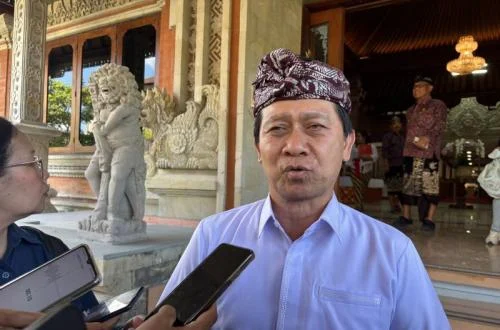
I Nyoman Suwirta, Chairman of Commission IV of the Bali DPRD, confirmed on Saturday in Denpasar that discussions are set to commence with a focus on amending the existing Subak regulation. "We will begin deliberations on the revision of the Subak regional regulation. Subsequently, for the 2027 regional budget (APBD), we will propose a substantial increase in financial aid," Suwirta stated, signaling a clear intent to translate policy changes into tangible financial benefits for the island’s farmers. This initiative is seen as a direct response to the increasingly pervasive phenomenon of land conversion in Bali, which continues to erode the agricultural landscape at an alarming rate. Lawmakers contend that government attention to the sustainability of Subak has fallen short of its immense strategic importance, not only as a bedrock of food resilience but also as a cornerstone of Bali’s unique cultural identity, which draws millions of tourists annually.
The Sacred Landscape Under Siege: Understanding Subak’s Predicament
Subak is far more than just an irrigation system; it is a complex socio-religious and ecological system that has sustained Balinese agriculture and culture for centuries. Recognized by UNESCO as a World Heritage site in 2012, Subak embodies the philosophical principle of Tri Hita Karana, promoting harmony between humans, nature, and the divine. This intricate network of rice terraces, canals, tunnels, and temples is managed collectively by communities of farmers, ensuring equitable water distribution and sustainable land use. The spiritual dimension of Subak, with its offerings and rituals dedicated to Dewi Sri, the goddess of rice and fertility, further intertwines agriculture with the island’s profound spiritual life. Its existence is critical not only for local food production, primarily rice, but also for maintaining the iconic terraced landscapes that are synonymous with Bali’s global image as a paradise island.
However, this ancient system now faces unprecedented modern challenges. The rapid expansion of tourism infrastructure, residential development, and commercial ventures has exerted immense pressure on agricultural land. Farmers, often grappling with low income, increasing operational costs, and the allure of lucrative offers from developers, are increasingly compelled to sell their ancestral lands. This economic pressure, coupled with a perceived lack of adequate government support, creates a vicious cycle that accelerates the rate of land conversion. The DPRD’s proposed revision of the Subak Perda seeks to counteract these forces by providing a robust legal and financial safety net, aiming to empower Subak communities to resist conversion pressures and continue their vital work.
Alarming Rate of Rice Paddy Shrinkage
The concerns voiced by the DPRD are firmly rooted in sobering statistics. Data from the National Land Agency (BPN) of Bali Province paints a grim picture, revealing a significant reduction in Bali’s rice paddy area. Between 2019 and 2024, the island lost a staggering 6,521.81 hectares of rice fields. From a total of 70,995.87 hectares in 2019, the area plummeted to just 64,474 hectares by 2024, representing a substantial decrease of approximately 9.19 percent. This translates to an average annual decline of about 1.53 percent, a rate that, if unchecked, threatens the very existence of Bali’s agricultural heartland within a few decades.
The implications of such a rapid decline extend far beyond mere land area. It jeopardizes Bali’s food security, increasing its reliance on external food supplies and making it vulnerable to market fluctuations. Ecologically, the loss of rice paddies disrupts crucial hydrological cycles, reduces biodiversity, and diminishes the natural flood regulation and carbon sequestration capabilities of these wetlands. Culturally, it signifies the erosion of a way of life, an ancient tradition that has defined Balinese identity for centuries.
Despite these alarming trends, the Bali Provincial Government has not been entirely passive. In an effort to safeguard agricultural land and preserve productive areas across the island, Governor of Bali, I Wayan Koster, issued Governor’s Instruction Number 5 of 2025, which explicitly prohibits the conversion of agricultural land. While this instruction demonstrates a commitment to the issue, the continued data on land loss suggests that such directives, in isolation, may not be sufficient without accompanying robust enforcement, meaningful incentives for farmers, and comprehensive financial support. The DPRD’s push for a revised Perda and increased funding is, therefore, an acknowledgment that current measures need significant reinforcement to be truly effective.
Chronology of Policy and Financial Support Fluctuations
The history of financial support for Subak organizations in Bali reveals a fluctuating and often inconsistent pattern, contributing to the current predicament. For years, Subak has relied on various forms of government assistance, primarily through the Special Financial Assistance (BKK) program. However, the quantum of this support has seen considerable volatility, leading to uncertainty and a sense of neglect among Subak communities.
In 2024, for instance, the BKK for Subak reached a relatively high point of Rp50 million per Subak unit, a figure that offered a glimmer of hope for farmers struggling with rising costs and diminishing returns. However, this level of support proved to be short-lived. Subsequent budget allocations saw a sharp decline, first to Rp25 million, then further down to a meager Rp10 million. While the proposed allocation for 2026, as outlined in Governor’s Regulation Bali Number 61 of 2025 concerning the Elaboration of the Semesta Berencana Provincial Budget for Fiscal Year 2026, shows a slight increase to Rp15 million, it remains significantly lower than the 2024 peak and is widely considered inadequate.
This downward trend in Subak funding stands in stark contrast to the trajectory of BKK for Desa Adat, or traditional villages, which has seen a substantial increase. The BKK for Desa Adat has risen from Rp250 million to an impressive Rp300 million per year. While support for traditional villages is undeniably important for cultural preservation and community governance, the disparity in funding levels between Desa Adat and Subak has raised questions about the provincial government’s priorities, especially given Subak’s critical role in food security and environmental sustainability. There are currently 2,883 registered Subak units remaining across Bali, each facing unique challenges. This historical timeline of fluctuating and often declining support underscores the urgent need for a more stable, substantial, and predictable funding mechanism, which the proposed Perda revision aims to establish.
Inadequate Assistance and Mounting Challenges for Farmers
The current allocation of Rp15 million per Subak unit for 2026 is widely perceived as insufficient to address the myriad challenges faced by Balinese farmers. This amount is meant to cover operational costs, maintenance of irrigation infrastructure, procurement of agricultural inputs, and various community activities essential for the functioning of Subak. However, farmers on the ground grapple with a multitude of issues that far outweigh this modest assistance.
Access to water, a foundational element of rice cultivation, is increasingly problematic due to climate change, prolonged dry seasons, and competing demands from other sectors. The cost of fertilizers and pesticides continues to rise, squeezing already thin profit margins. Furthermore, Subak communities frequently battle against pest infestations and plant diseases, which can decimate harvests and require significant resources to manage. Beyond these agricultural specific challenges, farmers often lament the low selling prices for their produce, which rarely reflect the arduous labor and increasing costs involved in cultivation. This economic reality makes farming a less attractive livelihood, particularly for younger generations, who are often drawn to more lucrative opportunities in the tourism sector or urban areas.
The DPRD members emphasize that farmers, as the custodians of Bali’s agricultural heritage and the providers of its staple food, deserve far greater attention and support. They are not merely agricultural workers but are an integral part of Bali’s cultural tapestry and an essential foundation for its tourism industry. The iconic rice terraces, meticulously maintained by Subak members, are a major draw for tourists seeking scenic beauty and cultural immersion. Without the dedication and hard work of these farmers, much of Bali’s picturesque landscape and cultural allure would simply cease to exist. The existing BKK, in its current form, fails to adequately acknowledge or compensate for these multifaceted contributions.
Broader Impact and Implications
The ongoing challenges faced by Subak and the alarming rate of land conversion have profound implications for Bali’s future across several critical domains:
-
Food Security: The most direct impact is on Bali’s ability to feed its own population. As rice paddies shrink, the island becomes more dependent on external food sources, increasing its vulnerability to supply chain disruptions, price volatility, and national food policies. This undermines the principle of food sovereignty and resilience.
-
Cultural Heritage and Identity: Subak is a living heritage, deeply intertwined with Balinese spiritual beliefs, social structures, and artistic expressions. Its decline represents not just a loss of agricultural land but an erosion of the island’s unique identity and cultural landscape. The UNESCO World Heritage status, a source of immense pride, could be jeopardized if the system’s integrity is compromised.
-
Environmental Degradation: Rice paddies play a crucial ecological role. They act as natural sponges, regulating water flow, preventing floods, and recharging groundwater. Their conversion often leads to increased runoff, soil erosion, habitat loss for various species, and altered microclimates. The shift from permeable agricultural land to impermeable concrete and asphalt exacerbates environmental challenges, including urban flooding and heat island effects.
-
Tourism Sustainability: While tourism is a primary driver of land conversion, the long-term health of Bali’s tourism sector is intrinsically linked to the preservation of its natural and cultural landscapes, including Subak. Tourists come to Bali for its unique beauty, which largely encompasses its verdant rice terraces and vibrant cultural practices. The loss of these iconic elements could diminish Bali’s appeal, turning it into just another generic beach destination.
-
Socio-Economic Disruption: The displacement of farmers from their traditional livelihoods can lead to social unrest, economic inequality, and a loss of community cohesion. It forces individuals into often low-paying jobs in other sectors, eroding traditional skills and knowledge.
The push for a revised Perda is therefore not merely a bureaucratic exercise but a critical intervention to safeguard Bali’s holistic well-being. It reflects a growing understanding that protecting Subak is synonymous with protecting Bali’s soul, its environment, its economy, and its future generations.
A Holistic Approach: The Path Forward
According to I Nyoman Suwirta, genuine commitment to Subak must manifest through a comprehensive strategy that encompasses robust budgetary support, stringent protection of agricultural lands, and progressive policies designed to uplift and inspire farmers. He emphasized that these measures are essential to sustain farmers’ motivation to preserve their rice fields amidst the relentless pressures of development and land conversion. This holistic approach envisions a future where farmers are not just recipients of aid but empowered stakeholders, whose invaluable contributions to Bali’s food security and cultural heritage are recognized and adequately rewarded.
The proposed revision of the Subak Perda is expected to be a pivotal step in this direction. By providing a stronger legal foundation, it can mandate higher and more consistent financial allocations, establish clearer guidelines for land protection, and potentially introduce incentives for sustainable farming practices. This legislative effort, coupled with effective enforcement of existing regulations like the Governor’s Instruction and a concerted effort to educate both developers and communities on the long-term value of Subak, offers a glimmer of hope for the future of Bali’s sacred rice paddies. The success of this initiative will ultimately determine whether Bali can navigate the complexities of modernization while preserving the essence of its unique identity for generations to come.