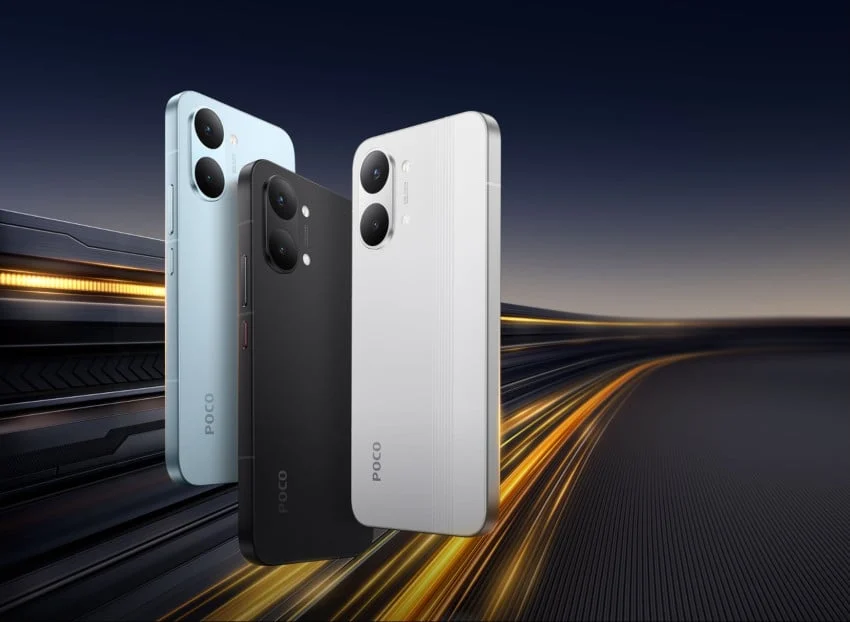
Poco Indonesia has officially entered the year-end retail season with a strategic market expansion, unveiling two highly anticipated devices: the high-performance Poco X8 Pro Max and the entry-level Poco C71. Announced on November 11, 2026, the company has leveraged the popular 11.11 shopping festival to introduce aggressive pricing structures, positioning both devices to capture significant market share across different consumer segments. The centerpiece of this release, the Poco X8 Pro Max, represents a technical milestone for the brand, being one of the first devices in its tier to feature a 3-nanometer chipset architecture and an exceptionally large battery capacity.
Chronology of the 11.11 Launch Event
The launch strategy for the Poco X8 Pro Max and C71 was meticulously planned to coincide with the peak of the Q4 shopping period. According to the official statement released by Poco Indonesia on Wednesday, November 11, 2026, the promotional period is scheduled to run from November 1 to November 11, 2026. This window is designed to incentivize consumers who have been waiting for end-of-year discounts to upgrade their mobile hardware.
The pricing strategy reveals a clear differentiation between the flagship-killer aspirations of the X8 Pro Max and the budget-conscious nature of the C71. For the X8 Pro Max, the 12GB+256GB model is being offered at a promotional price of IDR 8,299,000, reduced from its normal retail price of IDR 8,499,000. Meanwhile, the higher-storage 12GB+512GB variant is priced at IDR 9,299,000, down from IDR 9,499,000. The entry-level C71, configured with 4GB of RAM and 128GB of internal storage, is available for IDR 2,199,000, offering a modest discount from its standard price of IDR 2,299,000.
Technical Deep Dive: The 3-Nanometer Advantage
The standout feature of the Poco X8 Pro Max is the integration of the MediaTek Dimensity 9500s chipset. Fabricated using a cutting-edge 3-nanometer (3nm) process, this silicon architecture represents the current pinnacle of mobile processing technology. The transition from 4nm or 5nm to 3nm is significant in the semiconductor industry; it allows for a higher density of transistors on the same physical area, which directly translates to improved performance and, more importantly, enhanced power efficiency.
In the context of the Dimensity 9500s, the 3nm architecture enables the Poco X8 Pro Max to manage heavy computational tasks—such as high-frame-rate gaming, multi-tasking, and AI-driven image processing—without the typical thermal throttling issues associated with older fabrication nodes. This efficiency is critical, as it complements the device’s massive 8,500 mAh battery.
The inclusion of an 8,500 mAh battery is a notable departure from industry standards, where flagship devices typically hover between 4,500 mAh and 5,500 mAh. By pairing this high-capacity cell with 100W HyperCharge technology, Poco is addressing one of the most persistent pain points for modern smartphone users: the trade-off between battery longevity and charging speed. Industry analysts suggest that this configuration is designed to appeal to power users, mobile gamers, and content creators who require sustained performance throughout a long day of intensive usage.
Market Context and Strategic Positioning
Poco’s decision to launch these devices during the 11.11 shopping event reflects a broader trend in the Indonesian electronics market. The 11.11 event has evolved from a simple promotional day into a major bellwether for annual consumer electronics performance. By offering these devices at reduced prices, Poco is not only boosting sales volume but also accelerating the adoption rate of 3nm technology among its user base.
The Poco C71, conversely, serves a different strategic purpose. By keeping the price point firmly in the entry-level bracket (starting at IDR 2,199,000), the company ensures it maintains its reputation for providing high value-for-money products. While the X8 Pro Max attracts enthusiasts and tech-forward consumers, the C71 ensures that the brand remains accessible to students, first-time smartphone buyers, and those looking for reliable, cost-effective secondary devices.
Official Perspectives and Industry Reactions
While specific quotes from Poco executives were not provided in the initial release, the company’s documentation emphasizes a "user-centric approach to innovation." Industry observers have noted that Poco’s aggressive move to normalize high-end features—such as 3nm chipsets and high-capacity battery units—puts significant pressure on competitors to accelerate their own development cycles.

Market analysts tracking the Southeast Asian mobile sector point out that the Indonesian market is particularly price-sensitive yet technologically aspirational. The strategy of bundling high-spec hardware with a reputable brand name and a competitive price point is a classic "Poco move" that has historically yielded strong year-over-year growth. The choice of colors—black, white, and blue—suggests a focus on mass-market appeal, avoiding overly experimental aesthetics in favor of a clean, professional look that fits the premium positioning of the X8 Pro Max.
Analysis of Broader Implications
The introduction of the Poco X8 Pro Max carries several implications for the smartphone industry:
-
Setting a New Battery Standard: By normalizing the 8,000 mAh+ battery capacity in a premium device, Poco may be triggering a shift in consumer expectations. If this model proves successful, other manufacturers will likely face pressure to increase their battery sizes, potentially ending the "5,000 mAh plateau" that has characterized the last three years of flagship releases.
-
Democratization of 3nm Technology: Historically, 3nm chipsets were reserved for ultra-premium devices priced well above the IDR 10 million mark. By bringing the Dimensity 9500s to a price point under IDR 10 million, Poco is effectively democratizing access to top-tier processing power. This could force competitors to reconsider their mid-to-high range product roadmaps for 2027.
-
Logistical and Manufacturing Efficiency: Integrating an 8,500 mAh battery while maintaining a sleek form factor is a significant engineering challenge. It implies that Poco has made advancements in battery density technology, likely utilizing high-silicon anode materials. If this technology proves reliable in the field, it could signal a major leap forward for the entire industry’s approach to energy storage.
Challenges and Future Outlook
Despite the impressive specifications, the success of the Poco X8 Pro Max will depend on software optimization. High-end hardware is only as good as the operating system and user interface managing it. Users will be watching closely to see how the software handles the 3nm chipset and how effectively the 100W HyperCharge manages thermal output during the rapid charging process.
Furthermore, the longevity of the 8,500 mAh battery will be tested by long-term usage. As with any high-capacity battery, the degradation cycles over time will be a key performance metric for early adopters. Poco’s after-sales support and warranty infrastructure in Indonesia will play a crucial role in maintaining consumer trust as these devices hit the market in higher volumes.
As the 11.11 promotional period concludes, the data gathered from these initial sales will provide a clear picture of consumer appetite for high-performance, long-battery-life smartphones. If the X8 Pro Max achieves the sales targets projected by retail analysts, it is highly likely that this configuration—the 3nm chip coupled with an ultra-high-capacity battery—will become the new "gold standard" for the performance-oriented smartphone segment in 2027 and beyond.
For now, the Indonesian market remains in a state of high anticipation. With the Poco X8 Pro Max and C71, the company has effectively bookended its portfolio, offering a compelling choice for both the power user and the budget-conscious consumer. The combination of early-bird discounts and high-spec hardware makes this one of the most significant product drops of the final quarter, signaling a strong finish for Poco in the 2026 calendar year. Consumers interested in these devices are encouraged to verify availability through official Poco channels and authorized retail partners, as the promotional pricing is strictly limited to the November 1-11 timeframe.