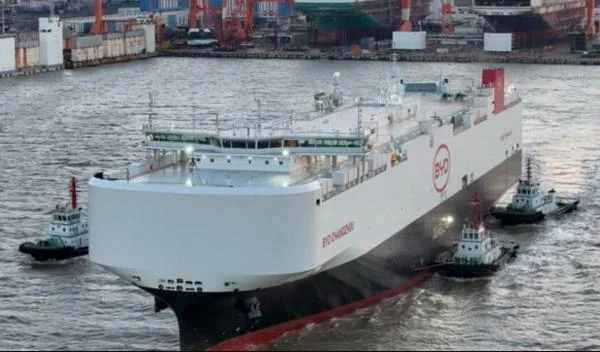
In a bold strategic move aimed at securing its position as a global leader in electric vehicle (EV) exports, BYD is reportedly finalizing an order for ten large-scale car carrier vessels. Each of these ships is designed with a capacity of 9,200 Car Equivalent Units (CEU), a massive expansion that signals the Chinese automotive giant’s intent to bypass reliance on third-party shipping logistics and exert greater control over its international supply chain. If these reports, initially circulated by maritime industry publications New Ships and the shipping platform Robin Assasfina, prove accurate, the company’s dedicated fleet will grow to 18 vessels, boasting a combined capacity exceeding 130,000 CEU.
The Strategic Shift Toward Vertical Integration
For years, the global automotive industry has been heavily reliant on specialized shipping companies to transport vehicles from manufacturing hubs to international markets. However, the post-pandemic era saw a massive surge in demand for shipping space, leading to a bottleneck that crippled many automakers. BYD, which has seen its international sales volume explode, appears to be applying its signature "vertical integration" philosophy to its logistics operations.
By owning and operating its own fleet of Pure Car and Truck Carriers (PCTC), BYD is effectively insulating itself from the volatility of the global shipping market. This move allows the company to dictate its own shipping schedules, reduce reliance on external freight contractors, and optimize costs as it scales up its presence in Europe, Southeast Asia, and South America.
Technical Specifications and Construction Timeline
According to industry reports, the ten new vessels are slated for construction at the China Merchants Industry facilities in the Jinling and Haimen shipyards. These facilities are recognized as some of the most capable in the world for producing specialized PCTC vessels.
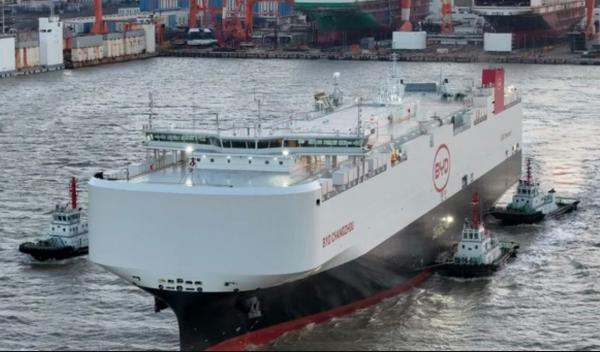
The construction timeline is projected to span from 2027 through 2029, with the ships being delivered in staggered intervals. This phased delivery is crucial for BYD, as it matches the company’s anticipated ramp-up in manufacturing capacity at its various overseas plants and the projected growth of its export destinations.
It is important to understand the metric of "Car Equivalent Unit" (CEU). While a ship is rated for 9,200 CEU, this does not represent a static number of physical vehicles. Because vehicles vary in size—from compact city cars to large electric SUVs and trucks—the actual load-bearing capacity will fluctuate based on the specific product mix being transported at any given time. Regardless of the variance, a 9,200 CEU vessel is considered a "mega-ship" in the automotive logistics sector, designed to maximize efficiency for high-volume trade routes.
Chronology of BYD’s Maritime Ambitions
The journey to becoming a maritime powerhouse did not happen overnight. BYD’s entry into the shipping sector has been a calculated progression:
- 2022–2023: As export numbers began to climb exponentially, BYD recognized that the global shortage of PCTC vessels was a primary risk to its international expansion plans.
- Early 2024: The company took delivery of its first purpose-built vessel, the BYD Explorer No. 1, marking the beginning of its proprietary shipping operations. This vessel, built by CIMC Raffles, served as a proof-of-concept for the company’s internal logistics model.
- Late 2024–2025: Throughout this period, industry insiders noted that BYD continued to seek additional capacity through long-term charters and new build orders.
- September 2026: The current reports regarding the order of ten additional 9,200 CEU vessels emerged, representing the largest single expansion of the company’s fleet to date.
Market Context and Economic Implications
The decision to expand its fleet comes at a time when BYD is facing increasing scrutiny and trade barriers in Western markets, particularly the European Union and North America. By controlling its own transport, BYD can potentially manage costs more effectively, allowing it to remain competitive even when faced with tariffs or other regulatory hurdles.
Furthermore, this expansion represents a significant shift in the competitive landscape of the shipping industry. Traditional shipping giants, which have historically enjoyed lucrative contracts with automotive manufacturers, may find themselves losing one of their largest potential clients.

From an economic perspective, this investment underscores the sheer scale of China’s EV push. By investing in maritime infrastructure, BYD is not just selling cars; it is building a permanent, structural link between its domestic factories and its global consumer base. This infrastructure is a long-term asset that will serve the company for decades, regardless of short-term fluctuations in the automotive market.
Silence from Corporate Headquarters
As of mid-September 2026, both BYD and the identified shipyards have maintained a strategic silence regarding the specific value of the contract. In the world of high-stakes shipbuilding, this is standard practice. Such contracts often involve complex financing structures, government-backed export credits, and multi-layered negotiations that are not typically disclosed in full detail during the initial phases of an announcement.
Analysts suggest that the total investment for ten such vessels would likely run into the billions of dollars, reflecting the high costs of specialized maritime engineering and the advanced environmental standards now required for international shipping, such as dual-fuel propulsion systems that utilize Liquefied Natural Gas (LNG) or other greener alternatives to reduce the carbon footprint of long-haul transport.
Broader Industry Impact
The implications of this move extend far beyond BYD. Other major automotive manufacturers, particularly those in the EV space, are likely watching these developments with great interest. If BYD’s model of owning its entire logistics chain proves successful—resulting in lower shipping costs and more reliable delivery schedules—it could trigger a trend where other major automakers attempt to secure their own shipping capacity.
However, the barrier to entry is high. Building and operating a fleet requires immense capital, specialized expertise in maritime logistics, and the ability to manage complex international port regulations. Most automakers lack the logistical infrastructure to replicate what BYD is doing, which may give the Chinese firm a distinct "first-mover" advantage in the global logistics theater.

Environmental Considerations
With the International Maritime Organization (IMO) tightening emissions standards, the design of these ten new ships is likely to be a major focus. Modern car carriers are increasingly moving away from heavy fuel oil toward more sustainable options. Given BYD’s focus on renewable energy and clean mobility, it is highly probable that these new vessels will feature advanced emission-reduction technologies, perhaps even incorporating wind-assisted propulsion or advanced hull designs to minimize drag and fuel consumption.
Conclusion
The reported order of ten 9,200 CEU vessels is a clear signal that BYD is preparing for a future where it is not just an automaker, but a global logistics entity. By taking control of its supply chain, the company is insulating itself against the uncertainties of the global shipping market and positioning itself for sustained growth. While the official confirmation of the contract is still pending, the implications of such a move are clear: BYD is betting big on its international future, and it is building the literal ships required to carry that future across the world’s oceans.
As the industry moves toward 2027 and the start of the delivery cycle, the global automotive and shipping sectors will be paying close attention. Whether this massive expansion will be met with further regulatory resistance or whether it will be viewed as a benchmark for industrial efficiency remains to be seen. What is certain, however, is that the maritime landscape for vehicle transport is changing, and BYD is at the helm of this transformation.