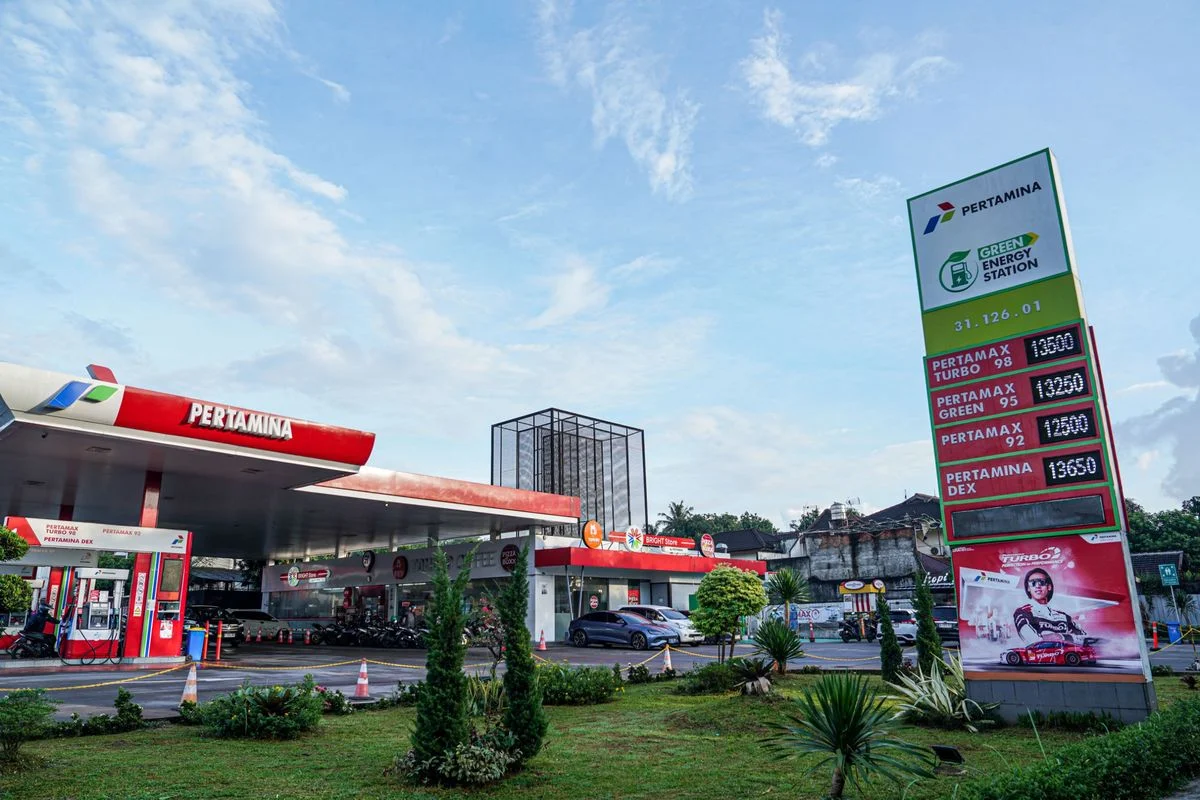
The fuel retail landscape in Indonesia remains characterized by stability as the second week of November 2026 commences. Major industry players, including state-owned Pertamina and international providers such as Shell, BP, and Vivo Energy, have opted to maintain their current pricing structures. This decision to hold prices steady reflects a broader trend of cautious market management amid global energy price fluctuations and domestic economic considerations. For motorists and businesses across the archipelago, the lack of adjustment means that the financial planning for transportation costs remains consistent with the levels observed throughout October 2026.
Current Market Stability: A Strategic Choice
As of November 9, 2026, the retail price for both subsidized and non-subsidized fuels has remained unchanged across all major service stations. Industry analysts suggest that this collective decision to refrain from price adjustments is a reflection of the current equilibrium between the fluctuating international crude oil benchmarks and the government’s efforts to maintain inflationary control.
Pertamina, as the primary provider, continues to offer its flagship products—Pertamax, Pertamax Green, and Pertamax Turbo—at their established October rates. Pertamax is currently priced at Rp15,950 per liter, while the higher-octane Pertamax Green and Pertamax Turbo are positioned at Rp19,150 and Rp19,600 per liter, respectively. On the commercial and logistics side, Dexlite and Pertamina Dex are retailing at Rp23,700 and Rp25,200 per liter, ensuring that the supply chain for heavy-duty vehicles remains predictable.
The Landscape of Subsidized Fuels
A critical component of Indonesia’s economic stability is the government-subsidized fuel segment. Pertalite, the most widely consumed gasoline in the country, remains firmly set at Rp10,000 per liter. Similarly, the price for Biosolar, essential for public transportation and small-scale agriculture, stays at Rp6,800 per liter.
The government’s decision to keep these prices constant is part of a broader fiscal strategy aimed at buffering the population against global energy volatility. By maintaining these price points, the state seeks to prevent sudden shocks to the consumer price index (CPI), which would otherwise impact the purchasing power of the middle and lower-income segments of the population.
Competitive Pricing Across Private Retailers
Private sector players have mirrored the strategy adopted by the state-owned entity. International fuel retailers operating in Indonesia—Shell, BP, and Vivo—have all opted for price parity with their previous monthly cycles.
Shell’s premium offerings, including its V-Power Diesel, remain at Rp25,420 per liter. This pricing consistency is mirrored by BP, which continues to sell its BP 92 at Rp16,130 per liter, BP Ultimate at Rp19,330 per liter, and BP Ultimate Diesel at Rp25,420 per liter. Vivo Energy, known for its competitive positioning, maintains its Revvo 92 at Rp16,130 per liter, Revvo 95 at Rp19,330 per liter, and Diesel Primus at Rp25,420 per liter.

The convergence of prices among these private entities suggests a highly competitive yet stable market environment. When companies maintain uniform pricing in a non-collusive manner, it often indicates that the wholesale costs and regulatory frameworks are influencing all participants equally, leaving limited room for aggressive price-cutting strategies at the retail pump level.
Historical Context and Regulatory Framework
To understand why the stability of fuel prices is significant, one must look at the historical volatility of the energy sector in Indonesia. Over the past decade, the country has navigated various shifts in global oil prices, which historically forced the government to adjust fuel subsidies frequently.
The current strategy of "price anchoring" reflects a shift in policy. By leveraging the financial strength of state-owned enterprises and coordinating with private sector stakeholders, the Ministry of Energy and Mineral Resources (ESDM) has aimed to foster a more predictable environment for consumers. The consistency observed in early November 2026 is the result of careful monitoring of the Mean of Platts Singapore (MOPS) and the Indonesian Crude Price (ICP). When these benchmarks remain within a manageable corridor, retailers are generally incentivized to keep prices stable to encourage consumer loyalty and operational predictability.
Economic Implications for Consumers and Businesses
The decision to hold fuel prices steady has immediate implications for the domestic economy:
- Inflationary Control: Transportation costs are a primary driver of inflation. By keeping fuel prices stable, the government effectively manages the cost of logistics and food distribution. This stability prevents the "ripple effect" where an increase in fuel prices leads to an immediate spike in the prices of basic commodities.
- Predictability for Logistics: For businesses, particularly in the e-commerce and manufacturing sectors, fuel price stability is a critical factor in budget forecasting. Logistics companies, which operate on thin margins, rely on stable fuel costs to maintain competitive delivery rates.
- Consumer Purchasing Power: With fuel costs remaining constant, households can better allocate their monthly income toward other essential goods and services, supporting aggregate demand in the economy.
Expert Perspective and Future Outlook
While current prices are stable, experts caution that the energy market remains susceptible to geopolitical tensions. Conflict in oil-producing regions, shifts in production quotas by OPEC+, and currency fluctuations (specifically the USD to IDR exchange rate) remain the "wildcards" that could force an adjustment in the coming months.
"The current stability is a testament to the effectiveness of the current pricing formula, but it is not a guarantee of future immunity to global trends," noted an energy policy analyst. "The government is essentially playing a balancing act between fiscal health and public welfare. As long as the global crude oil market does not experience a significant supply-side shock, we can expect this trend of stability to continue for the near term."
Detailed Pricing Overview (November 2026)
For the benefit of commuters and fleet managers, the following table summarizes the pricing landscape as of November 9, 2026:
Pertamina
- Pertalite: Rp10,000/liter
- Biosolar: Rp6,800/liter
- Pertamax: Rp15,950/liter
- Pertamax Green: Rp19,150/liter
- Pertamax Turbo: Rp19,600/liter
- Dexlite: Rp23,700/liter
- Pertamina Dex: Rp25,200/liter
Shell
- Shell V-Power Diesel: Rp25,420/liter
BP
- BP 92: Rp16,130/liter
- BP Ultimate: Rp19,330/liter
- BP Ultimate Diesel: Rp25,420/liter
Vivo
- Revvo 92: Rp16,130/liter
- Revvo 95: Rp19,330/liter
- Diesel Primus: Rp25,420/liter
Conclusion
The fuel market in Indonesia enters the mid-November period in a state of tranquil equilibrium. Whether this stability will persist through the end of the year remains a subject of ongoing scrutiny by both policymakers and market participants. For the average citizen, the status quo provides a welcome relief, allowing for consistent household budgeting and stable economic activity. However, the reliance on imported crude oil and the influence of international market forces mean that constant monitoring of global energy developments remains essential. As the industry moves forward, the focus remains on sustaining this balance, ensuring that the energy needs of the nation are met without compromising the broader economic stability that has been established throughout 2026.