The European aviation sector is grappling with a sophisticated and unsettling wave of security threats that has disrupted flight operations across the continent twice in less than a week. On Thursday, November 5, at least 14 commercial flights were targeted by a series of bomb threats, triggering emergency protocols, the diversion of aircraft, and the scrambling of fighter jets in various nations. This incident follows a similar, albeit slightly smaller, wave of threats that occurred on Tuesday, November 3, marking an alarming escalation in what security analysts are beginning to describe as a coordinated campaign of "hybrid warfare."
While no official state actor has been definitively linked to the malicious communications, the timing of these events coincides with heightened tensions across the continent. European intelligence officials have recently raised alarms regarding an increase in sabotage operations, physical attacks, and cyber-interference, frequently pointing toward the involvement of actors linked to Moscow or Tehran—claims both nations have consistently denied.
A Chronology of the Thursday Chaos
The disruption began in the early hours of Thursday, as air traffic control centers across Europe started receiving alerts regarding potential explosive devices on board several passenger jets. By midday, the situation had deteriorated into a logistical crisis for air traffic controllers and national defense forces.
One of the most notable incidents involved Aer Lingus flight EI402, traveling from Dublin to Rome. As the aircraft approached French airspace, it was identified as a target. Acting on standard security protocols, French authorities authorized the diversion of the Airbus A320, which landed safely at Evreux airbase, approximately 100 kilometers west of Paris. Data from flight tracking services like Flightradar24 captured the aircraft entering a holding pattern before diverting, while the French Air Force scrambled fighter jets to escort the plane to the ground.
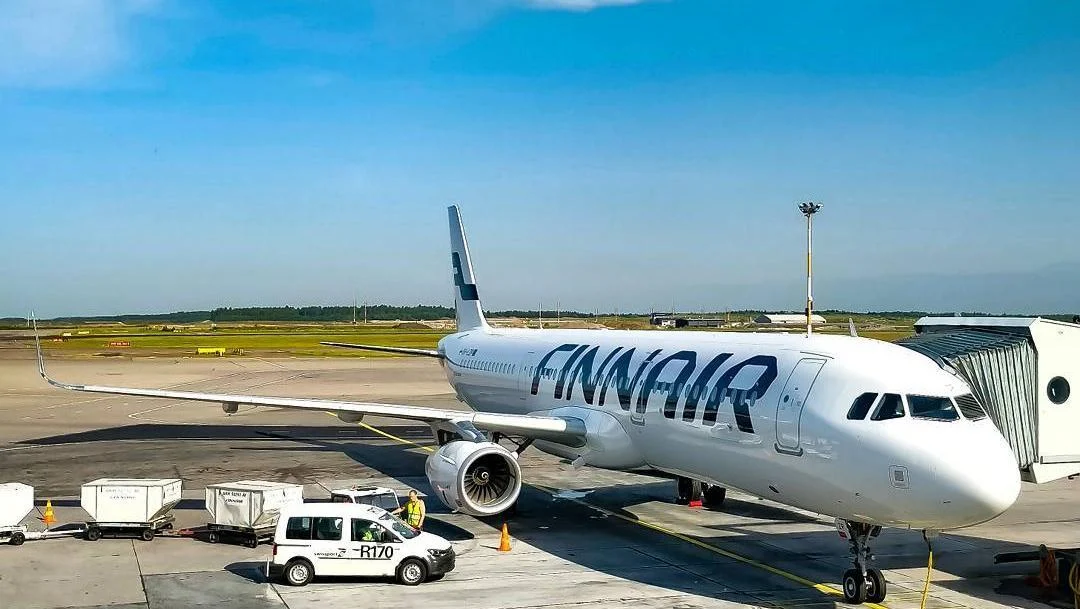
Concurrently, other carriers were reporting similar issues. Finnair confirmed that one of its flights from Helsinki was forced to land in Vienna following a threat, while another Finnair flight destined for Rome required a fighter jet escort before undergoing a rigorous post-flight inspection by bomb disposal experts upon arrival.
In Poland, a LOT Polish Airlines flight from Warsaw was diverted to Brussels, where it landed without incident. Meanwhile, the security situation in Bulgaria became particularly strained; the Bulgarian Interior Ministry confirmed that two Ryanair flights—originating from Copenhagen and Madrid—were forced to make emergency landings at Sofia Airport. A third aircraft, arriving from London, was diverted to Plovdiv.
Czech authorities faced a complex situation as well, with four aircraft inbound to Prague receiving simultaneous bomb threats. Despite the low credibility initially assigned to these specific alerts, the Czech police activated full security protocols. After the aircraft landed safely, specialized teams performed exhaustive sweeps of the planes and their cargo, ultimately confirming that all threats were hoaxes. Similar incidents were reported in Romania, where a Wizz Air flight from Milan to Bucharest was forced to land, necessitating the emergency evacuation of nearly 200 passengers, and in Italy, where two flights destined for Milan Malpensa Airport were subjected to emergency security procedures.
The Escalation: A Pattern of Disruption
The events of Thursday were not isolated. They represent the second major disruption to European air traffic in just 72 hours. On Tuesday, November 3, a similar series of threats targeted at least 10 flights, along with at least one cruise ship, causing widespread logistical delays.
The Tuesday wave of threats saw significant impact on major carriers, particularly Ryanair, which had four of its flights targeted. Poland’s airport authorities were forced to temporarily suspend operations at Warsaw, while Italian air defense forces were placed on high alert. Prior to that, on Monday, November 2, a Wizz Air flight from London to Sofia had to be diverted to Budapest, where Hungarian Gripen fighter jets were scrambled to provide an escort—a stark demonstration of how seriously authorities must treat even unverified threats.
Analyzing the "Hybrid Warfare" Dimension
The recurrence of these threats has forced European security agencies to look beyond individual acts of mischief and consider the possibility of a broader, orchestrated strategy. In the current geopolitical climate, "hybrid warfare" has become a common term among European officials to describe non-kinetic attacks designed to destabilize society, erode public trust, and strain national resources.
The cost of these disruptions is substantial. Beyond the immediate fuel and operational costs incurred by airlines, the diversion of police, military, and emergency services to handle false alarms creates a significant drain on national security budgets. Furthermore, the psychological impact on passengers and the systemic pressure placed on air traffic control systems provide a low-cost, high-impact method for hostile actors to project power or incite fear.
"We are seeing a clear pattern of harassment," said a security analyst familiar with regional transport safety. "Whether or not these threats originate from a single source, the goal is clearly to test the response times of various European NATO members and to force a high-alert posture that is difficult to sustain over long periods."
Official Responses and Operational Challenges
The official response has been one of extreme caution. While authorities in countries like the Czech Republic publicly noted that the "credibility" of the threats was low, they emphasized that the policy remains "zero-tolerance."
"We do not underestimate any such threat," the Czech police stated via a press release on the social platform X. "All necessary security measures have been activated with minimal impact on passengers and airport operations."
However, the reality of the situation is that "minimal impact" is increasingly difficult to achieve. Each diversion involves complex coordination between civilian air traffic control, national militaries, and ground-based emergency services. When multiple aircraft are threatened simultaneously, the strain on the system becomes exponential.
The European Union Aviation Safety Agency (EASA) and national civil aviation authorities are currently reviewing communication protocols to determine how these threats are being disseminated. There is growing concern that the use of encrypted messaging services or automated systems may be facilitating these threats, making it difficult for law enforcement to track the perpetrators.
The Economic and Safety Implications
For the aviation industry, already operating on thin margins and recovering from years of instability, these threats represent a significant operational headache. The mandatory inspections required after a bomb threat can keep an aircraft on the ground for hours, leading to cascading delays across entire flight networks. For passengers, the experience is one of uncertainty and anxiety, which can lead to a long-term erosion of confidence in air travel.
Looking ahead, the primary challenge for European authorities is finding a balance between maintaining the highest levels of safety and preventing the disruption of the continent’s vital transport corridors. If these threats continue at their current frequency, airlines may be forced to implement more aggressive and potentially invasive security measures, further complicating the travel experience.
As of this writing, there have been no confirmed injuries related to the threats. However, the persistence of these incidents suggests that European skies will remain a theater of psychological and logistical confrontation for the foreseeable future. The international intelligence community is expected to increase its cooperation in the coming weeks to identify the source of these threats, with a particular focus on whether they are the result of a coordinated campaign by foreign intelligence services intended to test the resilience of European infrastructure.
Until the perpetrators are identified and neutralized, airports and airlines across Europe remain on high alert, prepared to scramble fighter jets at a moment’s notice to ensure that the skies remain secure, even as the shadow of these "hollow" threats looms large over the continent.