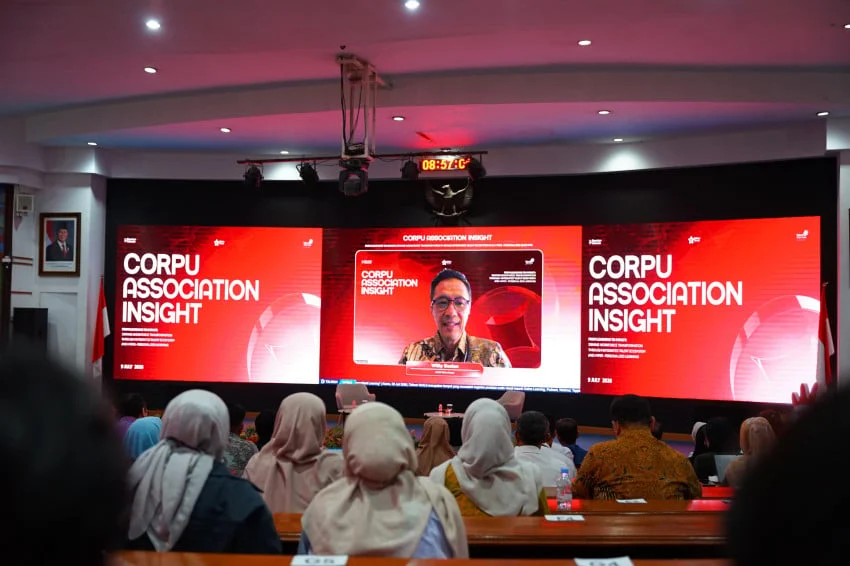
JAKARTA – In an era defined by the relentless acceleration of digital transformation and the burgeoning influence of Artificial Intelligence (AI), organizations are facing an unprecedented imperative to cultivate human resource development strategies that can swiftly adapt to evolving business demands. PT Telkom Indonesia (Persero) Tbk (Telkom), through its dedicated Telkom Corporate University (Telkom CorpU), proactively addressed this critical challenge by hosting the CorpU Association Insight forum. This significant event, held virtually and physically at the Telkom Corporate University campus in Bandung on Thursday, July 9th, convened under the theme "From Learning to Impact: Driving Workforce Transformation through Integrated Talent Ecosystem and Hyper-Personalized Learning."
The forum served as a vital nexus for collaboration, bringing together a diverse spectrum of professionals including HR practitioners, leaders of Corporate Universities, and talent development managers from a multitude of organizations. The primary objective was to foster an environment for the exchange of insights, the sharing of best practices, and the exploration of innovative approaches to building integrated talent ecosystems. Telkom CorpU, in its role as host and facilitator, underscored its commitment to promoting human resource development that transcends mere learning, emphasizing the crucial need for tangible impact on talent capabilities and overall organizational performance.
Willy Saelan, Director of Human Capital Management at Telkom, delivered a pivotal keynote speech, highlighting the indispensable link between business transformation and a talent pool equipped to navigate the complexities of technological advancements and shifting competency requirements. His address set the stage for the day’s discussions, framing the strategic importance of a forward-thinking approach to talent management.
The Imperative for Agile Talent in a Digital Age
"In the era of digital transformation and AI, organizations require talent that is agile and ready to embrace change," Saelan stated during his virtual address. "Therefore, learning, talent, and career development must be integrated within a single ecosystem to accelerate capability development, enhance talent readiness, and deliver tangible impacts on the achievement of business strategies." This sentiment resonated throughout the forum, emphasizing a paradigm shift from siloed training initiatives to a holistic, interconnected approach to human capital development.
The backdrop for this discussion is a global economic landscape increasingly shaped by technological disruption. A recent report by McKinsey & Company, published in late 2023, indicated that by 2030, as many as 30% of the global workforce may need to switch occupational categories, and up to 60% may require retraining of at least 10% of their skills. This stark statistic underscores the urgency of initiatives like the CorpU Association Insight forum, which aim to equip organizations with the frameworks and strategies to navigate this impending skills revolution.
M. Subhan Iswahyudi, Senior General Manager of Telkom Corporate University, further elaborated on the evolving role of Corporate Universities. He asserted that these institutions are no longer confined to traditional training functions but have ascended to a more strategic position in supporting organizational transformation. "Corporate Universities are now at the forefront of driving change, acting as catalysts for innovation and development within their respective organizations," Iswahyudi remarked.
Genesis and Evolution of the CorpU Association Insight Forum
The CorpU Association Insight forum is not a nascent initiative but rather a testament to Telkom CorpU’s ongoing commitment to fostering a community of practice within the talent development landscape. The association itself likely evolved from a recognized need for a dedicated platform where organizations could collectively address shared challenges and collaboratively devise solutions. While specific founding dates and initial membership figures are not publicly detailed in the provided information, the recurring nature of such forums suggests a sustained effort to build a robust network.
The July 9th event can be viewed as a significant milestone within this ongoing dialogue. It built upon previous discussions and insights, focusing on the contemporary challenges posed by rapid technological advancements. The "From Learning to Impact" theme signifies a maturation of the discourse, moving beyond simply acquiring knowledge to demonstrating its practical application and measurable outcomes.
The choice of "Integrated Talent Ecosystem" and "Hyper-Personalized Learning" as core components of the theme reflects current trends in HR and learning and development. An integrated talent ecosystem suggests a seamless flow between recruitment, development, performance management, and career progression, ensuring that all aspects of the employee lifecycle are aligned and mutually reinforcing. Hyper-personalized learning, on the other hand, acknowledges the diverse learning styles, paces, and needs of individuals, advocating for tailored learning experiences that maximize engagement and effectiveness. This approach moves away from a one-size-fits-all model towards bespoke development pathways.
Key Pillars of Workforce Transformation
The forum delved into several critical areas essential for driving workforce transformation:
1. The Integrated Talent Ecosystem
Participants explored the architecture and implementation of an integrated talent ecosystem. This involves breaking down traditional departmental silos and creating a cohesive system where learning and development are intrinsically linked to talent acquisition, performance management, succession planning, and internal mobility. The goal is to create a dynamic environment where employees can continuously grow, develop new skills, and seamlessly transition into roles that align with their capabilities and organizational needs.
This integrated approach is crucial for retaining top talent. A study by Deloitte found that organizations with a strong talent ecosystem are 2.3 times more likely to have high employee engagement and 1.5 times more likely to experience high employee retention. By providing clear pathways for growth and development, companies can foster a sense of loyalty and commitment among their workforce.
2. Hyper-Personalized Learning Strategies
The concept of hyper-personalized learning was a cornerstone of the discussions. This involves leveraging data analytics, AI, and adaptive learning technologies to create customized learning experiences for each individual. Instead of generic training modules, employees receive content, resources, and activities tailored to their specific roles, skill gaps, career aspirations, and preferred learning styles.
This approach is particularly relevant in the context of AI. AI-powered learning platforms can analyze an individual’s performance, identify areas for improvement, and recommend relevant learning resources in real-time. This not only enhances the efficiency of learning but also increases learner engagement and knowledge retention. For instance, platforms like Coursera for Business and LinkedIn Learning are increasingly incorporating AI to offer personalized course recommendations and learning paths.
3. Measuring Learning Impact
A significant portion of the forum was dedicated to strategies for measuring the impact of learning initiatives. This moves beyond traditional metrics like course completion rates to focus on demonstrable outcomes such as improved performance, enhanced productivity, successful application of new skills in the workplace, and ultimately, a positive contribution to business objectives.
To achieve this, organizations are increasingly adopting frameworks like the Kirkpatrick Model of Training Evaluation, which progresses from reaction and learning to behavior and results. Furthermore, the use of learning analytics dashboards allows for the tracking of key performance indicators (KPIs) related to skill development and its correlation with business outcomes. This data-driven approach provides valuable feedback for refining learning strategies and demonstrating the ROI of talent development investments.
Broader Implications and Future Outlook
The insights shared at the CorpU Association Insight forum carry significant implications for the broader Indonesian business landscape and beyond. As organizations increasingly recognize the strategic imperative of human capital in the digital age, the principles discussed – integrated talent ecosystems and hyper-personalized learning – are likely to become standard practice.
The success of initiatives like this hinges on strong leadership commitment and a willingness to invest in the necessary technology and infrastructure. Telkom, as a state-owned telecommunications giant, is well-positioned to champion these transformative approaches, potentially setting a benchmark for other organizations in Indonesia.
Looking ahead, the continuous evolution of AI and other emerging technologies will necessitate ongoing adaptation and innovation in talent development. Corporate Universities and HR departments will need to remain agile, continuously learning and refining their strategies to ensure their workforces are future-ready. The CorpU Association Insight forum serves as a crucial platform for this ongoing dialogue, enabling organizations to collectively navigate the complexities of workforce transformation and harness the full potential of their human capital. The emphasis on tangible "impact" signifies a mature understanding that learning is not an end in itself, but a powerful engine for driving business success and organizational resilience in an ever-changing world.