The global entertainment landscape was recently captivated by a monumental event as Taylor Swift dominated both the historic Madison Square Garden and the entirety of digital social media feeds following her wedding to Travis Kelce. The ceremony, a grand affair attended by 1,000 distinguished guests over the July 4th weekend, has set a new precedent for celebrity nuptials. While the celebrations continued within the iconic arena, Swift’s representatives issued a formal press release on July 3, confirming a major fashion milestone: both the bride and groom were adorned in custom Christian Dior Haute Couture for the occasion. This announcement marks a significant pivot in the fashion industry, as the garments were designed by Jonathan Anderson, the Creative Director for Dior’s Women’s, Men’s, and Haute Couture collections, in close collaboration with the couple. Notably, this represents the designer’s inaugural foray into creating a couture wedding gown for a global celebrity of Swift’s stature.
The Dior Collaboration and the Architecture of the Gown
The partnership between Taylor Swift and the house of Dior, under the creative guidance of Jonathan Anderson, signals a blending of contemporary pop culture with traditional Parisian craftsmanship. According to the official statement, the design process was an intimate collaboration, ensuring that the attire reflected the personal aesthetics of both Swift and Kelce while maintaining the rigorous standards of Haute Couture. Though official photographs and sketches have been closely guarded—with Dior confirming that Swift herself will be the first to unveil the visual documentation of the dress—eyewitness accounts from the 1,000-person guest list have provided tantalizing details.
The gown is described as a sophisticated off-the-shoulder silhouette featuring an extraordinary eight-meter train, a length that emphasizes the theatricality of the Madison Square Garden setting. Complementing the Dior couture, the couple opted for custom footwear by legendary cordwainer Christian Louboutin. Swift further elevated her bridal ensemble with high-jewelry pieces from Cartier, cementing the event as a masterclass in luxury branding and personal style. As of mid-July, the anticipation for the first official image remains at a fever pitch, with fashion analysts predicting the "Swift Effect" will trigger a resurgence in demand for long-train, off-the-shoulder bridal silhouettes.
A Chronology of Pop Star Bridal Fashion: Setting the Stage
Taylor Swift’s choice of Dior follows a long tradition of pop icons using their wedding day as a platform for high-fashion statements. To understand the significance of the Swift-Dior alliance, one must look back at the history of pop star weddings, which have frequently redefined bridal trends for the masses. From the punk-influenced designs of the 1980s to the minimalist "bridal mini" trends of the 2020s, these garments serve as cultural artifacts.
The recent timeline of pop star weddings has been particularly active. In 2026, Dua Lipa made headlines with her marriage to Callum Turner, wearing a custom Chanel Haute Couture gown designed by Matthieu Blazy. That specific garment required over 1,100 hours of intricate embroidery and featured a dramatic feathered train. Similarly, in 2025, Selena Gomez’s multi-look wedding to Benny Blanco, designed by Ralph Lauren, showcased the versatility of American luxury. These events set the stage for Swift’s 2026 nuptials, illustrating a trend where pop stars are no longer just wearing dresses, but are commissioning works of art that require thousands of hours of labor.
The 14 Most Iconic Pop Star Wedding Dresses of All Time
To provide context for the current Dior phenomenon, we examine the fourteen most influential bridal looks in pop music history, each of which broke the mold in its respective era.
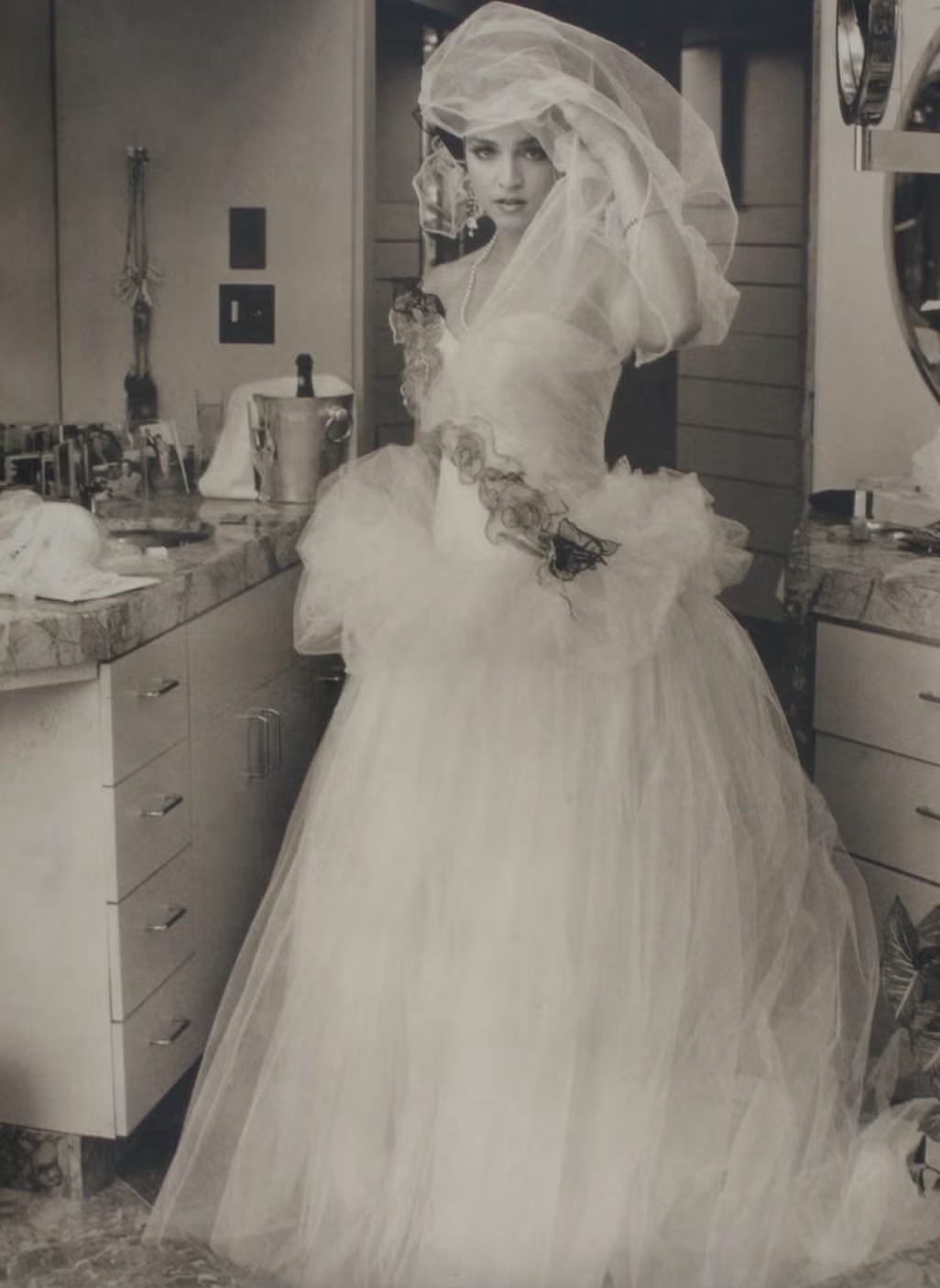
1. Madonna in Marlene Stewart (1985)
For her wedding to actor Sean Penn, Madonna eschewed traditional bridal houses in favor of Marlene Stewart. The look was quintessentially "80s Madonna," featuring a floral belt detail and a voluminous tulle skirt. It reflected her "Like a Virgin" era aesthetic—blending religious iconography with rebellious pop sensibilities.
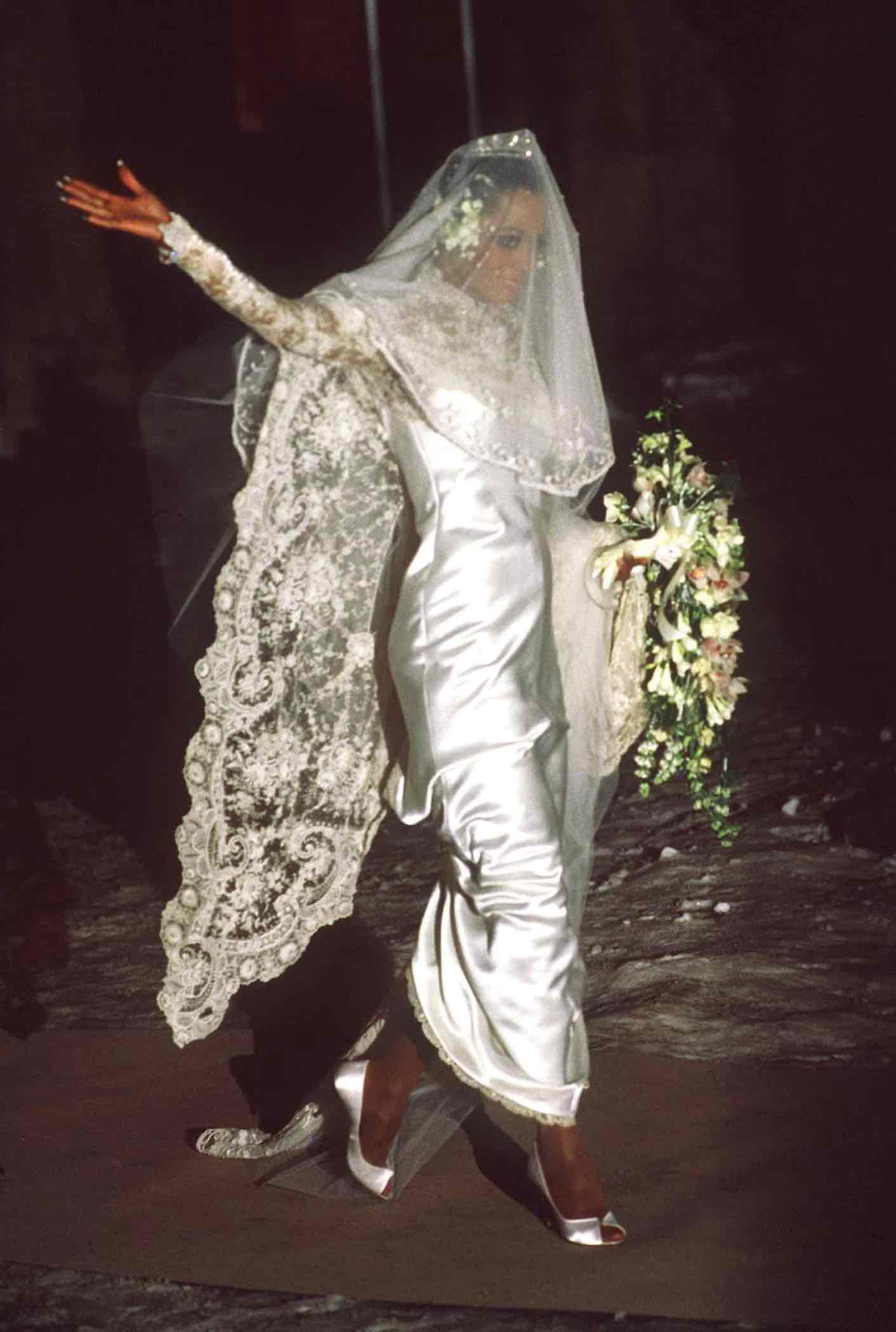
2. Diana Ross (1986)
The Motown legend’s wedding attire remains a pinnacle of glamour. Her choice emphasized dramatic silhouettes and luxury fabrics, influencing a generation of R&B divas to embrace maximalism on their wedding days.
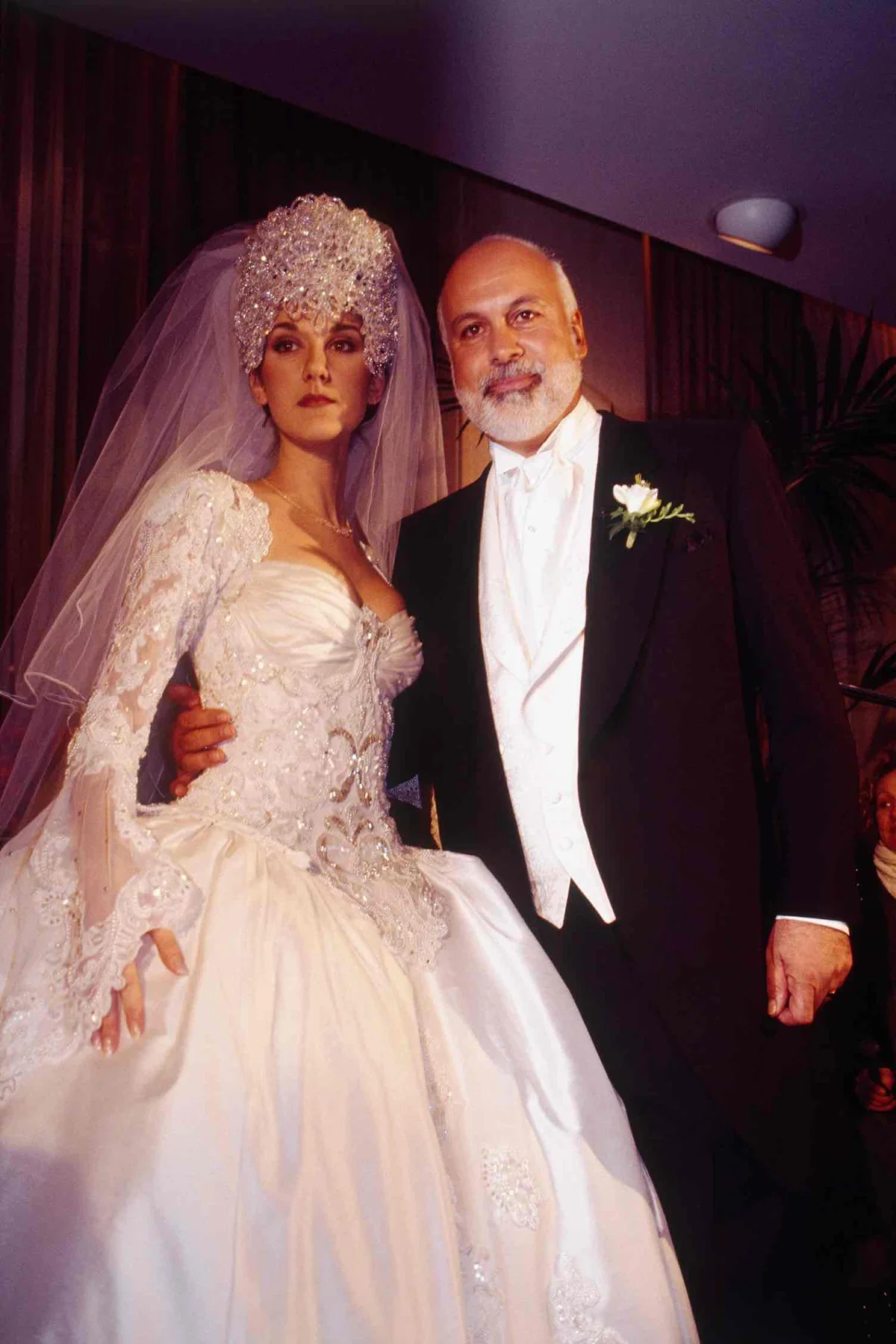
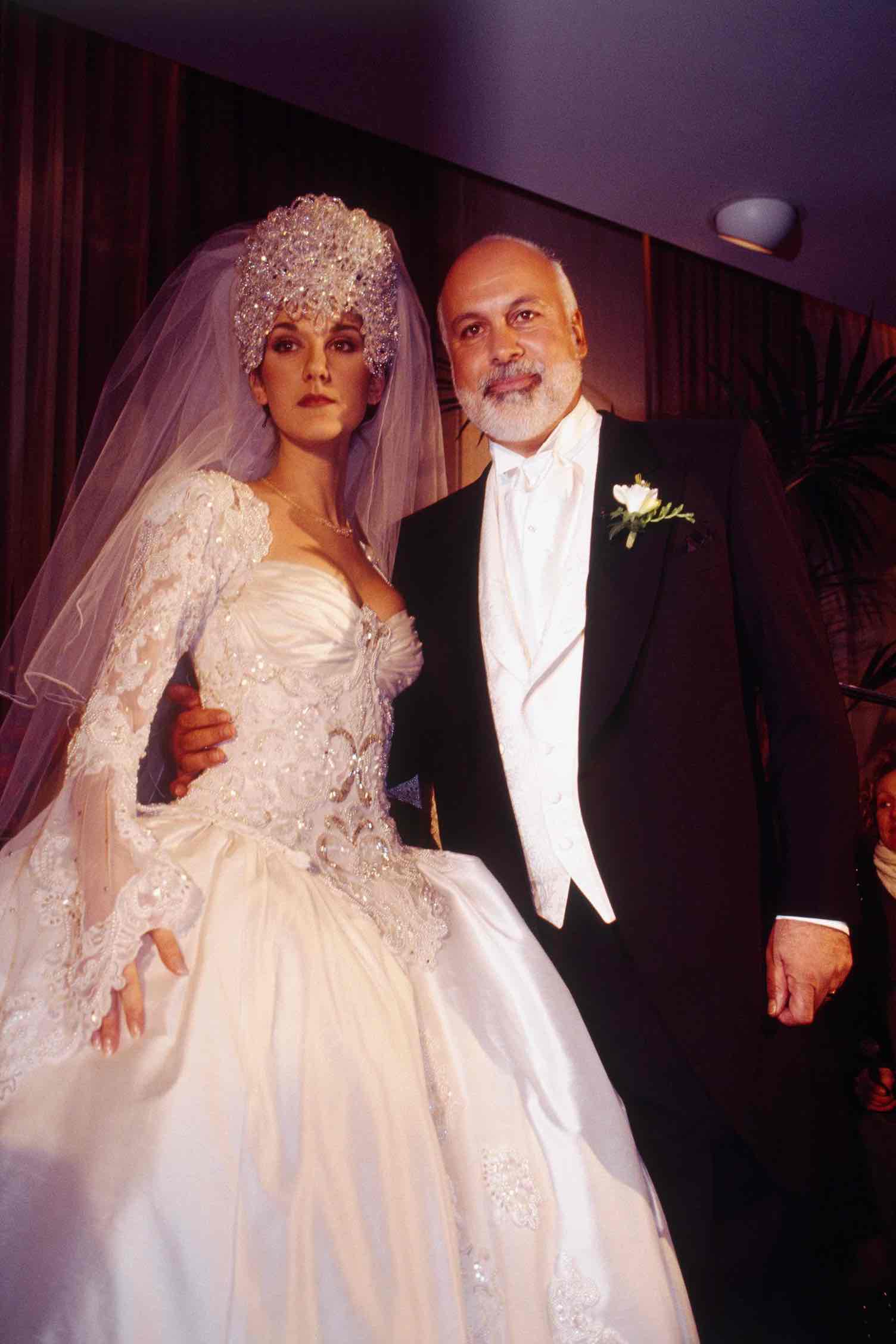
3. Céline Dion in Mirella and Steve Gentile (1994)
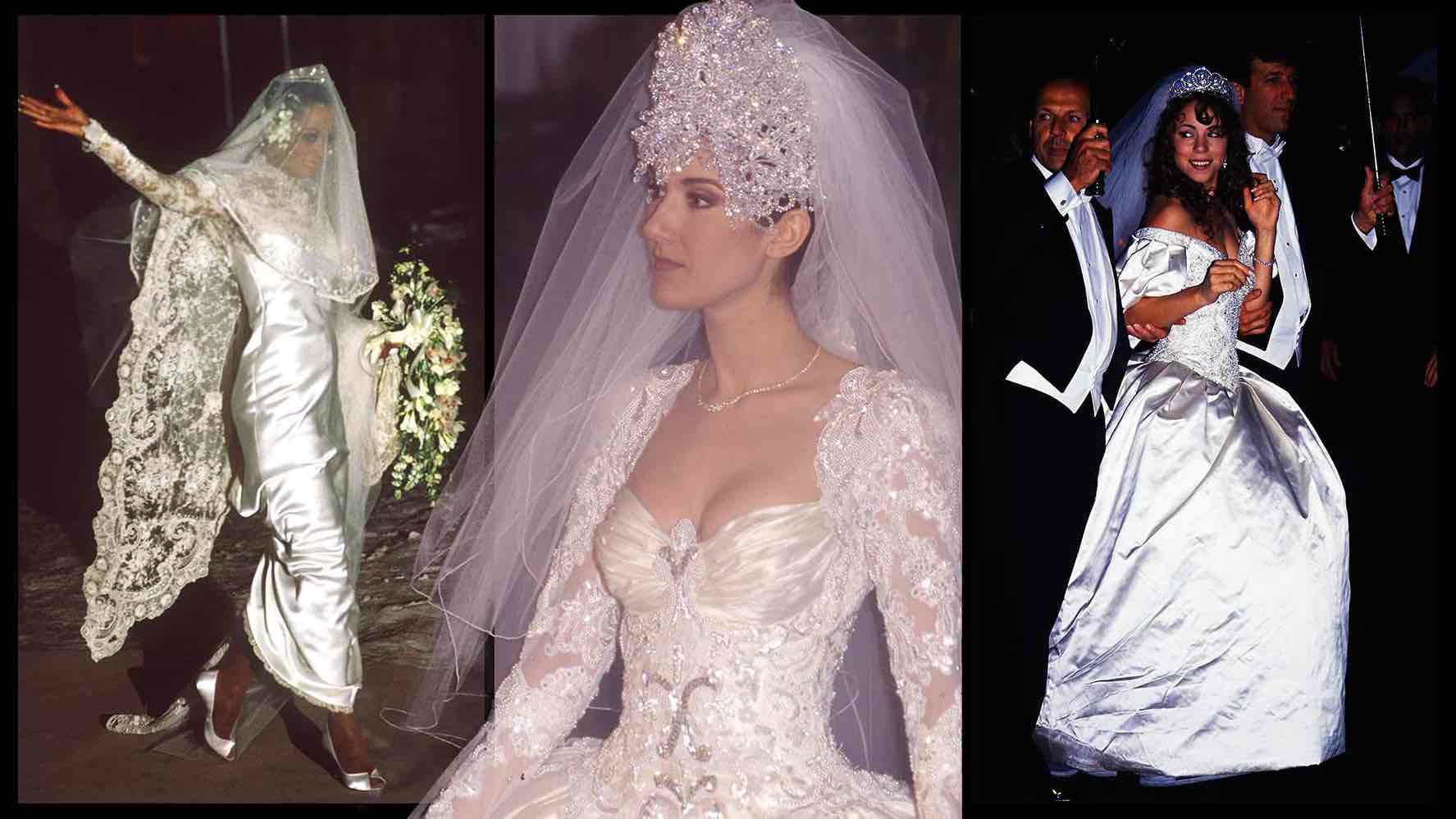
Céline Dion’s marriage to René Angélil was a spectacle of French-Canadian royalty. Her silk and lace gown, covered in hand-sewn sequins, took over 1,000 hours to complete. However, it was her seven-pound Swarovski crystal headpiece and veil that became the most talked-about accessory in bridal history.
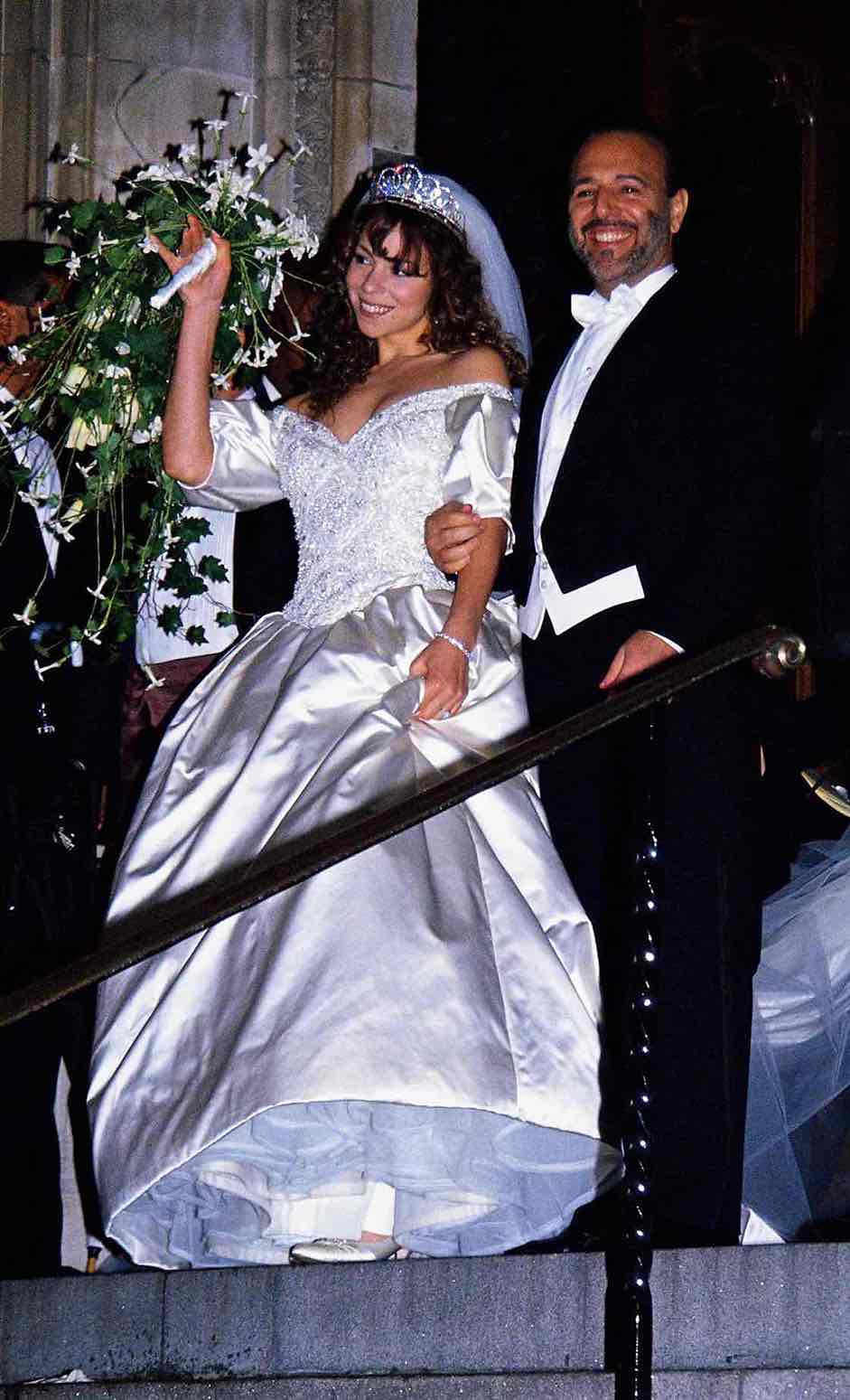
4. Mariah Carey in Vera Wang (1993)
For her nuptials with Tommy Mottola, Mariah Carey sought inspiration from royalty. Working with Vera Wang, she created a gown inspired by Princess Diana, featuring a 27-foot train. This dress helped solidify Vera Wang as the premier name in celebrity bridal wear.
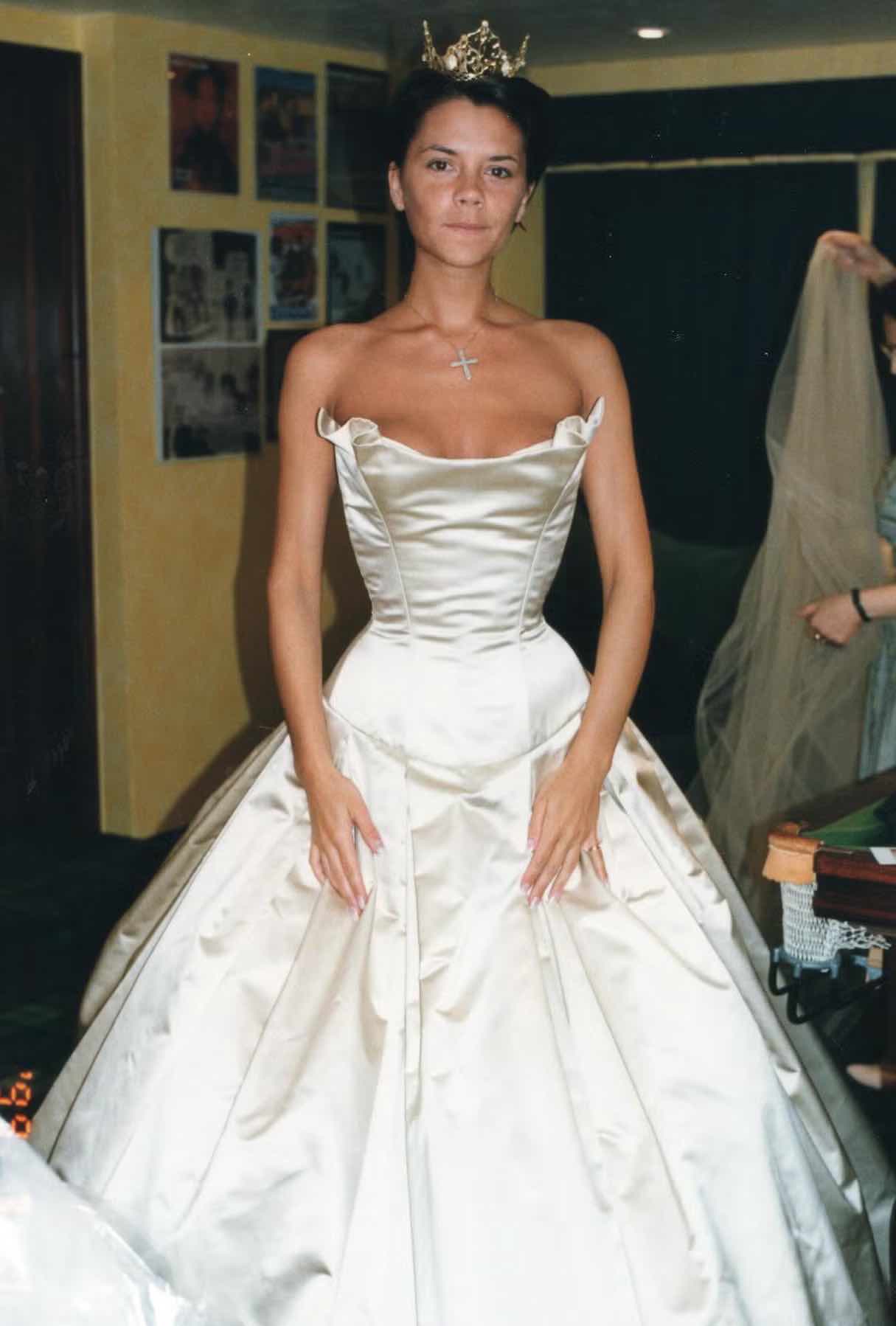
5. Victoria Beckham in Vera Wang (1999)
Before she was a world-renowned designer herself, the former Spice Girl chose a custom champagne-colored Vera Wang gown for her wedding to David Beckham. The structured corset and crown became iconic symbols of the "Posh and Becks" era.
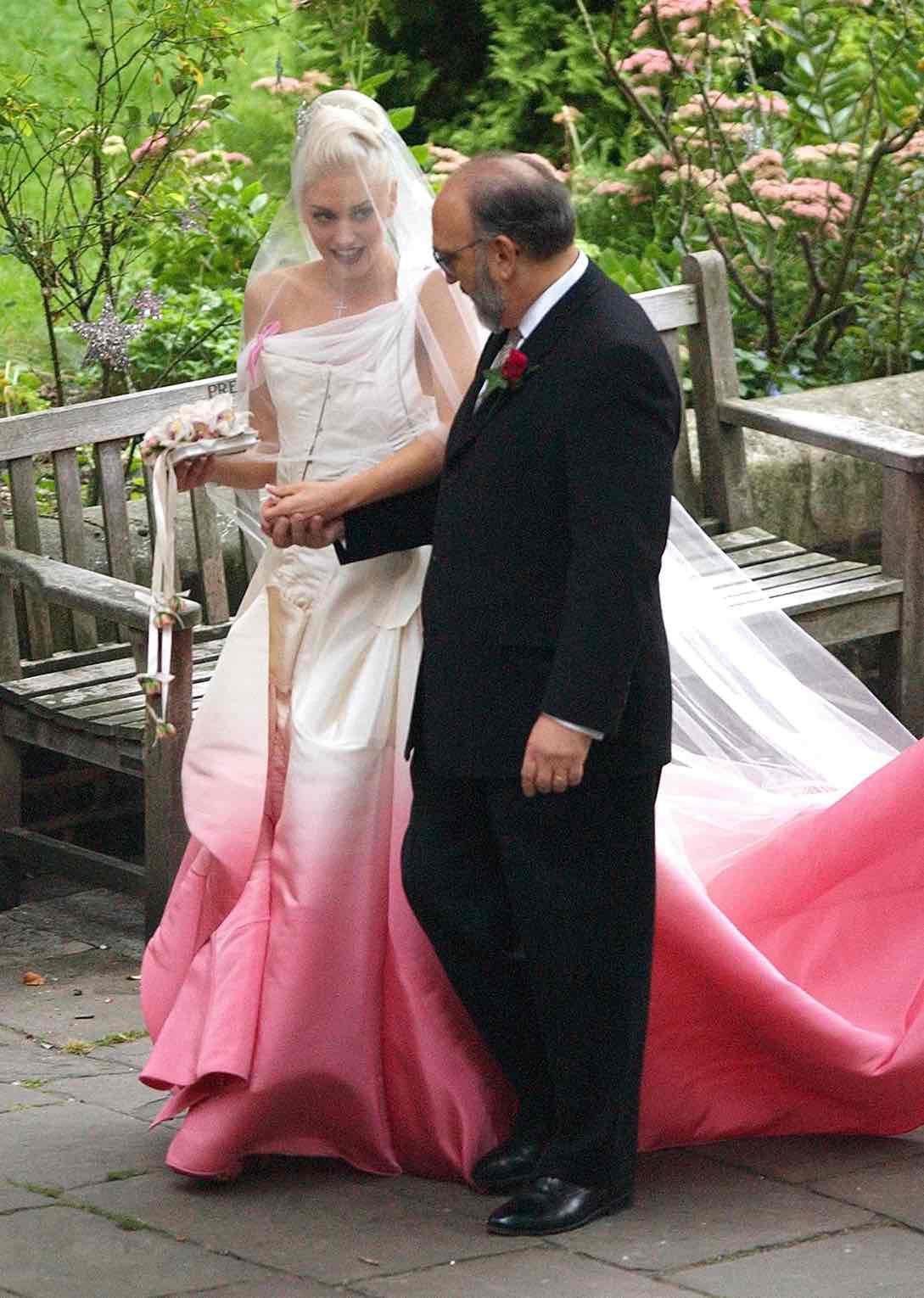
6. Gwen Stefani in John Galliano for Christian Dior (2002)
Gwen Stefani’s pink dip-dyed silk gown is perhaps one of the most famous dresses in fashion history. Designed by John Galliano, it perfectly married Stefani’s punk-rock roots with high-fashion elegance. The gown was later donated to the Victoria and Albert Museum.
7. Britney Spears in Monique Lhuillier (2004)
For her wedding to Kevin Federline, Spears collaborated with Monique Lhuillier on a series of looks. While the main gown was classic, Spears famously repurposed her after-party mini-dress years later to celebrate her divorce, showing the emotional and cultural evolution of a single garment.
8. Ciara in Roberto Cavalli (2016)
Designed by Peter Dundas, Ciara’s custom Roberto Cavalli gown for her wedding to Russell Wilson featured intricate lace and long sleeves. The standout feature was a personalized train embroidered with the couple’s monogram, a detail now frequently requested by modern brides.
9. Beyoncé in Galia Lahav (2018)
While her original wedding dress was designed by her mother, Tina Knowles, Beyoncé chose a Galia Lahav "Thelma" gown for her 2018 vow renewal. Inspired by Queen Victoria, the dress featured Swarovski crystals and pearls, which Beyoncé famously styled with futuristic white sunglasses.
10. Lily Allen in Dior (2020)
In a departure from the "big white wedding," Lily Allen opted for a 1960s-style Dior mini-dress for her Las Vegas ceremony with David Harbour. The double-breasted dress with black buttons proved that bridal elegance could be found in mid-century simplicity.
11. Ariana Grande in Vera Wang (2021)
Following a promise made at the Met Gala years prior, Vera Wang designed a custom silk charmuse empire-waist column gown for Grande. The look was finished with a shoulder-length veil topped with a signature satin bow.
12. Charli XCX in Vivienne Westwood (2025)
The "Brat" singer brought avant-garde British fashion to the altar in a custom Vivienne Westwood mini-dress. Her choice of an off-the-shoulder silhouette paired with oversized sunglasses and a simple veil has become a blueprint for the "cool-girl" bridal aesthetic of the mid-2020s.
13. Selena Gomez in Ralph Lauren (2025)
Gomez’s collaboration with Ralph Lauren resulted in multiple bridal looks that celebrated Americana luxury. Each outfit focused on clean lines and impeccable tailoring, highlighting the shift toward timelessness in celebrity fashion.
14. Dua Lipa in Chanel (2026)
As previously noted, Dua Lipa’s Chanel gown represents the peak of modern Haute Couture. The 1,100 hours of embroidery and the use of dramatic textures reflected her status as a global fashion chameleon.
Official Responses and Industry Implications
The fashion industry has reacted with overwhelming positivity to the news of Swift’s Dior ensemble. Analysts suggest that the choice of Jonathan Anderson—a designer known for his intellectual and often surrealist approach to fashion—indicates that Swift is moving into a more "avant-garde" era of her public persona. A spokesperson for Dior noted that the collaboration was "seamless," praising Swift’s "keen eye for detail and respect for the heritage of the atelier."
Furthermore, the scale of the Madison Square Garden event has implications for the wedding industry at large. By hosting 1,000 guests in a public arena, Swift and Kelce have effectively blurred the lines between a private ceremony and a stadium-level performance. This "eventization" of weddings is expected to drive a trend for larger, more theatrical venues among the ultra-wealthy.
Conclusion: The Legacy of the Eight-Meter Train
As the world awaits the first glimpse of Taylor Swift in her Dior Haute Couture, the narrative is already clear. This wedding is more than a personal milestone; it is a significant cultural event that bridges the gap between the music industry and the highest echelons of Parisian fashion. From Madonna’s tulle to Swift’s eight-meter train, the evolution of the pop star wedding dress reflects the changing nature of celebrity itself—moving from simple public declarations of love to meticulously curated, multi-million dollar fashion moments that influence global markets for years to come. Swift’s choice to trust Jonathan Anderson with her first couture bridal look ensures that her wedding attire will be analyzed and admired by fashion historians for decades.