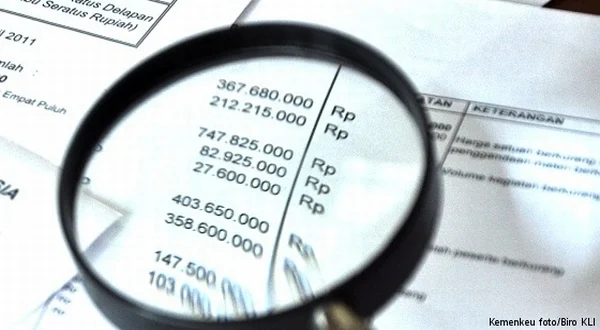
The Government of the Republic of Indonesia officially presented the Bill on the Accountability for the Implementation of the 2013 State Budget (RUU P2 APBN) during a plenary session of the House of Representatives (DPR RI) on Tuesday, June 24, 2014. Minister of Finance Chatib Basri, representing the administration of President Susilo Bambang Yudhoyono, delivered the report to the legislative body, marking a critical milestone in the nation’s fiscal transparency and governance cycle. The report highlighted that the Supreme Audit Agency (BPK) had issued a "Qualified Opinion" (Wajar Dengan Pengecualian or WDP) for the 2013 Central Government Financial Report (LKPP). This status indicates that while the financial statements were presented fairly in most material respects, certain specific areas failed to meet the rigorous accounting standards required for an "Unqualified Opinion" (WTP), the highest rating possible.
The 2013 fiscal year was characterized by significant domestic and international turbulence, which the government cited as a major factor influencing both the execution of the budget and the subsequent audit results. Minister Basri’s presentation at the Nusantara II Building in Senayan, Jakarta, provided a comprehensive overview of the hurdles faced by the Ministry of Finance and other state agencies in maintaining fiscal discipline while navigating a volatile global economic landscape.
Technical Factors Behind the Qualified Audit Opinion
The BPK’s decision to grant a WDP status for the 2013 LKPP was rooted in four primary accounting discrepancies. According to Minister Chatib Basri, these issues were systemic and related to long-standing complexities in state asset management and inter-agency coordination.
The first major issue involved "over-lifting" receivables in the oil and gas sector. In the context of Indonesia’s production-sharing contracts, over-lifting occurs when a contractor or the state takes more than its allocated share of oil or gas production in a given period. Reconciling these figures is notoriously difficult due to fluctuating global prices and technical delays in production reporting. The BPK found that the recording of these receivables did not fully comply with the required standards of accuracy and transparency.
Secondly, the audit highlighted problems with oil and gas sales receivables. This pertained to the timing and valuation of revenue generated from the sale of the state’s portion of hydrocarbons. The discrepancy often arises from the lag between the physical delivery of commodities and the final settlement of payments, coupled with the complexities of currency conversion and international trade regulations.
The third area of concern involved credit assets inherited from the now-defunct Indonesian Bank Restructuring Agency (BPPN/IBRA). Following the 1997-1998 Asian Financial Crisis, BPPN was tasked with managing the assets of distressed banks. Decades later, the valuation and legal status of some of these residual credit assets remain murky. The BPK noted that the government had not yet resolved the documentation and recovery processes for these assets to a degree that would satisfy an unqualified audit.
Finally, the BPK identified issues regarding the management of pension fund expenditures. As the state’s civil service and military apparatus grow, the administration of pension liabilities becomes increasingly complex. The audit pointed to inconsistencies in data reconciliation between the treasury and the agencies responsible for distributing these funds, leading to a lack of clarity in the final balance sheet.
The 2013 Global Economic Context: The Taper Tantrum and Commodity Slumps
Minister Chatib Basri emphasized that the 2013 budget execution cannot be viewed in isolation from the extraordinary external pressures that defined that year. One of the most significant factors was the global market volatility sparked by the United States Federal Reserve. In mid-2013, then-Fed Chairman Ben Bernanke hinted at a "tapering off" of the central bank’s quantitative easing program. This announcement triggered what economists now call the "Taper Tantrum," a period of massive capital outflows from emerging markets back to the United States.
Indonesia, as one of the "Fragile Five" economies at the time, felt the impact acutely. The sudden exit of foreign capital put immense pressure on the Indonesian Rupiah and the domestic bond market. This external shock necessitated rapid adjustments to the state budget, as the cost of debt servicing rose and the exchange rate deviated significantly from the assumptions laid out in the 2013 APBN.
Simultaneously, Indonesia faced a cooling of the global commodity boom. For years, the country’s budget had been supported by high prices for coal, palm oil, and minerals. However, in 2013, a slowdown in Chinese industrial demand led to a sharp decline in international commodity prices. This resulted in a significant shortfall in non-tax state revenue (PNBP) and corporate tax receipts from the mining and plantation sectors, forcing the government to tighten its belt mid-year.
Internal Economic Pressures and the Current Account Deficit
The external shocks were exacerbated by internal structural weaknesses. Throughout 2013, Indonesia’s current account deficit (CAD) widened to concerning levels, reaching over 3% of Gross Domestic Product (GDP) at its peak. The deficit was driven by high oil imports fueled by domestic fuel subsidies and a slowdown in export growth.
Minister Basri explained that the weakening of the Rupiah was an unavoidable consequence of this negative sentiment. As the currency depreciated, the cost of the government’s massive fuel subsidy program ballooned, as the subsidies were tied to international oil prices denominated in U.S. dollars. By the middle of 2013, the fiscal burden of these subsidies threatened to push the budget deficit beyond the legal limit of 3% of GDP.
In response, the government took the politically difficult step of raising the price of subsidized fuel (BBM) in June 2013. This move was intended to stabilize the fiscal position and restore investor confidence. While the policy successfully narrowed the deficit, it also led to a temporary spike in inflation, which reached 8.38% by the end of the year, further complicating the economic environment for both the government and the public.
Chronology of the 2013 Budget and Audit Process
The journey of the 2013 APBN began in 2012 with its initial drafting and approval. However, the year 2013 required an unusually early and significant revision, leading to the 2013 Revised State Budget (APBN-P).
- October 2012: The 2013 APBN is officially passed by the DPR with a growth target of 6.8% and an exchange rate assumption of Rp9,300 per USD.
- May-June 2013: The "Taper Tantrum" begins. The Rupiah slides toward Rp11,000 per USD. The government proposes the APBN-P to adjust for higher subsidy costs and lower revenue.
- June 2013: The DPR approves the APBN-P 2013. Subsidized fuel prices are increased to mitigate the fiscal deficit.
- December 31, 2013: The fiscal year closes. Actual GDP growth is recorded at approximately 5.78%, lower than the original target but resilient compared to other emerging markets.
- January-May 2014: The BPK conducts its annual audit of the Central Government Financial Report (LKPP).
- June 2014: The BPK submits its findings to the DPR, officially awarding the WDP status. Minister Chatib Basri subsequently presents the accountability bill to explain the results and the government’s corrective actions.
Legislative Reaction and Policy Implications
The presentation of the RUU P2 APBN in the plenary session is the first step in a legislative review process where various commissions within the DPR, particularly Commission XI (Finance) and the Budget Committee (Banggar), will scrutinize the government’s spending.
Members of the DPR have historically expressed concern over the recurring nature of the "Qualified" status. Opposition lawmakers and fiscal watchdogs often argue that the persistence of issues like "over-lifting" and "ex-BPPN assets" suggests a lack of political will to modernize state accounting systems. However, supporters of the administration point out that the number of ministries and agencies receiving "Unqualified" (WTP) opinions on their individual reports has been steadily increasing, suggesting that the "Qualified" status of the consolidated LKPP is due to a few remaining high-complexity areas rather than systemic failure.
Minister Basri reassured the legislature that the government has already implemented several strategic measures to address the BPK’s findings. These include the strengthening of the current account through export incentives, the stabilization of the Rupiah through coordinated efforts with Bank Indonesia, and the ongoing refinement of the "Sakti" integrated accounting system to better track state assets and liabilities.
Analysis of Economic Implications and Future Outlook
The WDP status for the 2013 budget serves as a reminder of the challenges inherent in managing the finances of a large, decentralized, and commodity-dependent economy. For international investors and credit rating agencies, the audit result is a mixed signal. On one hand, the transparency of the BPK process and the government’s willingness to admit and explain discrepancies are viewed as signs of a maturing democracy. On the other hand, the unresolved issues in the oil and gas sector and the management of legacy assets highlight areas where bureaucratic inefficiency continues to pose a risk to fiscal health.
The 2013 experience also fundamentally changed how Indonesia approaches its macro-economic assumptions. The volatility of that year taught policymakers the importance of "fiscal buffers"—reserves or flexible policy mechanisms that can be deployed when global conditions shift. The move toward more market-based fuel pricing, which began in 2013 and would be further expanded in 2014 and 2015, is a direct legacy of the pressures described by Minister Basri in his report.
As Indonesia moved toward the 2014 general election, the accountability of the 2013 budget became a point of debate. The outgoing administration sought to demonstrate that despite a "perfect storm" of global economic headwinds, it had maintained a deficit well below the 3% legal cap (finishing at approximately 2.3% of GDP) and kept the debt-to-GDP ratio at a healthy level of around 26%.
In conclusion, the 2013 APBN accountability report is more than a mere financial statement; it is a historical document that captures Indonesia’s struggle for economic stability during a period of global transition. While the "Qualified" opinion from the BPK indicates that there is still significant work to be done in cleaning up the state’s balance sheet, the government’s detailed explanation of the external and internal factors at play provides a roadmap for future fiscal reforms. The focus now shifts to the DPR’s deliberations, where the technicalities of oil receivables and pension funds will be debated against the broader backdrop of Indonesia’s long-term economic aspirations.