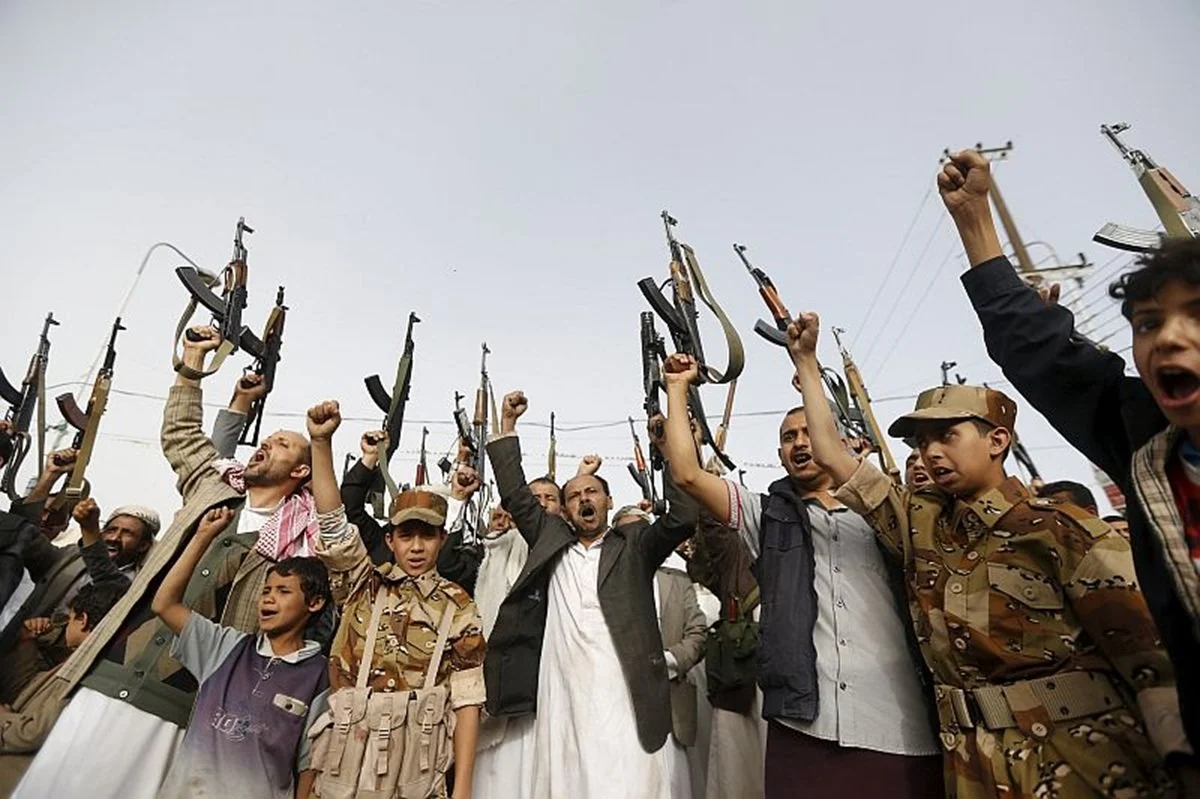
Sanaa, Yemen – In a dramatic escalation of the protracted conflict in Yemen, the Iran-backed Houthi rebel movement has officially declared a maritime blockade against Saudi Arabia. The announcement, made on Monday, July 20, 2026, marks the most significant and confrontational move by the Houthi forces against the Kingdom in several years, threatening to plunge the region into a deeper military and humanitarian crisis. This declaration is a direct response to what the Houthis term an "unjust and oppressive siege" and follows a recent airstrike by Saudi-backed government forces on Sanaa International Airport, an act aimed at preventing the return of a Houthi delegation from Tehran.
The Unfolding Crisis: A Week of Heightened Hostilities
The Houthi declaration of a maritime embargo comes in the wake of a critical incident that further inflamed an already volatile situation. Approximately one week prior to the blockade announcement, forces loyal to the internationally recognized Yemeni government, heavily supported by Saudi Arabia, launched a bombing raid on Sanaa International Airport. The stated objective of this aerial assault was to interdict an Iranian aircraft carrying a Houthi delegation, preventing their return from a visit to Tehran. While details of the delegation’s discussions in the Iranian capital remain largely undisclosed, such high-level engagements are routinely viewed by the Saudi-led coalition as evidence of Iran’s deepening military and political support for the Houthi movement. The airport bombing itself was a significant breach of an informal understanding that had largely spared the facility from direct attacks, despite its contested status and frequent accusations of its use for military purposes by the Houthis. This act of military interdiction was perceived by the Houthi leadership as a severe provocation and a direct affront to their sovereignty and freedom of movement, setting the stage for their retaliatory announcement.
On Monday, July 20, 2026, Houthi Military Spokesman Yahya Saree delivered a televised statement, widely circulated on social media platforms including X (formerly Twitter), formally announcing the blockade. Saree vehemently condemned what he described as the "unjust and oppressive siege" imposed on Yemen, a reference to the Saudi-led coalition’s ongoing air, land, and sea blockade initiated in 2015. "The Yemeni Armed Forces declare a maritime embargo against the criminal Saudi enemy, based on the principle of ‘an eye for an eye,’ effective immediately," Saree stated, invoking a clear tit-for-tat doctrine. He further issued a stark warning, cautioning that "any foolish action" by Saudi Arabia would be met with "comprehensive and decisive escalation," signaling the Houthis’ readiness to intensify their military operations beyond previous engagements. This explicit threat underlines the grave potential for the conflict to expand beyond Yemen’s borders and impact critical international shipping lanes.
Deep Roots of Conflict: Yemen’s Decade of War
To fully comprehend the gravity of the Houthi’s latest move, it is crucial to understand the intricate and devastating history of the Yemeni civil war, which began in earnest in 2014. The Houthi movement, officially known as Ansar Allah, is a Zaydi Shia revivalist group that emerged from Yemen’s northern Sa’ada province. For years, they championed the grievances of the Zaydi minority against perceived marginalization by the central government. Their rise gained momentum amidst the political instability following the 2011 Arab Spring uprisings. In September 2014, the Houthis capitalized on a weak and fragmented government, seizing the capital, Sanaa, and effectively overthrowing the internationally recognized government of President Abdrabbuh Mansur Hadi.
This rapid Houthi expansion was viewed with alarm by Saudi Arabia, which perceived it as a direct threat to its southern border and a proxy for Iranian influence in its backyard. Consequently, in March 2015, Saudi Arabia assembled a coalition of Arab states, including the United Arab Emirates, Bahrain, Kuwait, Egypt, Jordan, Morocco, Senegal, and Sudan, to launch a military intervention. The stated objectives were to restore President Hadi’s government to power, roll back Houthi gains, and counter what they saw as Iran’s growing regional footprint. The subsequent years witnessed an intense aerial bombing campaign by the Saudi-led coalition, coupled with ground operations and a comprehensive blockade of Yemen’s air, land, and sea routes.
The consequences of this prolonged conflict have been catastrophic. The United Nations has consistently labeled Yemen as the world’s worst humanitarian crisis. Millions of Yemenis have been displaced, and a staggering proportion of the population faces severe food insecurity, reliant on humanitarian aid for survival. The conflict has decimated infrastructure, healthcare systems, and the economy, leading to widespread famine, cholera outbreaks, and preventable diseases. International human rights organizations and the UN have repeatedly condemned the actions of all warring parties, including the coalition’s bombing campaigns, which have resulted in significant civilian casualties and the destruction of vital civilian infrastructure, exacerbating the humanitarian catastrophe.
In retaliation for the Saudi-led campaign, the Houthi movement has developed and deployed an arsenal of drones and ballistic missiles, targeting Saudi territory with increasing frequency and sophistication. These attacks have struck sensitive targets, including airports like Abha and Jazan, military installations, and critical oil facilities deep within the Kingdom.
Houthi Capabilities and Saudi Vulnerabilities
The Houthi declaration of a maritime blockade is not an idle threat; it leverages their demonstrated capabilities and targets Saudi Arabia’s significant maritime vulnerabilities. Over the years, the Houthis have proven adept at asymmetric warfare, utilizing a combination of locally modified and externally supplied weaponry. Their drone program has evolved significantly, with unmanned aerial vehicles (UAVs) capable of striking targets hundreds of kilometers away. Similarly, their ballistic and cruise missile arsenal, while often intercepted by Saudi air defenses, has successfully penetrated Saudi airspace on numerous occasions, causing damage and instilling fear.
Crucially, the Houthis have previously demonstrated a capacity to disrupt maritime traffic. While less frequent, incidents involving attacks on commercial vessels or attempts to target Saudi naval assets in the Red Sea have been reported. These have included attacks using remote-controlled explosive boats and anti-ship missiles. The Bab al-Mandeb Strait, a narrow chokepoint connecting the Red Sea to the Gulf of Aden and the Indian Ocean, is one of the world’s most vital maritime passages, through which an estimated 10% of global seaborne trade and a significant portion of global oil supplies pass daily. Saudi Arabia, with its extensive coastline and heavy reliance on maritime trade for both imports and oil exports, is particularly vulnerable to disruptions in these waters. Its critical infrastructure, including massive oil terminals, desalination plants that supply most of its freshwater, and major commercial ports, are all located along its coasts. Any sustained Houthi threat to shipping in the Red Sea could have immediate and severe repercussions for Saudi Arabia’s economy and national security, as well as broader implications for global energy markets and supply chains.
Official Responses and International Reactions
The Houthi declaration immediately drew a sharp rebuke from Riyadh. The Saudi Ministry of Foreign Affairs swiftly issued a statement condemning the "terrorist Houthi militia" for their provocative and irresponsible actions. The Ministry vowed that the Kingdom would "take all necessary measures to protect its vessels in accordance with international law," signaling a strong resolve to counter any attempts at enforcing the blockade. This commitment implies a potential escalation of Saudi naval patrols, increased air cover for shipping lanes, and a readiness for direct military engagement to safeguard freedom of navigation.
The international community reacted with alarm to the Houthi’s announcement.
- United Nations: The UN Secretary-General and his Special Envoy for Yemen were quick to express profound concern over the escalating tensions. They called for immediate de-escalation by all parties and reiterated the urgent need for a return to political dialogue and a comprehensive peace process. The UN emphasized the potential for the blockade to further exacerbate Yemen’s already dire humanitarian situation, warning that any disruption to shipping, particularly of aid and commercial goods, would have catastrophic consequences for millions of vulnerable Yemenis.
- United States: The U.S. State Department condemned the Houthi declaration, reaffirming its unwavering support for Saudi Arabia’s sovereignty and security. The U.S. called on the Houthis to cease all destabilizing actions and urged all parties to exercise restraint. Washington also highlighted its commitment to ensuring freedom of navigation in international waters, implicitly referencing the significant presence of the U.S. Navy’s Fifth Fleet in the region, which routinely conducts maritime security operations.
- Iran: While typically denying direct command and control over Houthi operations, Iranian officials are expected to voice solidarity with the Houthi movement, portraying their actions as legitimate resistance against Saudi aggression. Tehran will likely condemn Saudi Arabia’s "siege" on Yemen and its recent airport bombing, while carefully avoiding explicit endorsement of the blockade’s enforcement, maintaining a degree of plausible deniability regarding operational specifics.
- Regional Powers: Allies of Saudi Arabia, such as the United Arab Emirates and Egypt, expressed strong support for Saudi Arabia’s right to defend its maritime interests and condemned the Houthi move as a threat to regional stability and international trade. Egypt, in particular, with its control over the Suez Canal, has a vested interest in ensuring the unimpeded flow of shipping through the Red Sea.
- International Maritime Organizations: Agencies like the International Maritime Organization (IMO) and various shipping associations are expected to issue advisories to commercial vessels operating in the Red Sea and Gulf of Aden, recommending heightened vigilance, enhanced security measures, and rerouting options if the threat level significantly increases. Insurance premiums for shipping through the region are also likely to surge, adding costs to global supply chains.
Broader Impact and Implications
The Houthi declaration carries profound implications across military, humanitarian, geopolitical, and economic fronts.
- Military Escalation: The immediate danger is a direct military confrontation at sea. Should the Houthis attempt to enforce their blockade, it would inevitably lead to Saudi naval and air forces responding forcefully. This could involve direct engagements with Houthi vessels, drones, or missile launchers positioned along the Yemeni coast. Such clashes risk drawing in other regional and international actors, further complicating the conflict landscape. Saudi Arabia might intensify its air campaign against Houthi targets, potentially expanding its reach to include ports and coastal facilities used by the rebels.
- Humanitarian Catastrophe: For Yemen, the declaration is a harbinger of even greater suffering. Any disruption to commercial shipping or humanitarian aid delivery, whether directly caused by Houthi actions or indirectly by a tightened Saudi counter-blockade, would push millions closer to the brink of famine. Yemen relies almost entirely on imports for its food, fuel, and medicine. Increased insecurity in the Red Sea could deter shipping companies, raise freight costs, and slow down crucial deliveries, compounding the already dire humanitarian crisis.
- Regional Geopolitics: The move fundamentally undermines any nascent diplomatic efforts to de-escalate tensions between Saudi Arabia and Iran. While Saudi Arabia and Iran had been engaging in indirect talks aimed at rapprochement, this Houthi action, perceived by Riyadh as Iranian-backed, will severely strain those efforts. It also challenges the stability of the Red Sea region, a critical maritime chokepoint for global trade and energy flows, potentially inviting greater international military presence.
- Global Economic Impact: The most immediate economic concern is the potential for disruption to global oil supplies and a corresponding spike in oil prices. Even the threat of disruption in the Bab al-Mandeb Strait can trigger market volatility. Beyond oil, the Red Sea is a crucial artery for general cargo, connecting Europe and Asia via the Suez Canal. Increased security risks and insurance costs would impact global supply chains, leading to higher prices for consumers worldwide.
- Peace Prospects: The Houthi blockade declaration represents a significant setback for UN-led peace initiatives. Years of painstaking diplomatic efforts, including various ceasefires and confidence-building measures, have repeatedly faltered. This latest escalation erodes trust between the warring parties, making a return to the negotiating table even more challenging. It underscores the deep-seated grievances and the maximalist positions adopted by both sides, making a political resolution seem increasingly distant.
In conclusion, the Houthi rebels’ declaration of a maritime blockade against Saudi Arabia is a perilous gambit that significantly raises the stakes in the long-running Yemeni conflict. It directly threatens regional stability, vital global trade routes, and the lives of millions already suffering from an unprecedented humanitarian crisis. The international community faces an urgent imperative to press all parties for de-escalation, uphold freedom of navigation, and redouble efforts towards a comprehensive and lasting political solution for Yemen, before this latest escalation spirals into an even wider and more devastating regional confrontation.