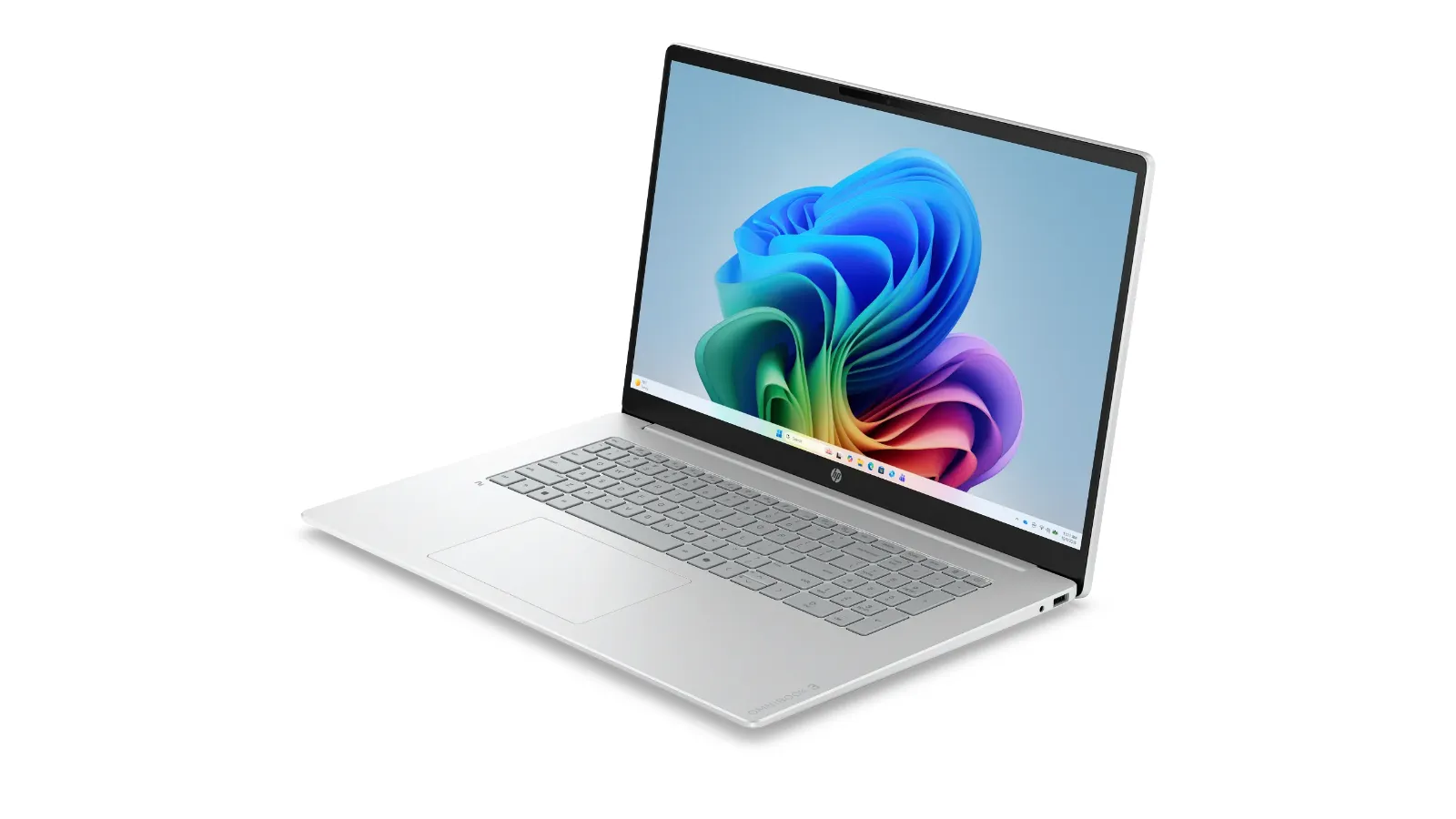
Hewlett-Packard (HP) has officially expanded its prominent OmniBook laptop portfolio with the introduction of the new HP OmniBook 3 17. This latest large-screen device integrates cutting-edge computing hardware, headlined by Intel’s newly debuted "Wildcat Lake" processor architecture. Designed to meet the evolving demands of productivity-focused professionals, students, and casual content creators who prefer expansive display real estate, the OmniBook 3 17 combines generous configuration options—including up to 32GB of high-speed memory—with modern artificial intelligence capabilities. As the technology industry transitions deeper into an AI-driven ecosystem, HP’s strategic refresh of its mainstream and mid-tier laptop lines underscores a broader industry commitment to bringing next-generation processing power and neural acceleration to a wider consumer base.
Main Facts and Product Overview
The HP OmniBook 3 17 is engineered to serve as a versatile desktop replacement, offering a massive 17.3-inch display paired with modern internal specifications. At the core of the laptop are Intel’s latest Core processors from the Wildcat Lake lineup. HP has structured the processor offerings into three distinct tiers, ranging from the entry-level Core 5 315 up to the more capable Core 7 350.
Regardless of the chosen tier, the silicon configurations maintain a balanced architecture featuring 6 cores and 6 threads. However, stepping up to higher-tier models yields tangible performance benefits, including higher clock boost frequencies and enhanced Neural Processing Unit (NPU) capabilities. The baseline Core 5 315, for instance, incorporates an integrated NPU capable of delivering up to 15 TOPS (Trillion Operations Per Second) of AI processing power, making it fully compliant with modern local AI tasks, advanced operating system features, and productivity tool accelerators.
Memory and storage configurations are similarly robust. The laptop supports DDR5-5600 RAM, with modular or factory-configured capacity options spanning 8GB, 12GB, 16GB, 24GB, and up to a maximum of 32GB. For data storage, HP relies on fast PCIe Gen 4 NVMe solid-state drives, available in 256GB, 512GB, and 1TB capacities. Wireless connectivity is equally future-proofed, featuring support for either Wi-Fi 6 or the ultra-fast Wi-Fi 7 standard, alongside Bluetooth 5.4 or the latest Bluetooth 6.0 protocols.
Display and Ergonomic Variations
Display options on the HP OmniBook 3 17 cater to varying user requirements and budgets. HP provides two distinct panel types for the 17.3-inch form factor. The budget-oriented configuration utilizes a Twisted Nematic (TN) panel with a resolution of 900p and a maximum brightness level of 250 nits. Meanwhile, the superior configuration upgrades to an In-Plane Switching (IPS) panel boasting a 1080p Full HD resolution and a brighter 300-nit backlight, which ensures better color reproduction, wider viewing angles, and improved outdoor legibility. Furthermore, both panel types are available in either touch-enabled or non-touch variants, giving buyers the flexibility to choose the interface style that best fits their workflow.
Power management is handled by one of two battery capacities, depending on the chosen build configuration: a modest 41Wh cell or a larger 68Wh battery designed to sustain the expansive 17.3-inch display over extended periods away from a power outlet.

Chronology and Market Context
The rollout of the OmniBook 3 17 aligns with a broader industry schedule characteristic of late-third-quarter hardware cycles. Throughout September, major PC manufacturers have synchronized their product announcements with Intel’s silicon availability timelines. This launch window follows closely on the heels of related ecosystem announcements, such as the debut of competing compact portables like the Advan Air Neo—which also leverages Intel Core Series 3 Wildcat Lake processors—indicating a simultaneous market push across multiple form factors and price points.
HP’s strategic rebranding and expansion of the OmniBook moniker represent the culmination of a multi-year restructuring of the company’s consumer and commercial laptop families. Having phased away legacy naming conventions in favor of the unified OmniBook and OmniStudio nomenclature, HP has systematically restructured its portfolio to clearly segment devices by performance tiers (OmniBook 3, 5, X, and Ultra). The introduction of a 17-inch variant to the tier-3 lineup fills a vital gap for consumers seeking immersive screen sizes without entering the premium gaming or workstation pricing brackets.
Pricing and Configuration Economics
The pricing structure of the HP OmniBook 3 17 scales dramatically depending on the selected components, reflecting the deep customization options available at purchase. In the United States market, the baseline entry-level model starts at an accessible USD 999 (approximately Rp16 million), providing budget-conscious buyers with a gateway into a large-screen modern laptop.
Conversely, the top-tier configuration reaches significantly higher. Fully specced-out models featuring the Intel Core 7 350 processor, 32GB of DDR5 RAM, a 1TB PCIe Gen 4 SSD, the larger 68Wh battery, and the upgraded 1080p IPS display command a retail price of USD 2,029 (approximately Rp33 million). This pricing tier places the maximum configuration in direct competition with performance-oriented multimedia laptops and entry-level mobile workstations, raising consumer expectations regarding build quality, thermal performance, and daily endurance.
Industry Implications and Market Analysis
The arrival of the HP OmniBook 3 17 highlights several critical trends in the current personal computer landscape. First, it demonstrates the democratization of hardware-level artificial intelligence. Even at the entry level, the inclusion of an NPU capable of 15 TOPS ensures that baseline machines can handle local AI workflows—such as background blurring in video calls, live transcription, and AI-assisted productivity features—without heavily taxing the main CPU cores.
Second, the persistence of the 17-inch form factor proves that a dedicated segment of the market still values large display workspaces. While ultra-portable 13-inch and 14-inch laptops dominate sales volume, remote workers, accountants, students, and home-office users frequently favor larger screens to manage multi-window multitasking without requiring external monitors.
Finally, HP’s pricing strategy illustrates the ongoing cost elasticity of modern RAM and SSD components. By offering a steep pricing gradient between the 8GB baseline and the 32GB maximum configuration, manufacturers continue to monetize high-density memory configurations as a primary differentiator for power users. As Intel’s Wildcat Lake processors gain traction across the global market, the performance benchmarks and consumer reception of devices like the OmniBook 3 17 will serve as a crucial barometer for the success of mainstream AI-enabled computing throughout the upcoming hardware generation.