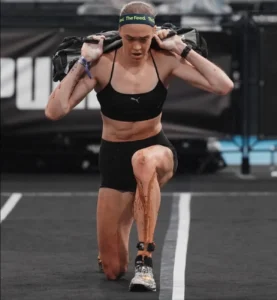
The HYROX fitness racing event held in Beijing on Saturday, September 12, 2026, concluded under unusual circumstances, prompting the event organizers to initiate an immediate and comprehensive sanitation protocol. The decision followed a highly publicized incident involving Australian athlete Joanna Wietrzyk, who suffered an involuntary bowel movement while competing in the elite Pro Women’s division. As images and video footage of the incident circulated across Chinese social media platforms and international news outlets, the organizers were compelled to address both the physical sanitation of the competition floor and the growing public discourse regarding athlete health and hygiene protocols.
The event, a grueling test of endurance and functional fitness, requires participants to navigate a series of eight one-kilometer runs interspersed with eight functional workout stations. The high-intensity nature of these races often pushes athletes to their physiological limits, leading to incidents of extreme physical distress. In the case of the Beijing event, the disruption caused by Wietrzyk’s medical emergency raised questions regarding the intersection of extreme athletic performance, public health, and the logistical challenges of maintaining sanitary conditions in a high-traffic sporting environment.
Chronology of the Incident and Immediate Response
The incident occurred during the mid-to-late stages of the Pro Women’s race. According to eyewitness accounts and verified footage circulating on platforms such as Weibo and Douyin, Wietrzyk continued her performance despite the evident physical trauma. The footage specifically captured the athlete performing burpee broad jumps, a movement that requires extreme core engagement and hip flexion, which appeared to exacerbate the situation.
Despite the visible contamination on the competition floor, Wietrzyk persisted, completing the remaining segments of the course. Her ability to finish the race while dealing with such an acute medical event sparked a polarized reaction among the fitness community; while some lauded her tenacity and mental fortitude, others expressed significant concern regarding the potential health risks posed to other competitors using the same lane and equipment.
Following the conclusion of the event, HYROX officials acted swiftly. The specific section of the arena affected by the incident was cordoned off by event staff. A specialized sanitation crew was deployed to conduct a deep-cleaning and disinfection process of the impacted lane, as well as the equipment—including weights, sleds, and the floor surface—that had been exposed to the area. By the following morning, organizers issued a statement confirming that the integrity of the competition area had been restored and that the facility was safe for subsequent heats and future use.
Understanding the Demands of HYROX
To understand why such an incident could occur, it is necessary to examine the physiological demands of a HYROX race. Unlike traditional marathons or standard CrossFit workouts, HYROX combines running with heavy strength-based functional movements. The metabolic cost of this combination is exceptionally high, often resulting in "GI distress," a common condition among endurance athletes.
Medical literature on high-intensity endurance sports frequently cites gastrointestinal issues as a primary reason for "did not finish" (DNF) results. Factors contributing to these issues include reduced blood flow to the gastrointestinal tract as the body redirects oxygenated blood to the working muscles, the physical jarring of the digestive system during running, and the ingestion of high-concentration carbohydrate gels or energy drinks under extreme duress.
For professional-level athletes like Wietrzyk, the pressure to maintain a competitive pace often leads them to ignore early warning signs of physical distress. In this specific instance, the athlete’s decision to continue to the finish line, while demonstrating significant individual resolve, brought the reality of these physiological stressors into a public spotlight.
Public Health Implications and Social Media Backlash
The incident gained significant traction on Chinese social media, where the footage was analyzed by thousands of spectators. The Hong Kong-based news outlet HK01 was among the first to report on the broader concerns raised by the public. The discourse primarily focused on two areas: the potential transmission of pathogens on a shared competition surface and the responsibility of the event organizers to ensure a hygienic environment for all participants.
In response to the growing scrutiny, experts in infectious disease control have noted that while the risk of pathogen transmission in such an environment is generally low if proper sanitation protocols are followed, the sight of biological contamination in a public arena is understandably distressing. HYROX’s rapid deployment of a professional cleaning team served as the primary mitigation strategy, aligning with international standards for public facility management following a biohazard event.
The Athlete’s Perspective and Aftermath
Joanna Wietrzyk, who resides in Melbourne, Australia, demonstrated high-level performance throughout the event, ultimately securing a victory in her category. However, the victory was followed by a brief period of personal medical attention. Following the race, Wietrzyk shared an Instagram Story featuring a photo of herself receiving intravenous (IV) fluids, a common recovery measure for athletes suffering from severe dehydration or metabolic exhaustion.
While the original post was later removed, the imagery highlighted the physical toll of the Beijing competition. Wietrzyk’s subsequent statement of gratitude toward her support network indicated a focus on recovery. As of the time of reporting, there have been no further comments from the athlete regarding the specific nature of the health crisis, and it is assumed she is undergoing a period of rest to recover from the strain of the event.
Organizational Responses and Future Protocol
The HYROX organization has been largely quiet regarding specific policy changes, though the incident has prompted internal discussions regarding medical monitoring during races. Currently, HYROX provides medical stations at every event to treat injuries, cramps, and exhaustion. However, the question of whether to implement "mandatory retirement" rules—whereby officials intervene if an athlete is deemed to be in a state of physical or sanitary distress that compromises the safety of others—is a complex one.
From a liability perspective, event organizers face a balancing act. Forcing a competitive athlete to stop when they wish to continue can lead to legal disputes regarding the athlete’s autonomy. Conversely, allowing an athlete to continue in a potentially unsanitary state raises questions about the event’s duty of care to other participants.
Industry analysts suggest that HYROX may look to strengthen its "Athlete Code of Conduct" to include specific language regarding personal health and hygiene. Such updates would likely focus on the responsibility of the athlete to self-report severe physical distress, similar to the protocols seen in major professional leagues like the Ironman World Championship or the CrossFit Games.
Broader Impact on the Fitness Industry
The Beijing incident serves as a poignant reminder that as functional fitness races grow in popularity and scale, the logistics of managing human physiology under extreme stress must evolve. The rise of "fitness tourism," where athletes travel globally to compete in events like HYROX, increases the complexity of medical support systems.
Furthermore, the visibility of the incident highlights the role of social media in the modern sporting landscape. What might have been a localized, private medical event a decade ago is now a global topic of discussion within minutes. For organizations like HYROX, the incident represents a "stress test" for their reputation management and operational efficiency. The fact that the area was cleaned and the event continued without further disruption is a testament to the organizational maturity of the race directors.
Conclusion
The events of September 12, 2026, in Beijing, remain a unique case study in the intersection of elite athletics and environmental management. While the involuntary nature of the incident was undoubtedly a source of embarrassment for the athlete, the rapid and effective response by the organizers prevented a minor medical emergency from escalating into a public health crisis.
As HYROX continues to expand its global footprint, the lessons learned from this incident—ranging from the necessity of rapid-response cleaning teams to the importance of transparent communication with participants—will likely be integrated into their standard operating procedures. The story of Joanna Wietrzyk’s win in Beijing will ultimately be remembered for two things: her remarkable athletic achievement in the face of extreme physiological challenge, and the incident that briefly turned the spotlight on the essential, yet often overlooked, importance of sanitation in the world of high-intensity competitive sports.
Moving forward, the focus for the fitness community remains on ensuring that these intense physical competitions remain a safe and hygienic environment for all involved, regardless of the challenges that may arise on the competition floor. The organizational response in Beijing has set a clear precedent for how such incidents will be handled in the future, prioritizing both the health of the individual athlete and the safety of the collective field.