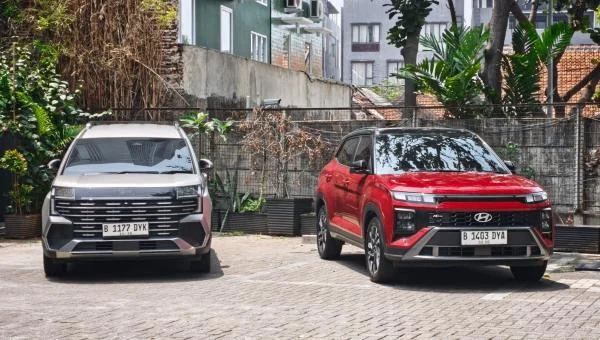
PT Hyundai Motors Indonesia (HMID) has officially announced a significant milestone in its fiscal performance, reporting a robust 15 percent year-on-year (YoY) increase in retail sales during the third quarter of 2026. This growth trajectory, achieved against a backdrop of a highly competitive national automotive market, underscores the company’s ability to navigate shifting consumer preferences and economic volatility. While Hyundai has historically been a trailblazer in the electrification segment, the latest data reveals that the primary catalyst for this recent surge is the continued demand for internal combustion engine (ICE) vehicles, particularly the Stargazer Cartenz.
The Strategic Importance of the Stargazer Cartenz
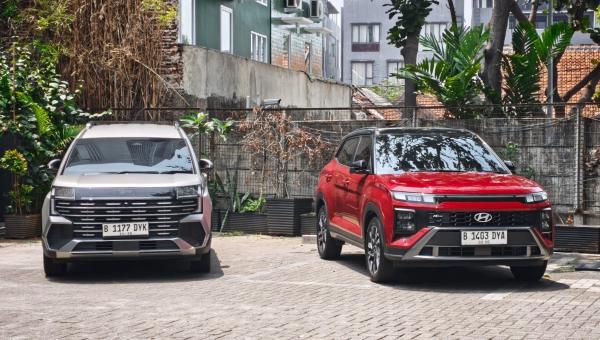
The Stargazer Cartenz has emerged as a cornerstone of Hyundai’s sales strategy in the Indonesian archipelago. By blending localized design elements with the mechanical reliability expected of ICE vehicles, the model has successfully captured a significant share of the multi-purpose vehicle (MPV) segment—a category that remains the bedrock of the Indonesian automotive market.
Market analysts suggest that the success of the Stargazer Cartenz is not merely a product of design, but a reflection of Hyundai’s strategic decision to cater to the practical requirements of the middle-class consumer. While the global automotive industry is undergoing a rapid transition toward electric vehicles (EVs), the Indonesian market remains pragmatic, prioritizing fuel efficiency, maintenance accessibility, and engine durability. Hyundai’s ability to balance its high-tech EV portfolio with reliable ICE offerings has created a "dual-engine" growth strategy that shields the company from the inherent risks of relying on a single technology pathway.
Contextualizing the Market Environment
The 15 percent growth rate is particularly notable given the broader economic landscape of 2026. Throughout the first three quarters of the year, the Indonesian automotive sector has faced headwinds characterized by fluctuating interest rates and a more selective consumer base. Consumers are increasingly scrutinizing their purchasing decisions, moving away from impulsive buys toward vehicles that offer long-term value, lower total cost of ownership, and comprehensive resale support.
Hyundai’s performance in Q3 2026 mirrors a broader trend where established manufacturers are pivoting toward value-added services to maintain market share. As competition intensifies—not just from legacy Japanese manufacturers that have long dominated the region, but also from an influx of new players entering the market—Hyundai has utilized its localized production facilities to ensure supply chain stability. This agility has allowed the company to keep lead times short and availability high, factors that have historically been major pain points for consumers in the region.
Leadership Perspective and Long-term Vision
Kenny Lee, President Director of PT Hyundai Motors Indonesia, emphasized that the company’s success is anchored in a deep-seated commitment to customer-centricity. In an official statement released on Friday, November 6, 2026, Lee noted that the automotive business is no longer solely about the transaction, but about the lifecycle of the vehicle ownership experience.
"Our commitment remains steadfast: we are focused on maintaining our business momentum by staying close to our customers and anticipating their evolving needs," Lee stated. He elaborated that in a market as diverse and demanding as Indonesia, success requires more than just a competitive price point. It requires an ecosystem of support, ranging from localized manufacturing to a sprawling network of service centers that provide peace of mind to the end-user.
Lee’s focus on the "customer experience" is a strategic move to build brand loyalty in a market where brand switching is common. By investing heavily in after-sales infrastructure, Hyundai is attempting to move its customer base from transactional buyers to long-term brand advocates.
The Evolution of Hyundai in Indonesia: A Brief Chronology
To understand the significance of the Q3 2026 results, one must look at the trajectory of Hyundai’s presence in Indonesia over the past few years:

- 2021-2022: The Foundation Phase. Hyundai focused on establishing its local manufacturing plant in Cikarang, West Java. This period marked the beginning of "Indonesia-first" vehicle designs, specifically aimed at the local MPV and SUV market.
- 2023-2024: The Electrification Push. The company gained significant market share by positioning itself as the leader in the EV space, introducing models like the Ioniq 5 and setting up a battery assembly plant.
- 2025: The Hybridization and Portfolio Diversification. Recognizing that mass-market adoption of EVs would take time, Hyundai began balancing its portfolio by refreshing its ICE models, leading to the development and aggressive marketing of the Stargazer series.
- 2026: Consolidation and Sustainable Growth. The current year has been characterized by optimizing the existing product line. The 15 percent YoY growth in Q3 2026 serves as validation that the diversification strategy is working, allowing the company to sustain revenue even during periods of slow EV adoption.
Supporting Data and Market Implications
The automotive industry in Indonesia has been tracking closely with national economic indicators. During the third quarter of 2026, the overall market witnessed a moderate cooling period due to inflation-related pressures. In this context, Hyundai’s 15 percent growth stands out as a clear "outperformance" of the industry average.
Industry data suggests that the "Cartenz" branding has been highly effective in localized marketing. By tapping into the regional preference for rugged, reliable vehicles that can navigate diverse terrains—from urban centers like Jakarta to the more challenging landscapes of the outer islands—Hyundai has managed to expand its footprint beyond the capital.
Furthermore, the emphasis on after-sales service is a direct response to the "Total Cost of Ownership" (TCO) trend. With global economic uncertainty, consumers are looking for vehicles that are not only affordable to purchase but also affordable to maintain. Hyundai’s investment in parts availability and technician training has served as a key differentiator, reducing the downtime for owners of ICE vehicles and boosting the brand’s reliability ratings in consumer surveys.
Future Outlook and Challenges
Looking ahead to the final quarter of 2026 and into 2027, the challenge for Hyundai will be to maintain this growth while simultaneously navigating the transition to greener energy. The government’s continued push for electric mobility, combined with the volatility of global oil prices, creates a complex environment.
Hyundai’s ability to remain profitable while scaling its EV infrastructure will be the defining factor of its next five years. However, the current data confirms that for the immediate term, the ICE market remains a powerful engine for revenue. By continuing to refine the Stargazer and other internal combustion models, Hyundai is creating a financial cushion that will likely fund the research, development, and infrastructure required for the next generation of electric mobility.

Ultimately, the Q3 2026 results prove that Hyundai is no longer an "emerging" player in the Indonesian market but a mature, integrated manufacturer that understands the nuances of local consumer behavior. Whether through the success of the Stargazer Cartenz or the promise of future EV innovations, the company has positioned itself as a critical pillar of the Indonesian automotive industry. As the year draws to a close, all eyes will be on whether this momentum can be sustained through the holiday season, a period typically associated with high automotive sales, as families prepare for year-end travel and increased mobility requirements.
In conclusion, Hyundai’s 15 percent growth is more than just a statistical victory; it is a testament to the effectiveness of a balanced product portfolio. By prioritizing both the present demands of the market and the future requirements of sustainable transport, Hyundai Motors Indonesia has solidified its standing as a dominant force in one of Southeast Asia’s most vital economic sectors.