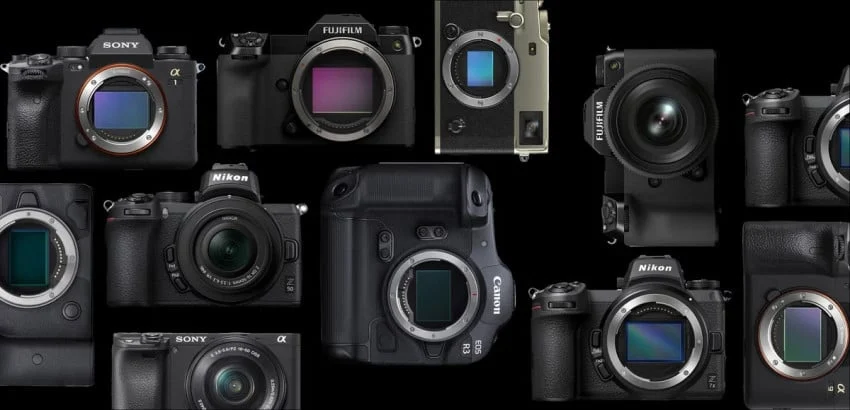
The global electronics landscape is currently undergoing a structural shift, one that promises to ripple through consumer sectors far removed from the primary centers of data processing. As the rapid proliferation of artificial intelligence (AI) technologies continues to necessitate unprecedented volumes of high-performance semiconductor and memory components, the photography industry is bracing for a period of significant economic volatility. Industry analysts and major imaging manufacturers, including Canon, have signaled that the escalating cost of essential components—specifically DRAM and specialized circuit boards—may force a widespread upward adjustment in the retail pricing of digital cameras beginning in 2027.
This impending price correction is not merely a localized supply chain hiccup; it represents the convergence of high-demand enterprise requirements and the finite production capacity of global semiconductor foundries. As AI-integrated data centers consume the lion’s share of available high-bandwidth memory (HBM) and NAND flash storage, consumer electronics manufacturers are increasingly forced to compete for remaining supply, often at significantly inflated costs.
The Macroeconomic Context of the Semiconductor Squeeze
To understand why a camera, a device primarily focused on optics and sensor technology, is being impacted by the rise of generative AI, one must look at the underlying architecture of modern digital imaging. Contemporary cameras are no longer simple mechanical devices; they are high-speed computing platforms. A professional-grade mirrorless camera is expected to perform complex image signal processing (ISP) in real-time, buffer massive bursts of RAW image files at high frame rates, and handle 8K video compression—all of which require advanced, high-speed memory modules.
The global semiconductor market has been stretched thin since the post-pandemic recovery, but the emergence of the AI gold rush has exacerbated these pressures. According to recent market intelligence reports, demand for AI-specific hardware has caused a supply-demand imbalance in the broader memory market. While manufacturers like Samsung, SK Hynix, and Micron have shifted their production priorities toward high-margin HBM chips used in NVIDIA-powered AI clusters, the secondary markets—which provide components for consumer electronics—have seen their priority status downgraded.
Chronology of the Supply Chain Crisis
The trajectory leading to the 2027 price warning can be traced through several critical phases of the last 24 months:
- Mid-2025: The AI Pivot: Global data center expansion accelerated, with major technology conglomerates investing billions into Large Language Model (LLM) infrastructure. This development initiated the aggressive absorption of global semiconductor production capacity.
- Early 2026: Cost Infiltration: Imaging manufacturers began reporting incremental increases in procurement costs for Printed Circuit Boards (PCBs) and NAND flash modules. At this stage, most companies, including Canon, attempted to absorb these costs internally to maintain price competitiveness.
- Q3 2026: The Strategic Disclosure: During the third-quarter earnings call for 2026, Canon leadership formally acknowledged that the imaging and printing segments were facing persistent headwinds. The management team confirmed that supply chain constraints were no longer temporary and that procurement costs for fundamental electronic components were failing to follow the anticipated downward trend.
- Late 2026 to Present: Forward-Looking Projections: The industry consensus, previously optimistic about a cooling in memory prices by late 2027, has shifted. Updated forecasts indicate that the scarcity of raw materials and the dominance of the AI sector will likely sustain, if not increase, component prices throughout the upcoming calendar year.
Official Responses and Corporate Strategy
Canon’s leadership has been transparent regarding the challenges posed by these external market forces. In the Q3 2026 post-earnings briefing, executives addressed the reality that the company’s imaging segment is inextricably linked to the broader electronics supply chain. The firm noted that while it is actively exploring alternative sourcing and long-term procurement contracts to mitigate risks, the reality of global market pricing remains a significant barrier.
"We are currently investigating all viable options to ensure a consistent supply of components for our 2027 product lineup," a spokesperson noted during the session. "However, given the current cost environment, we must acknowledge the necessity of potentially passing a portion of these increased procurement costs to the consumer."
This sentiment is echoed across the industry. While other major camera manufacturers have been more guarded in their public statements, industry insiders suggest that Canon’s position is representative of a broader industry-wide sentiment. When the cost of core components—which can account for a significant percentage of the bill of materials (BOM) for high-end imaging hardware—rises, manufacturers have limited mechanisms to maintain profit margins without adjusting the final price point for the end-user.
The Technical Impact on Imaging Hardware
The irony of the current situation lies in the fact that even cameras not explicitly marketed as "AI-powered" are being pulled into this price vortex. Modern image processing pipelines are heavily dependent on cache memory and high-speed storage interfaces. Even entry-level mirrorless cameras now utilize advanced processors that require efficient memory throughput to handle high-resolution files.
Furthermore, the rise of computational photography—where the camera uses algorithms to stack exposures, perform real-time noise reduction, and apply deep-learning-based autofocus tracking—means that the computational burden on camera hardware is higher than at any point in the history of photography. Because these features are now standard expectations for consumers, manufacturers cannot simply strip them away to lower costs. Instead, they are forced to continue procuring the same high-specification memory components that are simultaneously being fought over by AI data center architects.
Broader Economic Implications for Consumers
The impending price adjustments of 2027 are expected to have several implications for the global camera market:
1. Market Consolidation and Product Tiering:
Manufacturers may move to prioritize their mid-to-high-end product lines, where margins are thicker and can better accommodate fluctuating component costs. Conversely, the "budget" camera segment may see a reduction in the release of new models, or manufacturers may opt to keep older, lower-spec models in the market for longer periods to avoid the cost of re-engineering products with expensive new components.
2. Increased Focus on Durability and Longevity:
As prices rise, consumers may shift their purchasing behavior toward longer replacement cycles. If a high-end camera body sees a significant price hike, photographers are likely to retain their equipment for more years, potentially impacting the volume-based growth metrics that camera companies rely on for revenue.
3. Potential for Secondary Market Growth:
The rising cost of new equipment often acts as a catalyst for the secondary market. If new 2027 models enter the market at significantly higher price points, the value of well-maintained used equipment from the 2024–2026 era will likely remain robust, as users seek alternatives to the latest price-inflated releases.
4. Pressure on Technological Innovation:
There is a tangible risk that the increased cost of components could stifle innovation. If a significant portion of a product’s R&D budget is diverted toward managing supply chain costs and securing component inventory, there is less financial latitude for experimental or groundbreaking new features that require costly hardware prototypes.
Analysis: The Long-Term Outlook
The situation facing the camera industry is a classic case of supply chain contagion. In a globalized economy, the massive capital expenditure allocated to the AI revolution has created a "bottleneck effect." Because the technology required to capture a photograph and the technology required to train a Large Language Model both rely on the same fundamental building blocks—silicon, flash memory, and complex PCB fabrication—the two industries are now locked in a competition for resources.
For the photography industry, the challenge is not one of design capability, but of economic viability. The year 2027 will likely serve as a transition point where the industry moves away from the post-pandemic recovery phase and into a new "high-cost" reality.
For the average consumer, this means that the era of aggressive price-to-performance gains, where internal specifications were constantly improved while prices remained flat, may be coming to a close. Prospective buyers should anticipate that the next generation of hardware will be evaluated not just on its sensor resolution or autofocus speed, but on its value proposition in an environment where the underlying components have become precious commodities.
As we move toward the next fiscal cycle, all eyes will be on the major imaging conglomerates to see how they navigate these supply chain complexities. While Canon and its competitors continue to optimize their manufacturing and procurement processes, the fundamental economic pressure remains: the AI era is expensive, and the cost of building the devices that capture the world is being fundamentally reshaped by the silicon-hungry demands of the digital future. Whether this leads to a permanent shift in market pricing or a temporary spike remains to be seen, but for now, the industry is preparing for a reality where the cost of high-quality imaging is dictated by the global price of memory.