NVIDIA Corporation has officially announced the continued expansion of its cutting-edge Deep Learning Super Sampling 5 (DLSS 5) technology, bringing advanced artificial intelligence-driven rendering capabilities to three major titles throughout November 2026. Following its initial high-profile debut in NBA 2K27, the rapid adoption of DLSS 5 marks a significant paradigm shift in real-time computer graphics. Developers across the industry are increasingly embracing neural rendering frameworks to elevate fidelity, optimize computational performance, and refine lighting models without compromising the distinct artistic direction of their respective intellectual properties.
According to the official corporate deployment schedule released by NVIDIA, the rollout will commence with Avalanche Software’s open-world action role-playing game, Hogwarts Legacy, on November 5, 2026. This will be followed by mid-November updates for Gaijin Entertainment’s military combat simulator, War Thunder, and a subsequent launch for Everstone Studio’s historical Wuxia action-adventure title, Where Winds Meet, scheduled for November 23, 2026, in the United States. This phased introduction underscores NVIDIA’s aggressive strategy to integrate its latest neural rendering ecosystem into diverse game engines, spanning massive open-world fantasy environments, fast-paced tactical multiplayer simulations, and intricate martial arts historical epics.
Understanding DLSS 5: Beyond Traditional Upscaling
To fully comprehend the significance of this expansion, industry analysts point to the fundamental technological leap represented by DLSS 5 compared to its predecessors, such as DLSS 4.5. While traditional iterations primarily focused on spatial and temporal upscaling—reconstructing lower-resolution frames to match native resolutions while maintaining high performance—DLSS 5 introduces a proprietary 3D-Guided Neural Rendering architecture.
This new framework leverages advanced machine learning models trained on vast datasets of physical lighting, material interactions, and geometric depth. Instead of relying purely on heuristic algorithms or conventional rasterization pipelines, DLSS 5 uses neural networks to interpret 3D scene data directly. The result is a profound enhancement in global illumination, ray-traced reflections, dynamic shadows, and sub-surface character texturing.
Despite the heavy computational lifting performed by artificial intelligence, NVIDIA has emphasized developer-centric customization. Studios retain granular control over the intensity of AI-driven enhancements and specific visual layers. This mitigates early concerns voiced within the gaming community that aggressive neural rendering might override or homogenize distinct visual styles, ensuring that each game preserves its unique aesthetic identity.
Tailored Implementations Across Featured Titles
The integration of DLSS 5 manifests uniquely across the three newly announced games, reflecting the diverse technical requirements of their underlying engines and artistic visions.
Hogwarts Legacy: The Wizarding World Refined

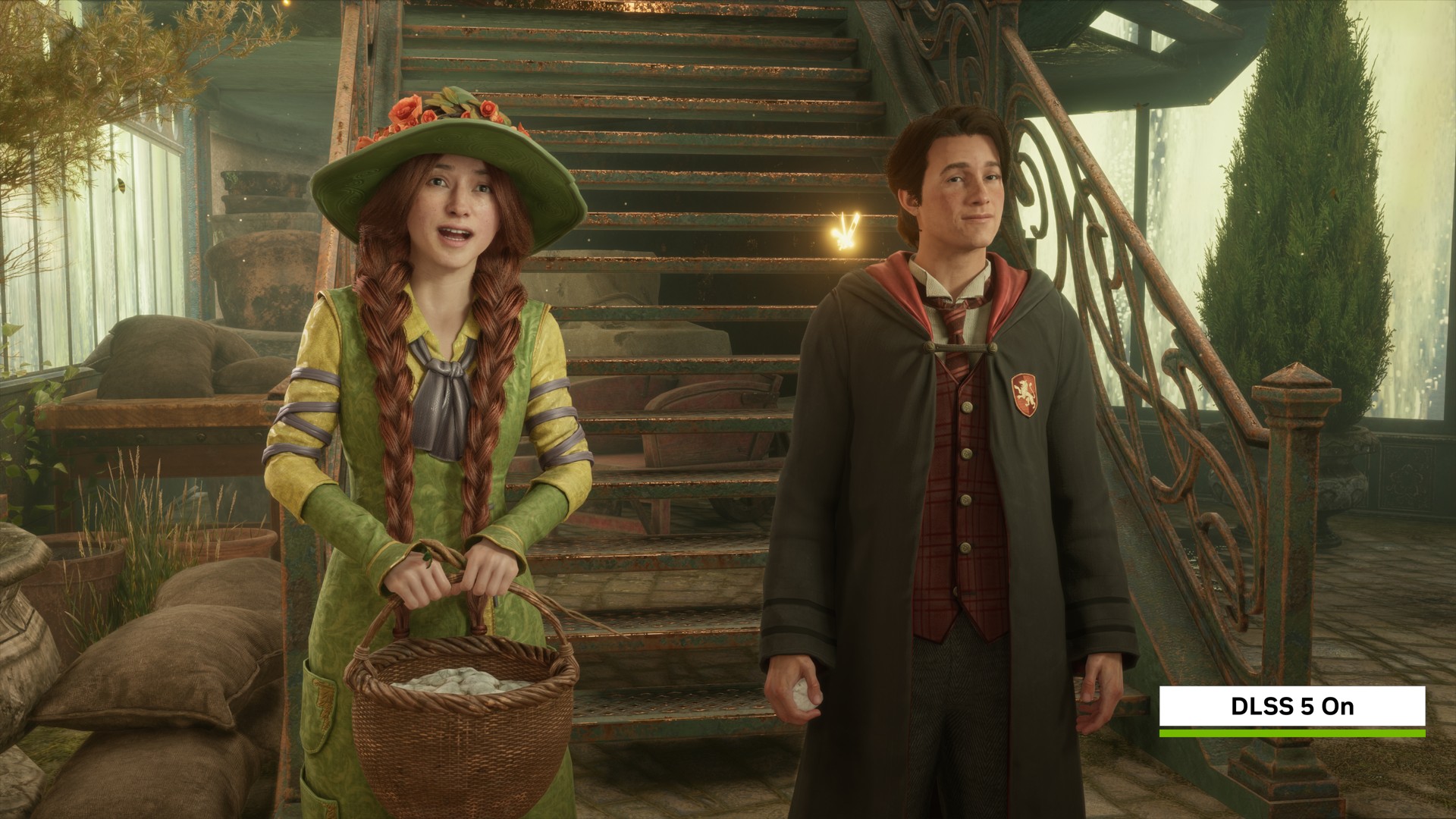
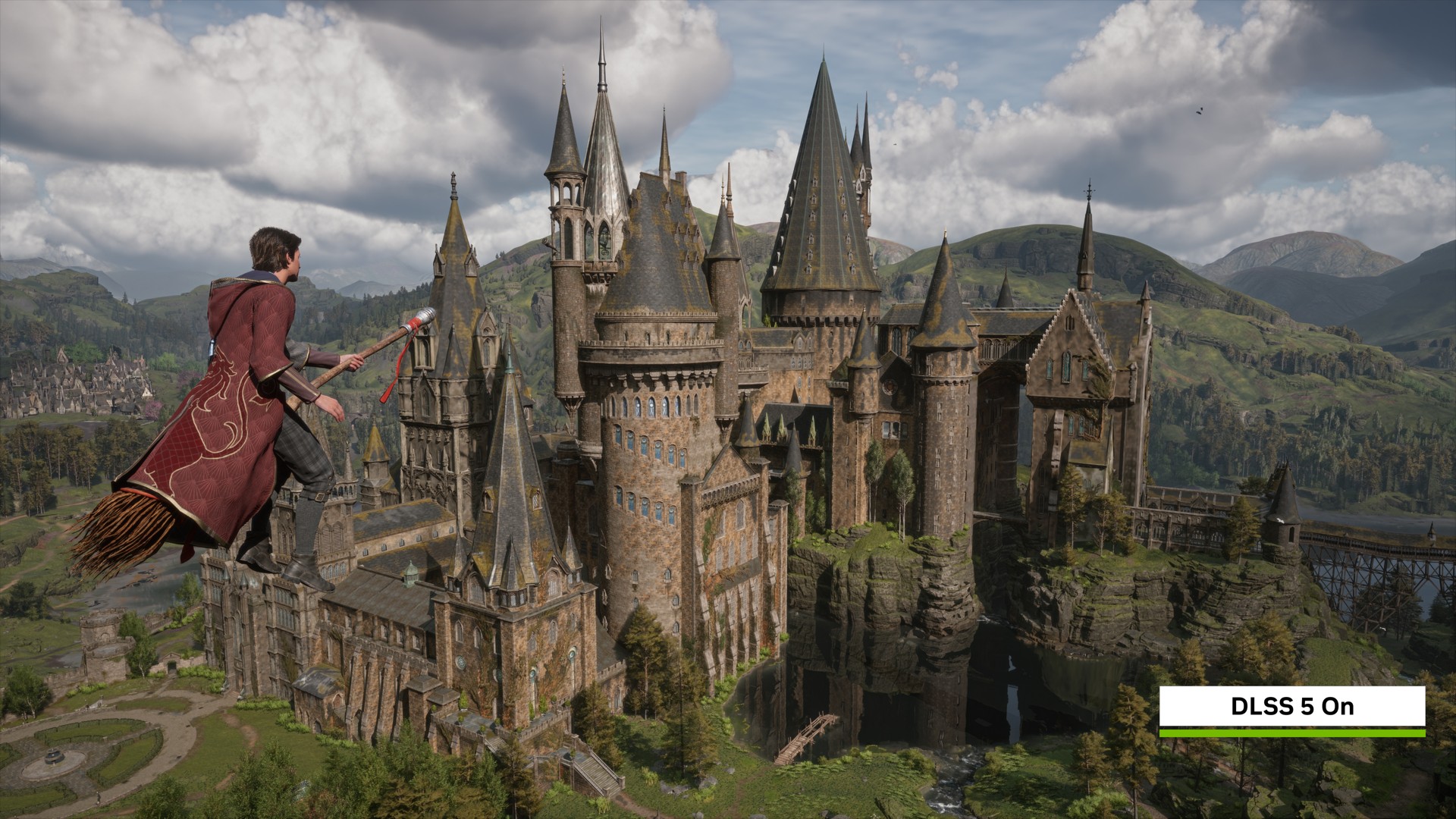
In Hogwarts Legacy, Avalanche Software has collaborated closely with NVIDIA engineers to deploy DLSS 5 with a focus on atmospheric depth and magical immersion. The sprawling halls of Hogwarts, the dense foliage of the Forbidden Forest, and complex spellcasting visual effects stand to benefit significantly from enhanced ray-traced reflections and hyper-realistic global illumination. Furthermore, character models will feature improved skin shading and cloth textures, allowing players to experience the 19th-century wizarding world with unprecedented visual clarity. Developers have fine-tuned the neural network parameters to ensure that the warm, storybook-inspired fantasy aesthetic remains intact, avoiding overly sterile or hyper-realistic anomalies that could clash with the established lore.
War Thunder: Tactical Precision and Material Realism
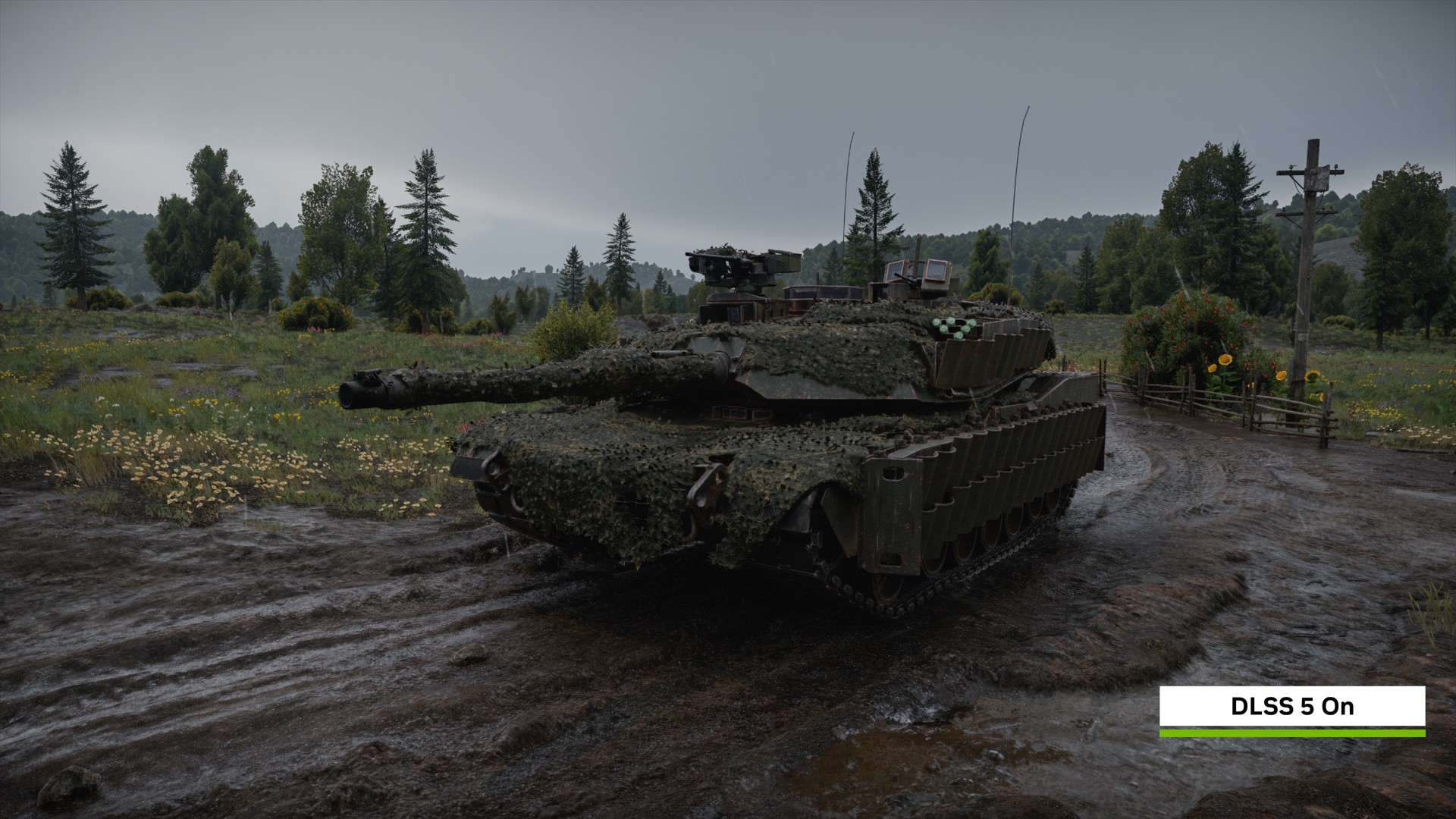
For Gaijin Entertainment’s long-running military MMO War Thunder, the implementation of DLSS 5 targets the granular physics and complex materials inherent in vehicular combat. Spanning historical eras from pre-World War II biplanes to modern main battle tanks and naval destroyers, War Thunder demands immense precision in rendering metallic surfaces, composite armor, volumetric smoke, and explosive muzzle flashes. By incorporating 3D-Guided Neural Rendering, the game engine can more accurately simulate how light interacts with varying surface wear, rust, paint finishes, and wet environments, providing competitive players with clearer visual cues regarding battlefield conditions without sacrificing frame rates.
Where Winds Meet: Elevating Wuxia Aesthetics
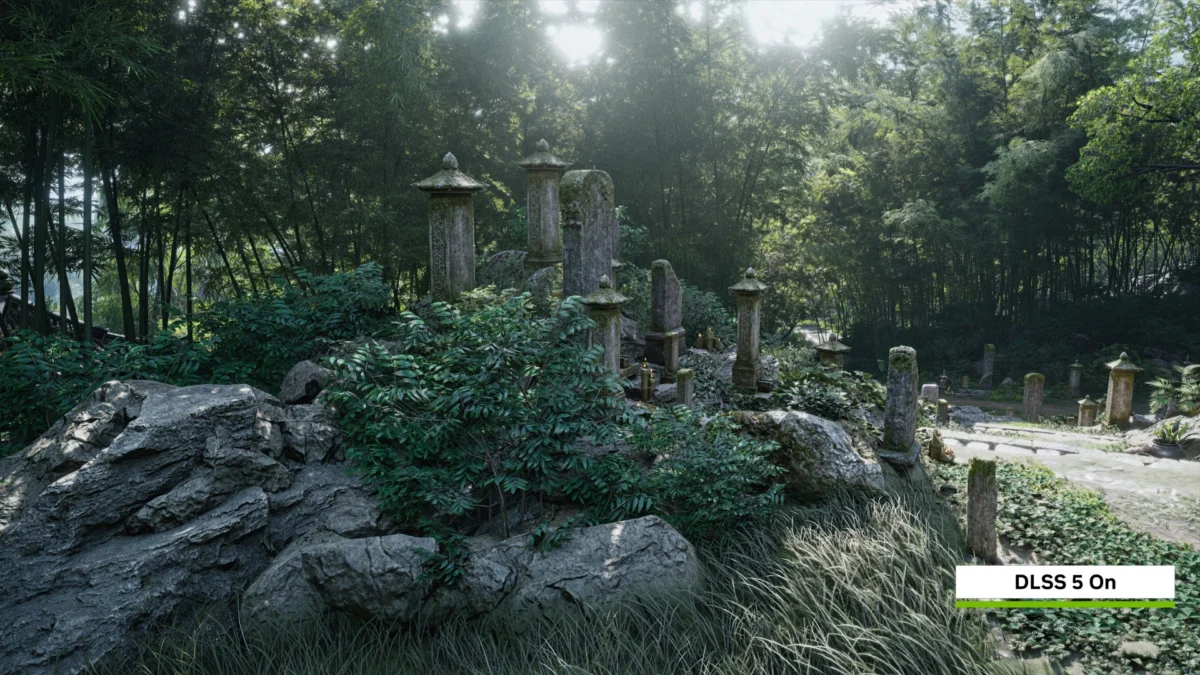
Everstone Studio’s Where Winds Meet presents an entirely different artistic challenge, focusing on the atmospheric, fluid aesthetics of traditional Chinese Wuxia folklore. Set against turbulent historical backdrops, the game features sweeping landscapes, intricate traditional architecture, and hyper-stylized martial arts combat involving wire-fu acrobatics and elemental swordplay. DLSS 5 will be utilized to sharpen environmental textures, refine dynamic wind-swept foliage interactions, and enhance complex particle effects during large-scale skirmishes. The neural rendering technology ensures that fast-moving combat remains artifact-free and visually arresting, capturing the poetic grandeur characteristic of the genre.
Industry Background and Chronological Timeline
The rollout of DLSS 5 represents the culmination of years of research and development within NVIDIA’s Applied Deep Learning Research division. The technology’s lifecycle can be traced through key milestones:
- Early 2025: Initial developer previews of 3D-Guided Neural Rendering concepts circulated among select AAA partner studios.
- September 2026: Official commercial debut of DLSS 5 alongside NBA 2K27, demonstrating the framework’s capability to process complex character models and arena lighting in real-time sports simulations.
- November 2026: Expansion into broader gaming genres, beginning with Hogwarts Legacy on November 5, followed by War Thunder in mid-November, and concluding with Where Winds Meet on November 23.
This measured expansion highlights a deliberate deployment strategy, allowing NVIDIA and its studio partners to test system stability, gather performance telemetry, and optimize AI hardware overhead across varying PC configurations.
Implications and Future Outlook for PC Gaming Hardware
The rapid adoption of DLSS 5 carries profound implications for both software developers and hardware consumers. As video games continue to push the boundaries of graphical fidelity—often straining native hardware capabilities—neural rendering is increasingly viewed by industry veterans as a mandatory pillar of modern game optimization.
From an economic perspective, technologies like DLSS 5 alleviate the mounting production costs associated with ultra-high-definition asset creation. By allowing AI models to intelligently supplement geometric detail and lighting fidelity, studios can achieve cinematic visual standards without exponentially increasing rendering budgets or pricing out players with mid-range hardware configurations.
However, the technology also reinforces hardware segmentation. DLSS 5 relies heavily on specialized Tensor Core architecture found exclusively in modern NVIDIA graphics cards, raising questions regarding cross-vendor parity and accessibility for users operating older hardware generations or competing graphics solutions. Despite these hardware prerequisites, consumer reception toward early implementations remains largely positive, driven by tangible improvements in visual fidelity and sustained frame rate stability.
As the November 2026 launch window progresses, industry observers will closely monitor performance benchmarks for Hogwarts Legacy, War Thunder, and Where Winds Meet. The success of these deployments will likely dictate the speed at which other major publishers transition their upcoming pipelines toward full neural rendering integration, cementing AI as the foundational bedrock of interactive digital entertainment.