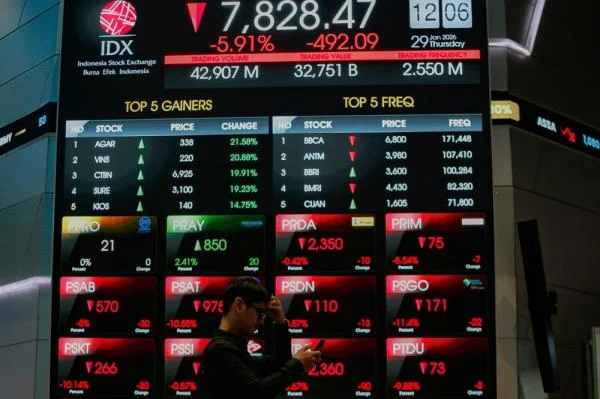
The Jakarta Composite Index (Indeks Harga Saham Gabungan, or IHSG) experienced a minor yet notable downturn during the first week of November 2026, pressured by fluctuating market sentiment, macroeconomic headwinds, and shifting investor allocations across various sectors. According to the official weekly statistical data released by the Indonesia Stock Exchange (Bursa Efek Indonesia, or BEI) on Friday, November 6, 2026, the benchmark index closed the trading week with a slight correction of 0.13 percent, settling at the 5,050.429 level.
This weekly performance marked a subtle retreat from the preceding week’s close. Throughout the five-day trading period spanning from November 2 to November 6, 2026, the domestic stock market encountered persistent selling pressure, prompting analysts to closely monitor domestic economic indicators alongside global market dynamics. The downturn in the headline index also triggered a ripple effect across the broader financial ecosystem, most notably resulting in a significant contraction in total market capitalization and a slight deceleration in daily transactional liquidity.
Market observers note that while the weekly correction was relatively modest in percentage terms, the absolute value wiped out from the market underlines the high-beta nature of the Indonesian bourse during periods of heightened volatility. As regulatory bodies and market participants navigate the closing stretch of the fourth quarter, understanding the underlying drivers of this weekly contraction remains essential for institutional and retail investors alike.
Chronology of Weekly Trading Movement
The trajectory of the IHSG during the November 2–6 trading week was characterized by pronounced intraday volatility and swift shifts in market momentum. Trading commenced on Monday morning under cautious sentiment as regional Asian markets reacted to mixed global economic data, particularly regarding US monetary policy trajectories and commodity price fluctuations.
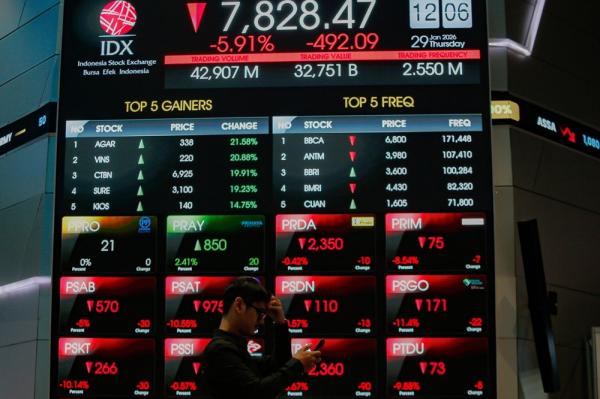
At the beginning of the week, the index attempted to claw back previous losses, buoyed by selective buying in heavy-weight banking and consumer goods counters. However, selling pressure quickly materialized as the week progressed. Mid-week trading sessions witnessed the index testing critical support levels. On Wednesday, November 4, market participants observed a temporary reprieve as the IHSG managed to close higher at 4,919 following bargain-hunting activities in select small-cap and growth stocks, led by popular retail favorites.
Despite mid-week recovery attempts, the overarching bearish sentiment culminated in the index hitting its lowest intraday threshold of the week at 4,824.364 points. This sharp descent reflected brief moments of panic selling and portfolio rebalancing among institutional investors responding to short-term liquidity constraints.
Fortunately, late-week buying in defensive sectors helped mitigate deeper losses. By the time the closing bell rang on Friday afternoon, the IHSG managed to pare some of its earlier steep losses, securing a weekly finish at 5,050.429. This final position represented a minor decrease of approximately 6.62 points compared to the previous week’s closing level of 5,057, illustrating a resilient defense of the psychological 5,000 threshold despite substantial mid-week turbulence.
Comprehensive Breakdown of Market Statistics
The broader financial metrics released by the Indonesia Stock Exchange paint a clearer picture of the contraction experienced across the domestic capital market during the review period. The most striking casualty of the week’s bearish correction was the total market capitalization of the bourse, which suffered a substantial decline.
Data from the BEI weekly statistics revealed that total market capitalization shrank by 1.34 percent over the five-day trading window. In absolute financial terms, this percentage translates to a staggering reduction of Rp119 trillion. The market capitalization dropped from Rp8,862 trillion recorded at the close of the previous week down to Rp8,744 trillion by Friday afternoon. This considerable contraction reflects not only the falling share prices of constituent companies but also the cautious stance adopted by major institutional players who opted to reduce their equity exposure.

In tandem with the drop in market capitalization, transactional activity across the exchange also exhibited signs of cooling down. The average daily trading volume of shares experienced a downward adjustment, slipping by 3.50 percent. Specifically, the average daily volume decreased to 31.29 billion shares traded, down from 32.43 billion shares recorded during the prior week.
Financial analysts attribute this dip in volume to a wait-and-see approach adopted by retail investors, many of whom preferred to stay on the sidelines while waiting for clearer trend reversals. Nevertheless, the continuous liquidity in the tens of billions of shares indicates that market participation remains active, albeit tempered by risk aversion.
Insights and Defensive Strategies Amid Market Pressure
The recent downward pressure on the IHSG has reignited discussions regarding portfolio diversification and asset class resilience within the Indonesian capital market. Amid broader market corrections, market authorities have frequently emphasized the importance of structural safeguards embedded within the local exchange framework.
Earlier in the week, BEI leadership pointed out the growing significance of alternative asset classes, notably Sharia-compliant equities, which have historically demonstrated a greater capacity to withstand macroeconomic shocks and market downturns. According to exchange officials, Sharia-compliant stocks often feature lower leverage ratios and more conservative corporate balance sheets, making them inherently more resilient when broader market indexes face severe selling pressures. This characteristic has proven particularly valuable for risk-averse investors seeking to protect their capital during periods of heightened macroeconomic uncertainty.
Furthermore, market analysts suggest that corporate fundamentals in Indonesia remain fundamentally sound, supported by stable domestic consumption and progressive fiscal policies. Consequently, corrections such as the one observed during the first week of November are frequently viewed by seasoned investors as natural consolidation phases rather than structural reversals. These fluctuations often present strategic accumulation opportunities for long-term investors looking to acquire fundamentally strong blue-chip companies at more attractive valuations.

Broader Economic Implications and Outlook
The performance of the IHSG serves as a vital barometer for the health of Indonesia’s financial sector and broader economy. A weekly contraction accompanied by a Rp119 trillion reduction in market capitalization underscores the sensitivity of domestic equities to both internal sentiment and external global spillovers, including shifting foreign capital flows and currency exchange rate dynamics.
Looking ahead, market participants will continue to monitor several critical catalysts. Key economic indicators—such as quarterly GDP growth figures, corporate earnings reports for the current financial year, and Bank Indonesia’s monetary policy stances regarding interest rates—will play a decisive role in shaping market direction through the remainder of the fourth quarter.
While short-term volatility is expected to persist as investors digest incoming macroeconomic data, the defense of the 5,050 level demonstrates a baseline of market support. Analysts remain cautiously optimistic that as global uncertainties abate and domestic economic fundamentals continue to display robust growth, the Indonesian capital market will regain upward momentum, paving the way for a stronger finish toward the end of the year.