
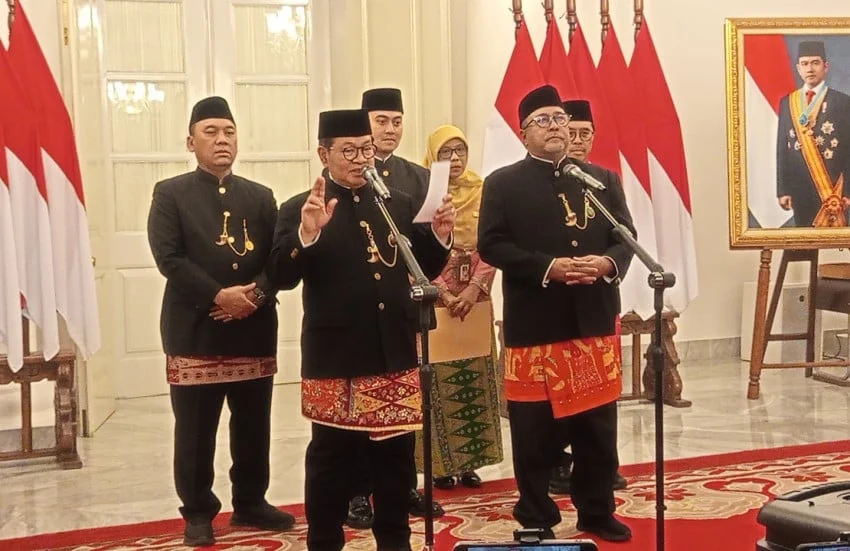
In a significant move aimed at enhancing administrative efficiency and ensuring seamless governance, DKI Jakarta Governor Pramono Anung has announced a comprehensive reshuffle involving 11 high-ranking primary officials within the provincial government. The appointments, which include the notable transfer of the Head of the DKI Jakarta Transportation Agency to the position of Mayor of South Jakarta, underscore a strategic effort to optimize leadership roles and streamline public services across the bustling capital region. The formal inauguration of these officials took place on Wednesday, April 15, 2026, at the DKI Jakarta City Hall, as depicted in images from the ceremony (Jonathan Simanjuntak).
Context and Rationale Behind the Extensive Reshuffle
The reshuffle, termed a "mutation or rotation of high-ranking primary official positions" (jabatan pimpinan tinggi pratama), reflects the Governor’s commitment to dynamic and responsive governance. These "pimpinan tinggi pratama" are typically Echelon II officials within the Indonesian civil service hierarchy, holding critical roles such as heads of provincial agencies, departments, or city mayors. Their positions are pivotal in implementing policies, managing resources, and delivering essential public services to Jakarta’s over 10 million residents.
Governor Anung clarified that while the inauguration ceremony for all 11 officials occurred on April 15, their effective starting dates are strategically staggered. "In this inauguration, there are 11 who were sworn in. Three people are effective starting today, on the day of the inauguration. Then, four people will be effective starting June 1. Three people will be effective starting August 1. One person is awaiting the issuance of a decree for their appointment as a Senior Functional Official (Pejabat Fungsional Utama)," Pramono explained to reporters at the DKI Jakarta City Hall. This staggered approach, he elaborated, is a deliberate tactic to prevent any official positions from being left vacant or temporarily filled by "Pelaksana Tugas (Plt)" (acting officials), a common practice that can sometimes lead to administrative bottlenecks and a lack of full authority.
The Governor’s explicit intention to eliminate the need for acting officials highlights a broader commitment to administrative stability and accountability. Acting officials, while capable, often operate with limited authority regarding budget allocations, long-term strategic planning, and personnel decisions, potentially slowing down critical government functions. By appointing officials well in advance of their start dates, the provincial government aims to ensure that new leaders can transition smoothly, prepare for their new responsibilities, and assume full authority from day one, without the administrative ambiguities associated with Plt status.
Key Appointments and Their Immediate Implications
Among the most prominent changes is the appointment of the Head of the DKI Jakarta Transportation Agency to the role of Mayor of South Jakarta. This particular move carries significant weight, given South Jakarta’s status as one of the capital’s most dynamic and economically vital municipalities. The Mayor of South Jakarta oversees a vast area with diverse demographics, significant commercial centers, and ongoing urban development projects. The transition of a seasoned transportation expert to a mayoral role suggests a strategic emphasis on improving urban mobility, infrastructure management, and integrated planning within one of Jakarta’s busiest regions. The new Mayor will face immediate challenges ranging from traffic congestion and informal settlements to managing public services and fostering local economic growth.
While specific names beyond the Head of Transportation Agency were not detailed in the initial report, the rotation of 11 high-ranking officials indicates a broad realignment across various sectors of the provincial government. These changes are likely to impact critical areas such as urban planning, public works, social services, and economic development. Each new appointment brings a fresh perspective and a new set of priorities, potentially leading to shifts in policy implementation and operational strategies within their respective departments.
The Staggered Transition: A Mechanism for Continuity and Preparedness
The phased implementation of the appointments is a crucial aspect of this reshuffle. By setting effective dates for June 1 and August 1 for a majority of the new officials, Governor Anung provides a structured transition period. This allows outgoing officials ample time to hand over responsibilities, complete ongoing projects, and brief their successors thoroughly. For the incoming officials, it offers an opportunity to familiarize themselves with their new roles, teams, and challenges before formally assuming office. This foresight aims to minimize disruption to public services and maintain the continuity of government operations.
The decision to conduct the swearing-in ceremony for all officials simultaneously, regardless of their start dates, is also noteworthy. "The inauguration is held today, and subsequently, there will be no more inaugurations. They will serve according to the time specified in the decree," Pramono stated. This approach centralizes the official ceremony, reducing logistical complexities and ensuring that all appointees receive their mandate directly from the Governor in a unified event. It also sends a clear message of decisive leadership and a well-planned transition process.
The unique case of one official "awaiting the issuance of a decree for their appointment as a Senior Functional Official (Pejabat Fungsional Utama)" points to another common practice in Indonesian bureaucracy. Appointment to a "Pejabat Fungsional Utama" position often signifies a shift from a structural (managerial) role to an expert (functional) role, where officials contribute their specialized knowledge and experience without direct managerial responsibilities. This can be a career progression for seasoned experts, a way to retain valuable institutional knowledge, or a mechanism to make room for new leaders in structural positions while still utilizing the expertise of experienced civil servants. The delay in this particular decree might be due to administrative procedures specific to functional positions or the need for additional approvals.
Broader Implications for DKI Jakarta’s Governance and Public Services
This reshuffle comes at a critical juncture for DKI Jakarta, a mega-city grappling with complex urban challenges. The provincial government is constantly working to address issues such as persistent traffic congestion, flooding during the rainy season, the need for improved public transportation, waste management, affordable housing, and equitable distribution of social services. The performance of high-ranking officials directly impacts the effectiveness of these efforts.
The Governor’s decision to rotate officials could signify several underlying objectives:
- Performance Enhancement: A reshuffle often aims to bring in fresh leadership or move officials to roles where their skills and experience are better suited, thereby boosting overall performance.
- Combating Stagnation: Regular rotation prevents officials from becoming complacent or entrenched, encouraging new ideas and approaches.
- Strategic Alignment: New appointments can help align leadership with the Governor’s current policy priorities and strategic vision for the capital.
- Succession Planning: It can also be part of a broader succession planning strategy, grooming future leaders and ensuring a robust talent pipeline within the civil service.
- Addressing Specific Challenges: Moving a transportation expert to a mayoral role, for instance, might be a direct response to specific urban mobility challenges identified in South Jakarta.
The reshuffle’s impact will be closely watched by various stakeholders, including residents, businesses, and civil society organizations. The effectiveness of the new leadership in their respective departments will directly translate into the quality of public services and the pace of development initiatives. For instance, the new Mayor of South Jakarta will be under scrutiny to see how they tackle local infrastructure projects, community engagement, and urban planning challenges. Similarly, the new Head of the Transportation Agency (once appointed) will inherit the immense task of managing Jakarta’s complex transportation network and advancing projects like the MRT, LRT, and bus rapid transit systems.
The Role of the Governor in Regional Autonomy
Under Indonesia’s system of regional autonomy, provincial governors hold significant authority in managing their respective administrations. This includes the power to appoint, transfer, and dismiss high-ranking officials, albeit often with consultation and approval from central government bodies like the Ministry of Home Affairs, especially for Echelon II positions. Governor Pramono Anung’s exercise of this authority reflects the dynamic nature of regional governance and the prerogative of elected leaders to shape their administrative teams.
This particular reshuffle might also be interpreted in the context of broader civil service reforms in Indonesia, which emphasize meritocracy, professionalism, and accountability. The stated goal of avoiding acting officials aligns with principles of good governance, aiming to ensure that all positions of authority are filled by permanent, fully empowered individuals.
Looking Ahead: Challenges and Opportunities for the New Leadership
The incoming officials face a daunting yet exciting array of challenges and opportunities. Jakarta, as a global city, is constantly evolving, requiring agile and innovative leadership. The new team will need to quickly adapt to their roles, foster collaboration across departments, and work diligently to address the pressing needs of the city’s inhabitants. Their success will not only be measured by their individual performance but also by their collective ability to drive the provincial government’s agenda forward and improve the quality of life for all Jakartans.
The staggered implementation allows for a measured approach, providing a period for transition and continuity. However, it also means that the full impact of this comprehensive reshuffle will only become apparent over several months as all new officials settle into their roles and begin to implement their visions. The ultimate success of Governor Anung’s strategic reorganization will depend on the new appointees’ capabilities, their commitment to public service, and their ability to navigate the complex administrative and political landscape of Indonesia’s capital city. The reshuffle signals a clear intention to inject renewed vigor and focused leadership into the DKI Jakarta Provincial Government, with the overarching goal of delivering more efficient and effective public services to its citizens.
