
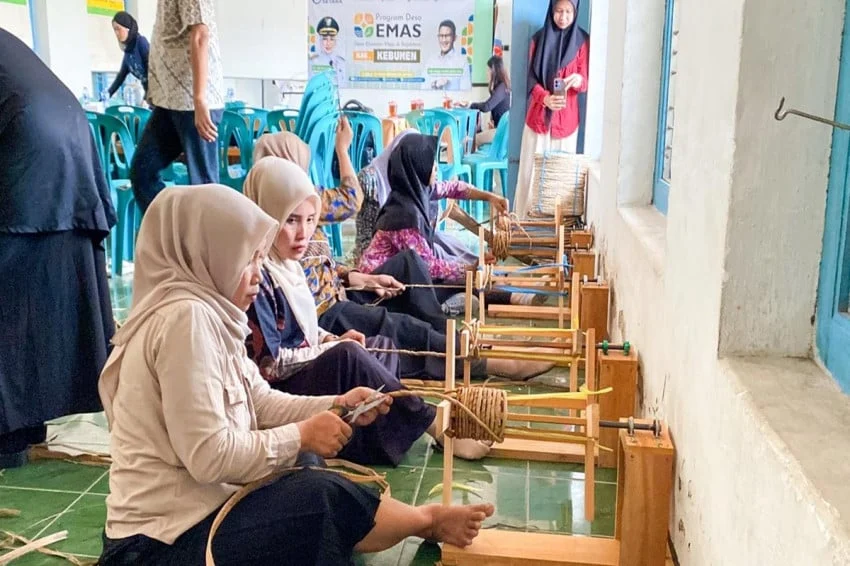
In a significant stride towards rural economic empowerment and sustainable waste management, the INOTEK Foundation, in collaboration with Yayasan Indonesia Setara (YIS) and the Kebumen Regency Government, recently inaugurated the "Desa Emas 2026" (Golden Village 2026) program. Held at the Lajer Village Hall in Dukuh Kademagan Ambal, Kebumen, the initiative aims to cultivate an entrepreneurial spirit among local communities by converting readily available agricultural waste into valuable economic assets. This program represents a concerted effort to not only boost local economies but also to instill principles of circular economy and environmental stewardship at the grassroots level.
Background: The Imperative for Rural Transformation
Indonesia, an archipelago nation rich in agricultural resources, faces the dual challenge of managing organic waste efficiently and stimulating economic growth in its vast rural areas. While agriculture forms the backbone of many regional economies, a significant portion of agricultural by-products, such as banana peels, often goes to waste, contributing to environmental burdens rather than economic benefits. The Kebumen Regency, located in Central Java, is no exception, with its agrarian landscape producing abundant biomass that, if properly managed, could unlock substantial value. The "Desa Emas" concept, envisioned as a long-term strategy, seeks to transform these often-overlooked rural communities into vibrant hubs of innovation, productivity, and self-sufficiency by the year 2026. It addresses a critical need for diversified income streams beyond traditional farming, offering pathways to improved livelihoods and reduced economic vulnerability.
Historically, rural communities in Indonesia have grappled with limited access to market information, skill development opportunities, and financial literacy, hindering their potential for sustainable economic growth. The Desa Emas 2026 program is designed to bridge these gaps, offering practical skills training, business development support, and market linkages. It is rooted in the understanding that empowering individuals with the tools to create their own economic opportunities is far more sustainable than purely relying on external aid. The choice of Lajer Village as the initial site for this program underscores its strategic importance, serving as a model that can potentially be replicated across other villages within Kebumen and beyond.
A Deep Dive into the Program’s Structure and Initial Workshops
The recent launch event brought together dozens of enthusiastic residents, eager to learn and participate in the transformative workshops. The core of the initial phase revolved around hands-on training sessions focused on converting banana peel waste into intricate handicrafts. This specific choice of raw material is highly pertinent given the widespread cultivation of bananas in the region, ensuring a sustainable and abundant supply of the primary input.
The workshop commenced with a comprehensive module on the process of spinning banana peel fibers. Participants were guided through the stages of collecting, drying, retting, and extracting fibers from banana stems and peels. This labor-intensive but rewarding process requires patience and precision, transforming what would otherwise be discarded into a versatile material suitable for weaving and crafting. Following fiber extraction, attendees were taught various techniques for weaving and assembling these fibers into a diverse range of products, including decorative items, household goods, and fashion accessories. The emphasis was placed not just on technical skills but also on fostering creativity and an eye for design, crucial elements for market appeal.
A pivotal segment of the workshop featured an inspiring sharing session led by Siswanto, a civil servant from the Alian sub-district of Kebumen. Siswanto has emerged as a local luminary in the field of banana peel craftsmanship, demonstrating how dedication and ingenuity can turn waste into significant profit. He shared his personal journey, detailing the initial challenges, the trial-and-error process of developing his craft, and eventually, the triumph of building a successful side business. Siswanto not only coordinates local artisans but also acts as a collector of dried banana peel raw material, creating a micro-economy around this overlooked resource. His candid account of achieving a monthly income that surpasses the Kebumen Regional Minimum Wage (UMR) served as a powerful testament to the economic viability of the craft. He highlighted how this additional income has become a vital support for his family’s daily needs and, critically, for funding his children’s education, underscoring the profound socio-economic impact of entrepreneurial endeavors.
Beyond the technical skills, the Desa Emas 2026 program recognizes that true entrepreneurship requires robust business acumen. Therefore, the curriculum extended into crucial areas of financial management and market penetration. Following Siswanto’s inspiring talk, participants engaged in a practical workshop on calculating the Cost of Goods Sold (HPP – Harga Pokok Penjualan) and managing finances effectively. This module equipped participants with fundamental accounting principles, enabling them to accurately price their products, understand profit margins, and maintain healthy cash flows – critical skills often lacking in nascent micro-enterprises.
Further enhancing the participants’ market readiness, subsequent workshops focused on modern marketing techniques. This included a session on product photography, leveraging the power of Artificial Intelligence (AI) to produce professional-quality images even with limited resources. In today’s digital age, high-quality visuals are paramount for attracting customers, especially for handcrafted goods sold online. Complementing this, a workshop on optimizing social media for marketing provided insights into creating engaging content, reaching target audiences, and building a brand presence on popular platforms. These digital literacy components are essential for connecting rural artisans to broader national and even international markets, transcending geographical limitations.
Supporting Data and Broader Context
Indonesia generates approximately 67.8 million tons of waste annually, with organic waste, including agricultural residues, constituting a significant proportion. In agricultural regions like Central Java, banana cultivation is extensive, leading to substantial quantities of banana stems and peels post-harvest. Estimates suggest that for every kilogram of banana fruit, there can be up to 2 kilograms of waste from the plant itself. Traditionally, these materials are either left to decompose, burned (contributing to air pollution), or used as low-value animal feed. The Desa Emas program directly addresses this by valorizing waste, aligning with national efforts to promote a circular economy model.
Micro, Small, and Medium Enterprises (MSMEs), or UMKM in Indonesia, are the backbone of the national economy, contributing over 60% to the country’s Gross Domestic Product (GDP) and employing over 97% of the workforce. However, rural UMKM often face disproportionate challenges, including limited access to capital, lack of business formalization, and insufficient marketing expertise. Programs like Desa Emas 2026 are vital in empowering these enterprises, providing them with the necessary tools and knowledge to thrive. The Kebumen Regency, with its UMR typically ranging between IDR 2.1 million to IDR 2.2 million (approximately USD 135-145) per month, offers a clear benchmark for economic improvement. Siswanto’s success in surpassing this figure through his craft underscores the significant potential for income generation through value-added activities.
Statements and Reactions from Related Parties
Officials from the participating organizations expressed strong optimism about the program’s potential. Mr. Budi Santoso, a representative from the Kebumen Regency Government, emphasized the administration’s commitment to sustainable development. "The Desa Emas 2026 program is a testament to our dedication to fostering self-reliance and innovation within our communities," Santoso stated. "By transforming waste into economic value, we are not only addressing environmental concerns but also creating tangible pathways for our citizens to improve their livelihoods. This aligns perfectly with our regional development agenda of promoting green economy and empowering local UMKM."
From the INOTEK Foundation, which champions innovation for social impact, Dr. Siti Nuraini, their Program Director, highlighted the strategic importance of technology and entrepreneurship. "Our collaboration with YIS and the local government in Kebumen is a prime example of how integrated approaches can drive sustainable change. We believe that by equipping individuals with both traditional crafting skills and modern digital marketing expertise, we are preparing them for the demands of the contemporary market. Siswanto’s story is a powerful narrative that demonstrates the potential inherent in every community when given the right tools and encouragement."
Ms. Rina Lestari, Executive Director of Yayasan Indonesia Setara (YIS), underscored the social equity aspect of the initiative. "Our mission is to create a more equitable Indonesia, and economic empowerment at the village level is fundamental to achieving this. The Desa Emas program empowers marginalized communities, particularly women and youth, by providing them with skills that can lead to independent income generation. It’s about more than just making crafts; it’s about building confidence, fostering community solidarity, and enabling individuals to take control of their economic futures."
Participants in the workshop also shared their enthusiasm. Ibu Ani, a mother of three from Lajer Village, expressed her hopes. "I never imagined banana peels could be turned into such beautiful and useful things. Siswanto’s story gave me so much hope. I’m excited to learn these skills and hopefully earn some extra income for my family," she remarked, holding up a sample of spun banana fiber. Another participant, Bapak Joko, highlighted the value of the business training. "The financial management and social media workshops are incredibly useful. It’s not enough to just make things; we need to know how to sell them and manage our money. This program is teaching us the whole package."
Broader Impact and Implications
The Desa Emas 2026 program in Kebumen carries multifaceted implications, promising a ripple effect across economic, environmental, and social dimensions.
Economic Impact:
The most immediate and tangible impact is the potential for increased household income and the creation of new micro-enterprises. By converting waste into saleable products, residents gain an alternative or supplementary income stream, reducing their reliance on volatile agricultural markets. This diversification of the local economy can lead to greater financial stability for families and a reduction in poverty levels. The program also fosters a local supply chain, from banana peel collectors to fiber processors and crafters, creating jobs at various stages of production. Furthermore, successful artisans could attract tourism, offering workshops or selling directly to visitors, thereby injecting further capital into the local economy.
Environmental Impact:
The program directly contributes to sustainable waste management practices. By upcycling banana peels, it reduces the volume of organic waste sent to landfills or disposed of through burning, mitigating greenhouse gas emissions and pollution. It promotes the principles of a circular economy, where resources are reused and recycled, minimizing waste and maximizing value. This approach not only benefits the local environment but also aligns with national and global sustainability goals.
Social Impact:
Beyond economic gains, the Desa Emas 2026 program strengthens community cohesion and fosters a sense of collective purpose. Participants collaborate, share knowledge, and support each other, building a stronger social fabric. The acquisition of new skills, particularly in craftsmanship and digital marketing, boosts self-esteem and empowers individuals, especially women and youth, to take on more active roles in their community’s economic development. The success stories emerging from the program can inspire others, creating a positive feedback loop of innovation and entrepreneurship. It also addresses rural-urban migration by creating viable economic opportunities within villages, encouraging residents to stay and contribute to their local communities.
Replicability and Long-term Vision:
The model implemented in Lajer Village has significant potential for replication across other villages in Kebumen and even in different regions of Indonesia. The success factors – community engagement, practical skill transfer, business acumen development, and leveraging local resources – are transferable. The long-term vision for Desa Emas 2026 extends beyond just craft production. It envisions self-sufficient villages that are recognized for their unique products, potentially evolving into eco-tourism destinations or centers for sustainable innovation. The program is not merely about a single workshop but about laying the groundwork for a resilient, environmentally conscious, and economically vibrant rural future. The ongoing mentorship and support from INOTEK, YIS, and the Kebumen local government will be crucial in ensuring the sustainability and growth of these nascent enterprises, transforming a simple waste material into a golden opportunity for Kebumen’s communities.
