
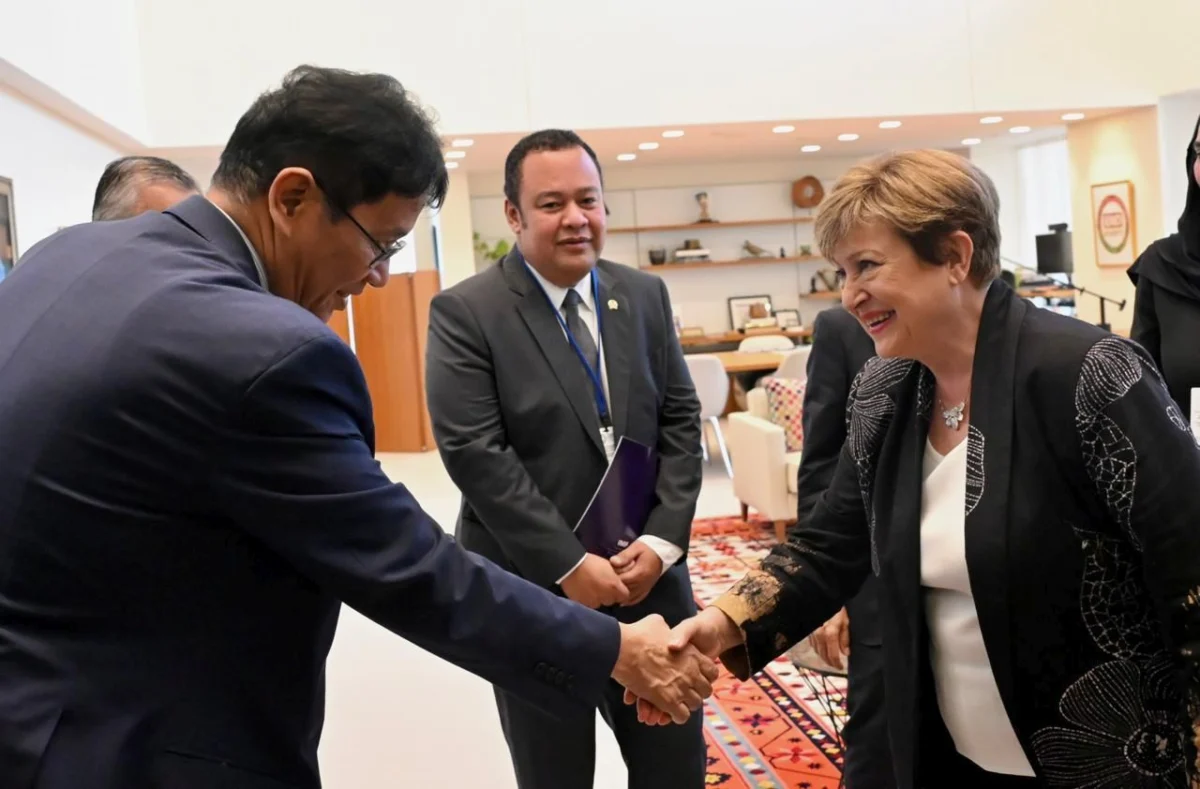
Indonesia’s Finance Minister, Purbaya Yudhi Sadewa, engaged with a formidable cohort of global financial leaders in Washington D.C., United States, on Tuesday, April 14, 2026, delivering a compelling narrative of the nation’s economic resilience and prudent fiscal management. The high-profile meetings included discussions with Kristalina Georgieva, Managing Director of the International Monetary Fund (IMF), senior officials from the World Bank, and representatives from leading international credit rating agencies such as S&P Global Ratings. The overarching message from these influential global bodies and private investors was one of profound admiration for Indonesia’s strategic fiscal approach, even extending offers of assistance, underscoring the international community’s confidence in the archipelago’s economic trajectory amidst a volatile global landscape.
Indonesia’s Fiscal Prowess: A Global Benchmark
Minister Purbaya’s agenda in Washington D.C. was multifaceted, primarily aimed at articulating Indonesia’s unwavering commitment to balancing robust economic growth with the long-term sustainability of its State Budget (APBN). This delicate equilibrium is particularly crucial given the prevailing global uncertainties, which range from persistent inflationary pressures and supply chain disruptions to geopolitical tensions and the ongoing imperative of climate change mitigation.
During his interactions, Minister Purbaya meticulously detailed the government’s comprehensive policy framework designed to navigate these complex challenges. "We met with 18 major investors, including titans like Goldman Sachs and Fidelity Investments. Their primary objective was to grasp the direction of Indonesia’s growth policies and budget management, and crucially, to assess the credibility and sustainability of these strategies," Purbaya stated in a press release issued in Jakarta on Wednesday, April 15, 2026. This extensive engagement highlights the global financial market’s deep interest in understanding the nuances of Indonesia’s economic governance.
The Minister elaborated that the government presented a thorough overview of its adopted policies, meticulously outlining their anticipated impact on both the national budget and overall economic expansion. The response from the IMF, World Bank, and credit rating agencies was overwhelmingly positive, with particular emphasis on Indonesia’s demonstrated capacity to foster accelerated economic growth without unduly burdening its fiscal policy. "They exhibited high enthusiasm and delved deeper into our economic fundamentals and policies. They have consistently questioned how Indonesia manages to achieve faster growth while maintaining a controlled budget," he explained, pointing to a persistent curiosity about Indonesia’s unique balancing act.
The Washington Dialogues: Engagement with Global Financial Leaders
The series of meetings in Washington D.C. served as a critical platform for Indonesia to reaffirm its position as a stable and attractive investment destination. The discussions with the IMF, led by Kristalina Georgieva, likely centered on Indonesia’s macroeconomic stability, structural reforms, and resilience to external shocks. The IMF, as a global lender of last resort and a monitor of the international financial system, typically scrutinizes countries’ fiscal prudence, debt sustainability, and monetary policy effectiveness. Their positive reaction suggests an endorsement of Indonesia’s adherence to sound economic principles.
Similarly, the engagement with the World Bank officials would have focused on Indonesia’s development agenda, including poverty reduction efforts, infrastructure development, human capital investment, and climate change initiatives. The World Bank often provides financing and technical assistance for development projects, and a strong fiscal position enhances a country’s eligibility and capacity to absorb such aid effectively. The reported offer of "assistance" could signify enhanced partnership opportunities, preferential lending terms, or increased technical support from these multilateral institutions, recognizing Indonesia’s commendable fiscal discipline.
The presence and positive feedback from representatives of S&P Global Ratings, one of the ‘Big Three’ credit rating agencies, is particularly significant. Credit ratings are crucial for a country’s access to international capital markets and the cost of its borrowing. S&P’s assessment typically covers economic structure and growth prospects, fiscal performance and flexibility, debt burden, and external liquidity. Their "admiration" for Indonesia’s fiscal strategy indicates a strong likelihood of maintaining or even improving Indonesia’s investment-grade sovereign credit rating, which signals lower risk to investors and can attract further capital inflows. Indonesia has consistently maintained an investment-grade rating from S&P (currently ‘BBB’ with a stable outlook), Moody’s (‘Baa2’ stable), and Fitch (‘BBB’ stable), reflecting a long-standing confidence in its macroeconomic stability and policy framework.
Chronology of Fiscal Discipline and Economic Reforms
Indonesia’s journey to this point of international recognition has been built on a foundation of sustained fiscal discipline and strategic economic reforms, particularly post-pandemic.
- Early 2020s (COVID-19 Pandemic): Like many nations, Indonesia faced unprecedented economic challenges, necessitating a temporary widening of its budget deficit beyond the statutory 3% of GDP limit to fund healthcare and social safety nets. This counter-cyclical fiscal policy prevented a deeper economic contraction.
- 2022-2023: Fiscal Consolidation: The government demonstrated remarkable resolve by initiating an aggressive fiscal consolidation program. This involved a combination of revenue optimization (e.g., tax reforms, digitalizing tax administration) and expenditure prioritization, bringing the budget deficit back within the 3% ceiling ahead of schedule by 2023. This rapid return to fiscal prudence distinguished Indonesia from many peers.
- Ongoing Structural Reforms: Alongside fiscal consolidation, Indonesia has been aggressively pursuing structural reforms to enhance its investment climate and boost long-term growth potential. Key initiatives include:
- Omnibus Law on Job Creation (2020): Aimed at streamlining regulations, simplifying business permits, and improving labor market flexibility to attract investment.
- Resource Downstreaming Policy: Prohibiting the export of raw materials like nickel ore and bauxite to encourage domestic processing and value-added industries, significantly boosting export revenues and creating jobs.
- Infrastructure Development: Continued investment in roads, ports, airports, and digital infrastructure to improve connectivity and logistical efficiency across the vast archipelago.
- Digital Economy Push: Fostering a vibrant digital ecosystem, attracting significant venture capital, and supporting the growth of tech startups.
- 2024-2026: Sustained Growth and Stability: Indonesia has consistently delivered robust economic growth, often exceeding 5% annually, even as global economic growth moderated. This growth has been underpinned by strong domestic consumption, increasing investment, and resilient exports, despite commodity price fluctuations. Inflation has also been effectively managed, staying within the central bank’s target range.
Supporting Data and Economic Performance
Indonesia’s economic indicators paint a compelling picture of stability and growth, justifying the international community’s admiration:
- GDP Growth: Indonesia’s Gross Domestic Product (GDP) has shown remarkable resilience. For instance, in 2023, the economy grew by approximately 5.05%, a strong performance considering global headwinds. Projections for 2024 and 2025 by institutions like the IMF and World Bank also typically place Indonesia’s growth above 4.5-5.0%, positioning it among the fastest-growing large economies.
- Inflation Control: The central bank, Bank Indonesia, in close coordination with the government, has successfully managed inflationary pressures. After a post-pandemic surge, inflation has largely returned to the target range of 2-4%, demonstrating effective monetary and fiscal policy synchronization.
- Budget Deficit: The government’s commitment to fiscal consolidation is evident in its budget deficit reduction. From a peak of over 6% during the pandemic, the deficit was successfully brought back to below 3% of GDP by 2023, a significant achievement that reassured investors about long-term fiscal health.
- Debt-to-GDP Ratio: Indonesia maintains a relatively low and manageable public debt-to-GDP ratio, typically around 40% or lower. This is considerably lower than many developed and emerging economies, providing ample fiscal space for future shocks or development spending.
- Foreign Direct Investment (FDI): While Minister Purbaya noted the current interest in portfolio investment, Indonesia has also been a consistent recipient of substantial FDI, indicating long-term confidence in its economic prospects. In 2023, FDI inflows remained robust, driven by sectors like manufacturing, mining, and services.
- Trade Balance: Indonesia has consistently recorded a trade surplus, driven by strong commodity exports and the success of its resource downstreaming policy, particularly in nickel products. This contributes to a healthy current account balance and strengthens external resilience.
Investor Confidence and Portfolio Inflows
Minister Purbaya’s meetings with 18 major investors, including global financial powerhouses like Goldman Sachs and Fidelity Investments, underscored the burgeoning interest in Indonesia’s financial markets. These institutions manage trillions of dollars in assets and their engagement signals a serious consideration of Indonesia as a viable investment destination.
Investors from the United States, in particular, showed significant interest in Indonesia’s financial sector instruments, encompassing both fixed income and equity markets. This preference for "portfolio investment" – typically involving purchases of stocks, bonds, and other financial assets – suggests a growing appetite for Indonesia’s liquid assets. While distinct from Foreign Direct Investment (FDI), which involves long-term investments in productive assets, portfolio investment is often a precursor and a strong indicator of overall market confidence. Increased portfolio inflows can have several positive impacts:
- Strengthening the Rupiah: Inflows of foreign currency to purchase Indonesian assets can appreciate the Rupiah, making imports cheaper and helping to control inflation.
- Boosting Capital Markets: Increased demand for stocks and bonds can drive up market capitalization, improve liquidity, and reduce borrowing costs for Indonesian companies and the government.
- Validation of Policies: The influx of "hot money" signifies that global investors perceive Indonesia’s economic policies as sound and its markets as offering attractive returns relative to risk.
"This is mostly portfolio investment, not foreign direct investment (FDI). However, we are optimistic that these funds will flow in the near future and contribute to strengthening Indonesia’s capital markets," the Minister added. This optimism is well-founded, as a robust and liquid capital market can further enhance Indonesia’s appeal for long-term FDI by providing avenues for exit strategies and access to local financing.
The "How" of Indonesia’s Economic Management
The central question posed by international observers – "how can Indonesia grow faster with a controlled budget?" – speaks to the ingenuity of its fiscal and economic strategies. The answer lies in a multi-pronged approach:
- Prudent Fiscal Policy: The government has prioritized productive expenditures, channeling funds towards critical infrastructure projects, human capital development (education and health), and targeted social safety nets, which have a high multiplier effect on the economy. Concurrently, efforts to curb unproductive spending and enhance efficiency have been intensified.
- Revenue Mobilization: Beyond traditional tax collection, Indonesia has embarked on comprehensive tax reforms, including expanding the tax base, improving tax administration through digitalization, and optimizing non-tax revenues. This ensures that the government has sufficient resources without relying excessively on debt.
- Structural Reforms for Investment: The aforementioned Omnibus Law on Job Creation and other deregulation initiatives have significantly improved the ease of doing business, making Indonesia more attractive to both domestic and foreign investors. Streamlined licensing processes, reduced bureaucratic hurdles, and greater legal certainty have lowered the cost of doing business.
- Resource Downstreaming: This strategic industrial policy has been a game-changer. By processing raw materials like nickel into higher-value products (e.g., stainless steel, battery components), Indonesia not only boosts its export earnings but also fosters domestic industrialization, technology transfer, and job creation. This adds significant value to its natural endowments, moving beyond being merely a commodity exporter.
- Digital Transformation: Embracing the digital economy has opened new avenues for growth, particularly in e-commerce, fintech, and digital services, leveraging Indonesia’s large, digitally native population.
Broader Impact and Future Outlook
The enthusiastic reception received by Minister Purbaya and his delegation carries significant implications for Indonesia’s economic future:
- Policy Validation and Credibility: The strong endorsement from the IMF, World Bank, and major rating agencies validates Indonesia’s current macroeconomic policies and strengthens the credibility of its economic leadership on the global stage. This can instill greater confidence among domestic and international stakeholders.
- Enhanced Access to Capital: A positive international perception can translate into more favorable borrowing terms for the government and Indonesian corporations, reducing the cost of financing development projects and business expansion. It also encourages increased capital inflows, both portfolio and FDI.
- Resilience Against Global Headwinds: In an era marked by persistent global uncertainties, having the backing and confidence of major international financial institutions provides Indonesia with a stronger buffer against potential external shocks, making its economy more resilient.
- Catalyst for Further Reforms: The positive feedback may further embolden the government to continue its reform agenda, pushing for deeper structural changes that can unlock even greater economic potential and improve long-term competitiveness.
- Regional Leadership: Indonesia’s success story serves as an encouraging example for other emerging markets, particularly within ASEAN, demonstrating that disciplined fiscal management combined with strategic economic reforms can yield significant rewards even in challenging global environments.
However, the journey ahead is not without its challenges. Indonesia must remain vigilant against potential global economic slowdowns, commodity price volatility, and the ever-present threat of climate change. Sustaining the momentum of reforms, ensuring inclusive growth, and effectively managing the transition to a green economy will be critical for Indonesia to solidify its position as a leading economic power in the 21st century. The admiration from the World Bank, IMF, and global investors is a powerful affirmation, but also a call to maintain the disciplined and strategic approach that has brought Indonesia this far.
