
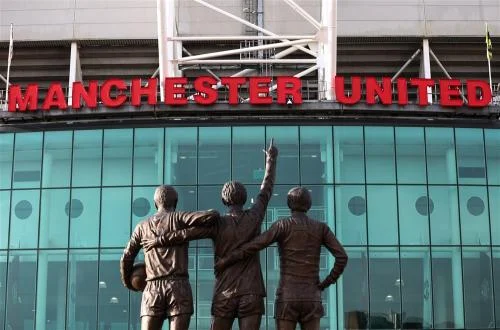
The prospect of a Qatari investment consortium lodging an early bid for Manchester United Football Club has ignited discussions and concerns among football aficionados regarding the escalating economic inequalities at the pinnacle of the sport. Should this acquisition materialize, it would mark the third major English Premier League club to fall under the stewardship of a wealthy, oil-rich Middle Eastern investment group, further cementing elite football’s status as a trophy asset for the ultra-wealthy and a vehicle for national ambitions.
The Qatari Interest: A Deepening Financial Commitment
Reports surfaced on Tuesday, February 14, 2023, indicating that a consortium of Qatari investors was preparing to submit an initial proposal for Manchester United by the end of that week. Citing individuals familiar with the matter, Bloomberg News detailed that officials from the Qatar Investment Authority (QIA), the nation’s sovereign wealth fund, were actively involved in the preparatory stages, collaborating with a local family office. This development immediately sent ripples through the financial markets, with Manchester United’s shares experiencing a notable surge in New York trading on the same day. The club’s market capitalization stood at approximately $3.9 billion USD, equivalent to roughly Rp 59.8 trillion at the time of reporting, underscoring its immense commercial value.
The potential involvement of Qatar as a state-backed entity significantly amplifies the likelihood of such a bid succeeding, primarily due to the sheer financial firepower available. To date, the only other prominent party to have publicly expressed interest is British billionaire Sir Jim Ratcliffe, who has reportedly been collaborating with financial giants Goldman Sachs Group Inc. and JPMorgan Chase & Co. on a potential offer.
Sir Jim Ratcliffe, the founder and majority shareholder of petrochemicals giant Ineos Group Holdings Plc, is recognized as the second-wealthiest individual in the United Kingdom, with a net worth estimated at $13.4 billion USD (approximately Rp 203 trillion) according to the Bloomberg Billionaires Index. While this wealth is substantial, it pales in comparison to the QIA’s estimated $450 billion USD (around Rp 6,826 trillion) in assets under management. The Emir of Qatar, Sheikh Tamim bin Hamad Al Thani, is known to be a fervent supporter of Manchester United, adding a personal dimension to the potential acquisition.
Navigating Regulatory Hurdles: UEFA’s Multi-Club Ownership Rules
A significant potential impediment to any Qatari takeover lies within the regulatory framework governing European football. UEFA, the continent’s governing body, has stringent rules in place to prevent clubs with common majority ownership from competing in major European tournaments. This rule is designed to ensure fair competition and prevent conflicts of interest.
Qatar Sports Investments (QSI), a subsidiary of the QIA, currently holds ownership of Paris Saint-Germain (PSG), the prominent French Ligue 1 club. The prospect of another major European club, particularly one of Manchester United’s stature and global reach, falling under the same ownership umbrella raises immediate questions about its eligibility for competitions like the UEFA Champions League. Such a scenario could be a deal-breaker for both fan bases and the broader football hierarchy.
The feasibility of the acquisition will hinge on UEFA’s determination of whether QSI and QIA are deemed to be independent entities. This assessment is crucial, especially given that the chairman of QSI, Nasser Al-Khelaifi, also holds a position on UEFA’s executive committee. This dual role could introduce complexities and scrutiny into the decision-making process.
Precedents and Potential Scrutiny
UEFA has encountered similar situations in the past. In 2018, RB Leipzig of Germany and Red Bull Salzburg of Austria competed against each other in the Champions League, despite both clubs being part of the Red Bull GmbH conglomerate. UEFA ultimately ruled that no single person or entity controlled both clubs, allowing them to participate. However, the scale and prominence of Manchester United and Paris Saint-Germain present a more significant challenge to this principle of independence.
Even if QSI and QIA are deemed separate entities by UEFA, the acquisition would still place two of the world’s top five clubs by revenue under the control of investors with state ties to Qatar. This would undoubtedly stir considerable debate across Europe, where football officials are already grappling with the financial sustainability of regional leagues in the face of the Premier League’s immense spending power.
The Financial Fair Play Conundrum
Under Qatari ownership, PSG has been responsible for some of the most expensive player transfers in football history. This includes the record-breaking €222 million ($238 million) acquisition of Neymar Jr. from Brazil in 2017 and the subsequent €180 million transfer of Kylian Mbappé the following year.
Such extravagant spending might face greater constraints at a Qatar-owned Manchester United, particularly in light of recent developments within the Premier League. Last week, Manchester City, owned by Abu Dhabi’s sovereign wealth fund, was formally accused by the Premier League of over 100 alleged breaches of financial rules, commonly referred to as "Financial Fair Play" (FFP) regulations. This action signals a potential tightening of enforcement regarding financial regulations within the league.
Meanwhile, Newcastle United, acquired by Saudi Arabia’s Public Investment Fund (PIF) in 2021, has demonstrated a more measured approach to its spending compared to Manchester City or Chelsea, the latter of which was purchased by American investor Todd Boehly from Russian oligarch Roman Abramovich last year. The FFP accusations against Manchester City could serve as a cautionary tale for any new owners of Manchester United, suggesting that unchecked spending might attract increased regulatory attention.
Valuations, Fan Expectations, and the Future of Elite Football
The Glazer family, the current owners of Manchester United, has reportedly been seeking a valuation of $6 billion USD for the club, as reported by Bloomberg News last year. This valuation translates to an enterprise value to earnings before interest, taxes, depreciation, and amortization (EV/EBITDA) ratio of over 60 times. While Manchester United boasts an illustrious history and arguably the largest global fanbase among Premier League clubs, its on-field success has been less consistent in the past decade.
The club’s supporters have frequently voiced their discontent with the Glazer ownership, blaming them for excessive debt burdens and insufficient investment in the team and infrastructure. Many fans would likely welcome a Qatari group that could potentially place the club on a more financially stable footing, comparable to that of its rivals with state-backed ownership.
The potential Qatari acquisition of Manchester United is not merely a financial transaction; it represents a broader trend that could reshape the landscape of elite football. It highlights the increasing concentration of wealth and power in the hands of a few sovereign wealth funds and ultra-high-net-worth individuals. This influx of capital, while potentially bringing immediate financial stability and ambitious sporting projects, also raises fundamental questions about the competitive balance, financial sustainability, and the very soul of the sport. The coming months will be critical in determining whether this bid progresses and what implications it will have for the future of one of the world’s most iconic football clubs and the sport as a whole.
