
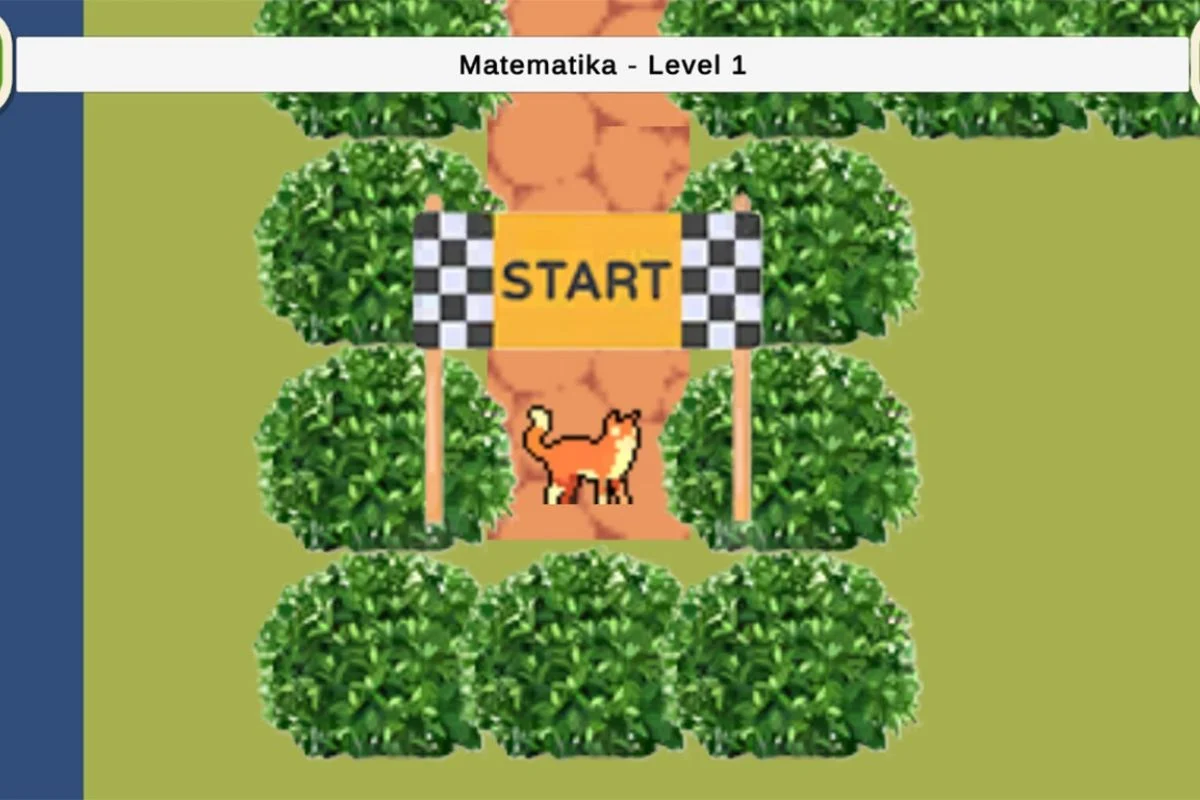
For many children, mathematics is often perceived as a daunting and tedious subject. The abstract nature of numbers, the complexity of formulas, and the challenge of problem-solving can quickly extinguish their enthusiasm for learning. However, developing strong numerical skills is crucial from an early age, forming the bedrock for future academic and practical success. Fortunately, the rapid advancement of technology has ushered in a new era of mathematics education, offering engaging and enjoyable learning experiences through a variety of smartphone gaming applications. This technological shift liberates children from the confines of traditional practice books, introducing interactive gameplay and captivating visuals that transform mathematics into a relaxed and exciting pursuit. Children are increasingly motivated to tackle mathematical problems without the conscious feeling of "studying," fostering a more positive and enduring relationship with the subject. This article explores several recommended mathematics game applications that can significantly bolster a child’s computational abilities.
The integration of educational games into early childhood learning is not a new concept, but the sophistication and accessibility offered by modern mobile applications represent a significant leap forward. Historically, parents and educators have sought creative methods to make abstract concepts like numbers and operations more tangible and appealing. Early attempts often involved physical manipulatives, board games, and interactive storytelling. However, the digital age has amplified these efforts, providing dynamic platforms that adapt to individual learning paces and offer immediate feedback, crucial elements for effective skill development. The global market for educational technology, particularly in the K-12 sector, has witnessed exponential growth. Reports from market research firms consistently highlight a strong demand for digital learning tools that enhance engagement and improve learning outcomes. For instance, a recent analysis projected the global educational games market to reach tens of billions of dollars in the coming years, underscoring the widespread adoption and perceived value of such tools. This surge is driven by parents’ increasing awareness of the importance of early numeracy and a desire for supplementary learning resources that align with their children’s digital fluency.
Gamified Learning: A Paradigm Shift in Math Education
The traditional classroom setting, while foundational, can sometimes struggle to cater to the diverse learning styles and attention spans of young children. Mathematics, with its inherent logic and sequential nature, can be particularly challenging to present in a universally engaging manner. This is where educational gaming applications come into play, offering a compelling alternative by embedding mathematical concepts within interactive narratives and challenging puzzles. These applications leverage principles of game design, such as reward systems, progression, and immediate feedback, to keep children motivated and invested in their learning journey.
The psychology behind gamified learning is rooted in intrinsic motivation. When learning is presented as a challenge with clear goals and achievable rewards, it taps into a child’s natural desire for mastery and accomplishment. The visual appeal and interactive elements of these games also contribute to sustained engagement, reducing the likelihood of boredom or frustration that can often accompany rote memorization or repetitive drills. By transforming abstract mathematical principles into concrete challenges within a game world, children can develop a deeper understanding and a more intuitive grasp of the subject matter. This approach not only enhances computational skills but also fosters critical thinking, problem-solving abilities, and logical reasoning.
Top Gaming Applications for Enhancing Mathematical Skills
1. King of Maths: Building Foundational Numeracy Through Adventure
"King of Maths" stands out as a popular choice for cultivating foundational mathematical skills in children. This application frames various mathematical concepts, including basic algebra, geometry, and division, within an engaging adventure narrative. Children are invited to select a character and embark on challenges that involve solving numerical problems to progress. A key feature of "King of Maths" is its emphasis on finding missing numbers, a mechanic that not only sharpens computational accuracy but also significantly enhances a child’s logical reasoning and meticulousness. The game is designed to be accessible to elementary school students and is typically available for free on multiple platforms, making it a widely accessible resource. The game’s structure, which often involves navigating different levels or worlds, mirrors the progression seen in many popular video games, thereby tapping into a child’s familiarity with interactive entertainment. This familiar interface reduces the learning curve, allowing children to focus on the mathematical content.
The educational philosophy behind "King of Maths" aligns with constructivist learning theories, where children actively build their understanding through exploration and problem-solving. By presenting mathematical tasks within a context that requires strategic thinking and pattern recognition, the game encourages children to internalize mathematical principles rather than simply memorizing them. For instance, a geometry challenge might require a child to identify shapes and their properties to unlock a path, or an algebra problem could involve balancing equations to defeat a digital adversary. This contextualization makes the learning process more meaningful and memorable.
2. Math Tango: A Whimsical Journey into Arithmetic
"Math Tango" transports children to a vibrant and magical island filled with colorful landscapes and intriguing quests. Guided by the character Uncle Fibonacci, children embark on missions that require them to solve mathematical problems to earn gems. These collected gems can then be used to unlock new characters and game elements, adding a layer of personalization and progression. Through dozens of interactive math lessons, "Math Tango" allows children to practice arithmetic skills while simultaneously building their own fantasy world. This dual approach of learning and creation fosters a sense of ownership and investment in the game.
The choice of Uncle Fibonacci as a guide is particularly noteworthy, referencing Leonardo of Pisa, better known as Fibonacci, a renowned mathematician whose sequence has profound implications in nature and mathematics. This subtle nod to mathematical history can spark curiosity about the origins and applications of mathematical concepts. The game’s design often incorporates elements of exploration and discovery, encouraging children to actively seek out challenges and rewards. This aligns with the principles of discovery learning, where learners are empowered to find solutions through their own investigations. The visual design, characterized by bright colors and imaginative settings, is crucial in capturing and retaining the attention of young learners, making the abstract world of numbers feel more approachable and exciting.
3. Math Puzzle Games: Sharpening Logic and Analytical Skills
"Math Puzzle Games" are specifically engineered to hone children’s logical thinking and analytical abilities. These applications present a series of challenging mathematical riddles that require focused problem-solving. The learning process is structured around puzzle-solving mechanics, which inherently promotes interactivity and prevents monotony. This approach encourages children to think critically and strategically, breaking down complex problems into smaller, manageable steps.
Parents can leverage these games as a consistent learning activity, reinforcing concentration and improving their child’s computational prowess. The iterative nature of puzzle-solving means that children are continually exposed to new challenges, building resilience and adaptability in their problem-solving strategies. Furthermore, many of these puzzle games are designed with adaptive difficulty settings, ensuring that children are consistently challenged without being overwhelmed. This personalized learning path is a hallmark of effective digital educational tools, ensuring that each child progresses at their optimal pace. The emphasis on logic and analysis extends beyond mere arithmetic, equipping children with transferable skills applicable to various academic disciplines and real-world scenarios.
4. Math Duel: Fostering Speed and Mental Agility
For children who thrive on competition and challenges, "Math Duel" offers an exciting gaming experience. This application is designed to enhance quick thinking by tasking children with combining number cards and mathematical operations to form correct equations. The competitive nature of the game motivates children to improve their mental calculation skills without succumbing to boredom. This element of direct competition, whether against an AI opponent or another player, introduces an element of urgency and excitement that can significantly boost performance.
The core mechanic of "Math Duel"—rapidly forming equations—directly targets the development of fluency in arithmetic operations. This fluency is essential for tackling more complex mathematical concepts later on. By engaging in timed challenges, children learn to perform calculations quickly and accurately, a skill that is invaluable in both academic and practical settings. The game’s design often incorporates leaderboards and scoring systems, further fueling the competitive spirit and encouraging children to strive for continuous improvement. This focus on speed and accuracy is a departure from purely conceptual learning, offering a more direct approach to skill mastery.
5. Prodigy Math Game: An Immersive RPG Adventure
"Prodigy Math Game" is widely recognized as one of the most popular mathematics applications available. It adopts a role-playing game (RPG) format, seamlessly integrating curriculum content for grades 1 through 8 into a captivating fantasy adventure. The game’s adaptive system adjusts the difficulty level based on the child’s individual abilities, ensuring that the learning experience is always appropriately challenging. A significant advantage for parents is the integrated progress-tracking feature, which allows them to monitor their child’s academic development and identify areas where further support might be needed.
The RPG format is particularly effective because it taps into children’s natural inclination for exploration, character development, and narrative engagement. In "Prodigy," mathematical problems are presented as the means to overcome obstacles, defeat monsters, and progress through the game’s story. This contextualization makes learning feel like a natural part of the adventure, rather than an imposed task. The adaptive learning engine is a crucial component, ensuring that children are neither bored by overly simple problems nor discouraged by those that are too difficult. This personalized approach maximizes learning efficiency. The reporting features provide valuable insights for parents, transforming the game from a purely recreational activity into a valuable educational tool that supports structured learning.
6. Monster Math: Engaging Challenges for Young Learners
"Monster Math" boasts an impressive library of over 67 mathematical skill materials, ranging from basic arithmetic operations to more advanced concepts like decimals. Specifically designed for children aged 6 to 10 years old, the game presents exciting missions such as defeating monsters and rescuing friends. The game’s narrative structure is built around these engaging objectives, making the practice of mathematical skills feel like a heroic endeavor.
Similar to other applications, "Monster Math" provides weekly progress reports, which are invaluable for parents in monitoring their child’s mathematical development. The game’s visual design is often cartoonish and vibrant, appealing to the target age group. The challenges are presented in a way that requires children to apply their knowledge of numbers and operations to achieve specific goals within the game world. This active application of learned skills is a powerful way to solidify understanding and build confidence. The progression through different levels and the introduction of new types of monsters and challenges ensure that the game remains engaging over time, encouraging sustained practice.
7. Todo Math: Inclusive and Accessible Learning
"Todo Math" is celebrated for its inclusive and child-friendly design, catering to children aged 3 to 8 years old. The application is meticulously crafted to meet diverse learning needs, incorporating features such as dyslexia-friendly fonts and a left-hand mode. Its multisensory approach, which combines visual, auditory, and tactile elements, makes the introduction of mathematical concepts a delightful and intuitive experience for young children.
The focus on accessibility in "Todo Math" is particularly important in ensuring that all children, regardless of their specific learning challenges or preferences, can benefit from digital educational tools. The use of visual aids, engaging sound effects, and interactive touch controls creates a rich and immersive learning environment. For very young children, the introduction to numbers and basic counting can be overwhelming. "Todo Math" simplifies these concepts through playful interactions, such as counting animated objects or matching numerical symbols. The multisensory approach helps to reinforce learning by engaging multiple parts of the brain, leading to better retention and understanding.
The Role of Parental Guidance in Digital Learning
While these gaming applications offer a revolutionary approach to mathematics education, the indispensable role of parents in a child’s learning journey cannot be overstated. Active parental involvement, including playing alongside their children, discussing the concepts encountered in the games, and setting appropriate screen time limits, is crucial. This guidance ensures that the learning experience remains balanced and that children develop healthy digital habits.
Parents can act as facilitators, helping their children to connect the abstract concepts learned in games to real-world applications. For example, if a child is learning about multiplication through a game, a parent can reinforce this by discussing how multiplication is used in everyday situations, such as calculating the number of items needed for a recipe or determining the total cost of multiple identical items. This bridging of the gap between digital play and tangible reality is essential for developing a comprehensive understanding of mathematical principles. Furthermore, parental oversight can help identify any potential issues, such as a child struggling with a particular concept, allowing for timely intervention and additional support.
The integration of these gaming applications into a child’s educational routine, when coupled with appropriate parental guidance, can effectively cultivate a genuine love for mathematics from an early age. This proactive approach to early numeracy development can have profound and lasting positive impacts on a child’s academic trajectory and their overall confidence in their cognitive abilities. The ability to approach challenges with a sense of curiosity and a belief in their problem-solving capacity is a valuable life skill fostered through such engaging and supportive learning environments.
Future Implications and Broader Impact
The success of these innovative gaming applications signifies a broader trend in education: the increasing reliance on technology to personalize and enhance learning. As artificial intelligence and adaptive learning technologies continue to mature, we can expect even more sophisticated and effective educational games to emerge. These future applications may offer even more tailored learning paths, real-time feedback that adapts instantly to a child’s needs, and immersive experiences that further blur the lines between play and learning.
The implications of this shift are far-reaching. It suggests a future where education is not confined to traditional classrooms but is accessible anytime, anywhere, and tailored to the unique needs of each learner. This democratization of education has the potential to bridge learning gaps and empower a new generation of critical thinkers and problem-solvers. The early success of math gaming apps is a testament to the power of technology when thoughtfully applied to educational challenges, promising a more engaging, effective, and enjoyable learning experience for children worldwide. The data consistently shows that early exposure to engaging STEM content can lead to increased interest and proficiency in these fields throughout a student’s academic career. Therefore, tools like these math games are not just about improving current grades but about shaping future academic and career pathways.
