
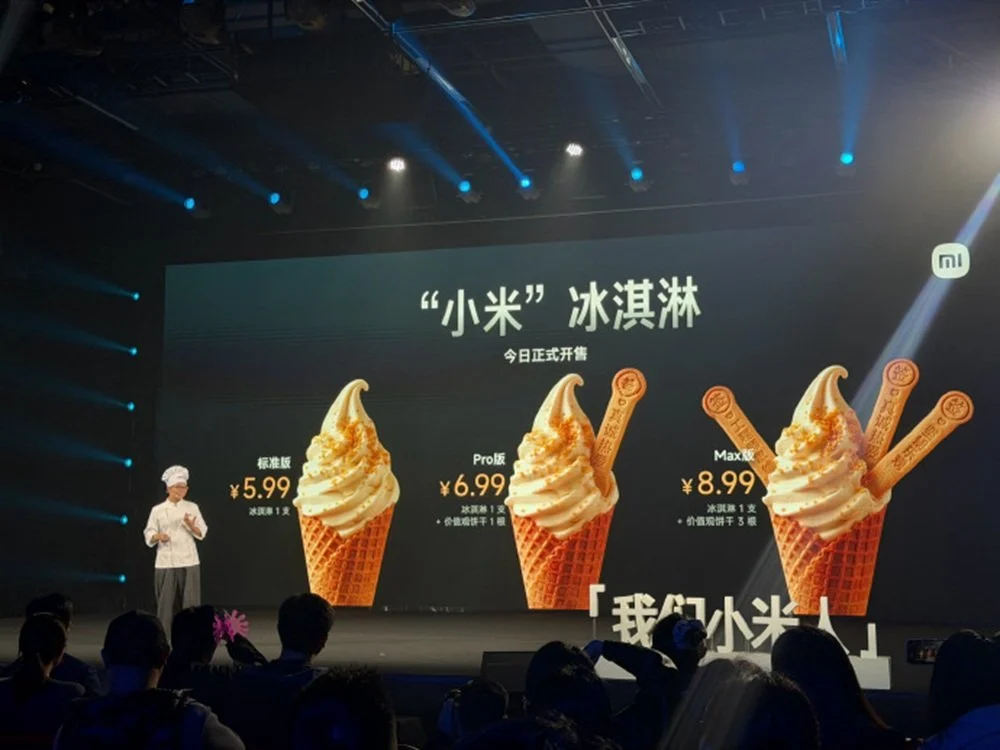
Xiaomi, a global technology giant renowned for its expansive portfolio encompassing smartphones, electric vehicles, and an array of smart home devices, has ventured into an unexpected domain: frozen desserts. At its recent Values 2026 Conference, the company unveiled a new line of ice cream, a move that has surprised industry observers and consumers alike. This culinary foray into the competitive dessert market sees Xiaomi offering its ice cream in three distinct tiers: Standard, Pro, and Max, each priced to cater to different consumer preferences and budgets.
The launch signifies a bold diversification strategy for Xiaomi, moving beyond its traditional technological offerings. While the company has steadily expanded its consumer electronics and lifestyle product ecosystem, the introduction of edible goods, specifically ice cream, marks a significant departure and a testament to its ambition to integrate into various facets of daily life. This expansion into food products, while unconventional for a tech company, aligns with a growing trend among major corporations to leverage their brand recognition and supply chain expertise into adjacent or entirely new markets.
A Deep Dive into the New Ice Cream Lineup
Xiaomi’s new ice cream collection mirrors the tiered product strategies often seen in its technology releases, featuring a Standard, Pro, and Max version. This approach allows for a differentiated product offering, appealing to a broader consumer base with varying price points and feature sets.
The Standard variant is positioned as the accessible entry point, retailing at 5.99 yuan, which converts to approximately $0.83 USD or around Rp15,000. This pricing strategy suggests an aim to capture a significant share of the everyday treat market, making it a readily available indulgence for Xiaomi’s vast customer base.
Stepping up the offering, the Pro version introduces an added element of texture and flavor complexity with the inclusion of cookies. Priced at 6.99 yuan (approximately $0.97 USD or Rp17,000), this tier caters to consumers seeking a slightly more elaborate dessert experience without a substantial price increase. The addition of cookies likely enhances the mouthfeel and overall enjoyment, differentiating it from the basic offering.
The premium offering, the Max variant, elevates the experience further by incorporating three cookies. This version is priced at 9.99 yuan (approximately $1.39 USD or Rp22,000), positioning it as the most indulgent option in the lineup. The triple cookie addition suggests a richer, more satisfying dessert, designed for those who desire a more decadent treat. The pricing of all three variants indicates a strategic move to offer competitive options within the bustling Chinese ice cream market, which is estimated to be worth billions of dollars.
The Millet Connection: A Culinary Tribute to Xiaomi’s Roots
The innovation behind Xiaomi’s ice cream lies not just in its tiered marketing but also in its core ingredient. Bing Jiabao, a chef from Xiaomi’s cafeteria, revealed that the inspiration for the ice cream’s unique formulation stemmed from a desire to incorporate millet, a staple grain deeply intertwined with Xiaomi’s brand identity. The company’s name itself, "Xiaomi," translates to "millet" in Chinese, highlighting the grain’s historical and cultural significance.
Chef Bing Jiabao explained that the development process was inspired by traditional tofu-based ice creams and involved extensive experimentation to infuse the subtle flavor of millet into a frozen dessert. After a rigorous three-stage development process, the recipe was perfected, addressing the challenge of imparting a robust millet flavor without compromising the dessert’s appeal.
The refined method involves steaming millet to create a paste, which is then blended with milk. The final touch includes a topping of millet grains, providing an additional textural and visual element. This deliberate incorporation of millet is a strategic move by Xiaomi to reinforce its brand narrative and connect with consumers on a deeper, culturally resonant level. It transforms the ice cream from a mere product into a culinary embodiment of the company’s heritage.
Strategic Implications and Market Analysis
Xiaomi’s foray into the ice cream market, while seemingly unconventional, is indicative of a broader corporate strategy aimed at brand diversification and ecosystem expansion. By venturing into food and beverage, Xiaomi is tapping into a market with consistently high consumer demand and a relatively lower barrier to entry compared to highly regulated sectors like pharmaceuticals or advanced materials.
Brand Reinforcement and Consumer Engagement: The use of millet in its ice cream is a masterful stroke in brand reinforcement. It allows Xiaomi to tell a consistent story about its origins and values, making its products, whether technological or edible, feel more cohesive and relatable. This can foster deeper consumer loyalty and create unique brand touchpoints beyond the typical tech-related interactions.
Ecosystem Expansion: The ice cream launch can be seen as an extension of Xiaomi’s "1+4+N" IoT strategy, which aims to build a comprehensive smart living ecosystem. While not directly a "smart" product, it aligns with the lifestyle aspect of this ecosystem, offering consumers everyday consumables that are associated with the brand they trust. This can also create opportunities for cross-promotional activities with other Xiaomi products, such as smart refrigerators or kitchen appliances.
Market Opportunity: The Chinese ice cream market is substantial and continues to grow, driven by rising disposable incomes and evolving consumer tastes. Xiaomi’s established brand recognition and extensive distribution network provide a significant advantage in penetrating this market. The tiered pricing strategy allows them to compete with both local and international brands across different market segments.
Potential Challenges: Despite the promising outlook, Xiaomi will face stiff competition in the ice cream sector. Established domestic and international brands have long-standing market presence, consumer trust, and sophisticated supply chains. Maintaining product quality, ensuring consistent distribution, and effectively marketing a food product will be crucial. Furthermore, navigating food safety regulations and consumer perceptions of a tech company entering the food industry will be key challenges.
A Timeline of Innovation and Diversification
Xiaomi’s journey from a smartphone manufacturer to a diversified technology and lifestyle conglomerate has been marked by strategic expansions into various sectors. While the ice cream launch is a recent development, it is part of a larger pattern of innovation and market penetration.
- 2010: Xiaomi is founded, initially focusing on its MIUI custom Android ROM.
- 2011: The first Xiaomi smartphone, the Mi 1, is launched, quickly gaining popularity for its high specifications at competitive prices.
- 2013-2015: The company begins its aggressive expansion into the Internet of Things (IoT) and smart home devices, launching products like the Mi Band, Mi Power Bank, and Mi Box. This period marks the genesis of its "1+4+N" strategy.
- 2016-2018: Xiaomi diversifies further into lifestyle products, including laptops, scooters, backpacks, and kitchenware, solidifying its brand presence beyond just electronics.
- 2019-2022: The company continues its global expansion, entering new markets and introducing a wider range of products, including smart TVs, air purifiers, and even smart locks.
- 2023: Reports emerge of Xiaomi’s ambitious venture into the electric vehicle (EV) market, with the first vehicle, the SU7, being officially launched in late 2023. This represents a significant leap into a capital-intensive and highly competitive industry.
- 2026 (Values Conference): Xiaomi unveils its latest diversification effort: ice cream. This event, the Values 2026 Conference, serves as the platform for showcasing this unexpected product line, demonstrating the company’s ongoing commitment to exploring new frontiers and integrating its brand into everyday consumer experiences.
This timeline illustrates a consistent drive for growth and a willingness to challenge traditional market boundaries. The ice cream launch, while seemingly small in comparison to its EV ambitions, is a logical extension of its strategy to become an omnipresent brand in consumers’ lives.
Expert and Consumer Reactions (Inferred)
While direct quotes from industry experts and consumers regarding Xiaomi’s ice cream are not available in the provided content, we can infer potential reactions based on industry trends and past consumer responses to similar corporate diversifications.
Industry analysts might view this move as a calculated risk, leveraging brand equity to explore a high-volume, lower-margin market. Some may praise Xiaomi’s bold approach to diversification, while others might question the strategic alignment with its core technology business. There could be concerns about potential brand dilution if the ice cream quality does not meet consumer expectations or if it detracts from the company’s primary focus on innovation in electronics.
Consumer reactions are likely to be mixed. Many loyal Xiaomi fans may embrace the new product with curiosity and enthusiasm, eager to try anything associated with their favorite brand. The "novelty factor" of a tech company selling ice cream will undoubtedly generate buzz. However, traditional ice cream consumers might be skeptical, comparing it against established brands with decades of experience in the culinary field. The taste, texture, and overall quality will be the ultimate arbitrum of success in this segment. Positive reviews highlighting the unique millet flavor and the appealing tiered options could sway public opinion. Conversely, any perceived shortcomings in taste or ingredient quality could lead to swift criticism, especially in the highly competitive Chinese food market.
The Future of Tech-Food Hybrids
Xiaomi’s move into the ice cream market prompts questions about the future of technology companies venturing into the food and beverage sector. As brands seek new avenues for growth and deeper consumer engagement, the lines between traditional industries are becoming increasingly blurred.
This trend could lead to more tech companies exploring similar diversifications, potentially focusing on health-conscious snacks, smart kitchen appliances integrated with food services, or even entirely new food concepts enabled by technological innovation. The key to success in these ventures will lie in understanding consumer needs, maintaining stringent quality control, and effectively communicating brand values.
For Xiaomi, the ice cream represents more than just a new product; it’s a statement of its ambition to be a lifestyle brand that touches every aspect of a consumer’s life. Whether this culinary experiment will be as successful as its technological endeavors remains to be seen, but it undoubtedly adds an intriguing new chapter to the ongoing story of brand diversification in the 21st century. The company’s ability to innovate, adapt, and connect with consumers on multiple levels will be paramount as it continues to push the boundaries of what a technology company can be.
