
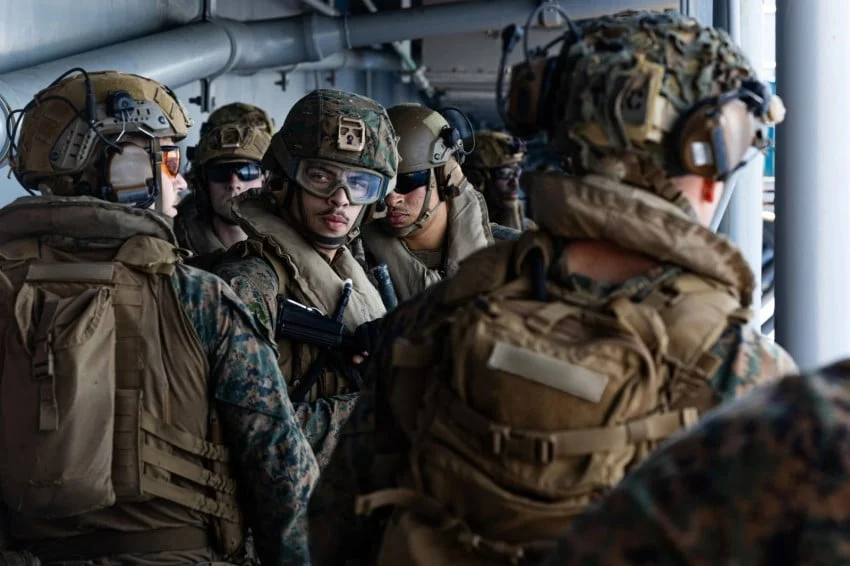
The United States Army is reportedly developing its own proprietary artificial intelligence (AI) chatbot system, designed to augment the decision-making capabilities of soldiers during complex military operations. This initiative, operating under the Army’s Rapid Intelligence and AI Implementation Project (ARIA), aims to create a digital assistant capable of processing sensitive information and delivering critical mission data in real-time, particularly in high-risk operational environments where network connectivity may be compromised or entirely absent. This development signifies a significant step in the Army’s ongoing modernization efforts, seeking to leverage advanced AI to maintain a technological edge in an increasingly intricate global security landscape.
The core objective of this AI chatbot is to serve as an intelligent assistant for ground forces, providing them with synthesized information and actionable insights that can significantly reduce cognitive load. Unlike commercially available large language models (LLMs) that often rely on extensive cloud-based infrastructure and constant internet access, this military-grade AI is being engineered to function autonomously or with intermittent connectivity. This resilience is paramount for battlefield applications, where communication lines can be disrupted by enemy action or the sheer remoteness of the operational area. The system is intended to support a range of critical functions, from real-time situation analysis and mission planning to the simulation of operational scenarios and the optimization of logistical support.
Background and Strategic Imperative
The push for AI integration within military structures is not a new phenomenon, but the current pace and ambition reflect a broader strategic shift. Global military powers are increasingly investing in AI to enhance their operational effectiveness, encompassing areas such as intelligence, surveillance, and reconnaissance (ISR), autonomous systems, cyber warfare, and command and control. The US Army’s ARIA project is a direct response to this evolving threat environment. The ability to process vast amounts of data rapidly, identify patterns, and present concise, relevant information to commanders and individual soldiers under pressure is seen as a decisive advantage.
Historically, military decision-making has relied heavily on human analysis of fragmented intelligence reports, maps, and communication intercepts. While human expertise remains indispensable, the sheer volume and velocity of information in modern conflicts can overwhelm even the most experienced personnel. AI, in this context, is not envisioned as a replacement for human judgment but as a powerful force multiplier. By automating the laborious tasks of data collation and initial analysis, AI can free up human operators to focus on higher-level strategic thinking, tactical execution, and ethical considerations.
Project ARIA: A Timeline of Development
While specific dates for the ARIA project’s inception are not publicly detailed, its emergence aligns with a broader trend in military AI development that has gained significant momentum over the past decade. The US Department of Defense has consistently articulated its commitment to AI as a critical technology for future warfare. Early research and development efforts focused on specific applications, such as predictive maintenance for vehicles and aircraft, or automated target recognition.
The ARIA project, as described, represents a more sophisticated application, moving towards generative AI capabilities within a controlled and secure military environment. The development is likely to have followed a phased approach:
- Initial Concept and Research: Understanding the feasibility of an AI chatbot that could operate in restricted network environments and process classified data. This phase would have involved extensive research into AI architectures, security protocols, and data handling.
- Prototype Development: Building early versions of the AI chatbot, focusing on core functionalities like information synthesis and real-time data retrieval. This would have involved extensive coding, model training, and initial testing with simulated data.
- Testing and Evaluation: Conducting rigorous testing in simulated and controlled environments to assess the AI’s accuracy, speed, security, and usability. This phase is crucial for identifying and rectifying any shortcomings. The article mentions that "several phases of testing have reportedly been conducted," indicating that the project is well into its development cycle and moving towards potential deployment.
- Refinement and Iteration: Based on test results, the AI model would undergo further refinement, with adjustments to algorithms, data sets, and user interface. This is an ongoing process in AI development.
- Potential Deployment Consideration: Following successful testing and validation, the Army would then consider the practicalities of wider deployment, including integration into existing command and control systems, training requirements for personnel, and ethical oversight mechanisms.
The mention of "several phases of testing" suggests that the project has progressed beyond the initial conceptual stages and is actively being vetted for operational readiness. This implies a significant investment of resources and expertise.
Key Features and Capabilities
The proprietary AI chatbot under ARIA is designed with several critical capabilities tailored for military operations:
- Secure Data Processing: A fundamental requirement is the ability to process classified and sensitive battlefield information without compromising national security. This necessitates robust encryption, secure data pipelines, and potentially on-premise or air-gapped processing capabilities, rather than relying on public cloud infrastructure.
- Real-time Information Synthesis: The system is intended to ingest data from various sources – sensor feeds, intelligence reports, satellite imagery, communications intercepts – and synthesize it into a coherent and actionable format. This could involve identifying enemy movements, assessing terrain suitability, or predicting potential threats.
- Offline/Limited Connectivity Operation: Unlike consumer-grade chatbots, this military AI must be resilient to network disruptions. This likely means employing advanced on-device processing or distributed network architectures that can function effectively even when disconnected from broader networks.
- Reduced Cognitive Load: By presenting information in a concise, digestible manner and offering potential courses of action, the AI aims to reduce the mental burden on soldiers and commanders, allowing them to make faster, more informed decisions.
- Scenario Simulation: The ability to simulate operational scenarios can be invaluable for training and planning. The AI could help war-game potential outcomes of different tactical approaches, identify vulnerabilities, and optimize resource allocation.
- Logistics Management: Efficient logistics are the backbone of any military operation. The AI could assist in tracking supplies, predicting needs, and optimizing delivery routes, especially in challenging terrains or under duress.
Ethical Considerations and Human Oversight
A crucial aspect emphasized by the military is the stringent ethical framework guiding the development and deployment of this AI system. The statement that "development of the AI system is conducted under strict control to ensure compliance with the ethics of war and international security protocols" is a critical reassurance. Furthermore, the assertion that "the final decision remains in the hands of humans" underscores the principle of human-in-the-loop control.
This approach is consistent with established military doctrines and international humanitarian law, which mandate that human judgment and accountability are always paramount in decisions involving the use of force. AI is intended to be a tool that enhances human decision-making, not to automate it entirely, especially in matters of life and death.
The ethical considerations surrounding military AI are multifaceted, including:
- Accountability: Establishing clear lines of responsibility when AI is involved in operational decisions.
- Bias: Ensuring that the AI models are not trained on biased data that could lead to discriminatory outcomes.
- Transparency: Understanding how the AI arrives at its recommendations, even if it’s a "black box" in some instances, for validation and debugging.
- Escalation: Preventing AI from inadvertently escalating conflicts due to misinterpretation or algorithmic errors.
The US Army’s emphasis on these aspects suggests a proactive approach to mitigating potential risks associated with AI in warfare.
Broader Implications and Future Outlook
The development of a proprietary AI chatbot by the US Army has several significant implications:
- Technological Advancement: It signals a commitment to staying at the forefront of AI technology and developing specialized capabilities that cannot be met by commercial off-the-shelf solutions. This could spur further innovation within the defense sector.
- Operational Effectiveness: If successful, this AI could significantly enhance the speed and accuracy of decision-making on the battlefield, potentially leading to improved mission outcomes and reduced casualties.
- Geopolitical Competition: As other major powers are also investing heavily in military AI, this development contributes to the ongoing technological arms race. The US Army’s efforts aim to maintain its qualitative and quantitative superiority.
- Doctrine Evolution: The integration of advanced AI tools will likely necessitate adjustments in military doctrine and training to effectively leverage these new capabilities.
The journey from development to widespread operational deployment is often long and complex, involving not only technological readiness but also the development of robust training programs, maintenance protocols, and clear command structures. The fact that "several phases of testing have reportedly been conducted" suggests that the Army is moving deliberately, focusing on ensuring the system is reliable, secure, and effective before committing to broader adoption.
The future of warfare is undeniably intertwined with artificial intelligence. Initiatives like Project ARIA represent the early stages of this transformation, where AI is not just a supplementary tool but an integrated component of military strategy and execution. The US Army’s investment in a bespoke AI chatbot underscores its recognition of the evolving nature of conflict and its determination to equip its forces with the most advanced technological capabilities available. The success of this project could set a precedent for future AI development within the military, influencing how soldiers operate and make critical decisions in the complex and unpredictable environments of the 21st century. The ongoing evolution of AI in military applications necessitates continuous dialogue about its capabilities, limitations, and, most importantly, its responsible and ethical deployment.
