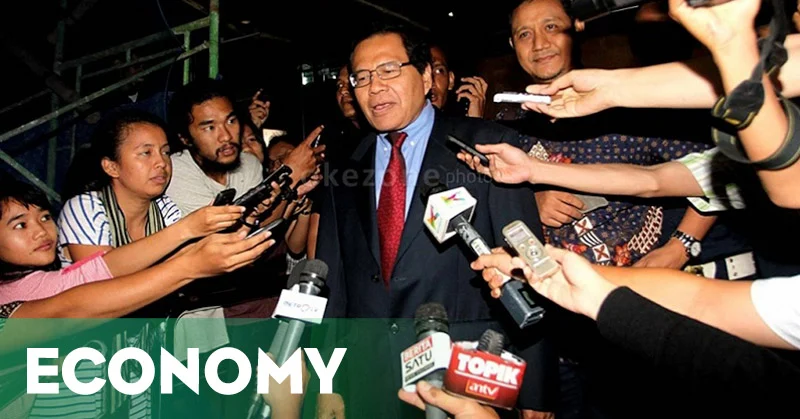
The Coordinating Minister for Maritime Affairs and Resources, Rizal Ramli, maintained a notable silence on Monday, November 9, 2015, regarding the recent developments surrounding the dissolution of Pertamina Energy Trading Limited (Petral). Despite persistent inquiries from the media following a high-level meeting at his office in Jakarta, the minister opted not to provide a formal statement concerning the forensic audit findings that have sent shockwaves through Indonesia’s energy industry. The audit, conducted by an independent firm, recently uncovered significant evidence of third-party interference in the procurement of crude oil and fuel products, highlighting long-standing systemic issues within the nation’s energy supply chain.
The scene at the Coordinating Ministry for Maritime Affairs and Resources was one of strategic avoidance. After presiding over a session focused on the diversification and decentralization of national energy, Rizal Ramli was seen exiting the premises while being swarmed by journalists. When asked for his reaction to the Ministry of Energy and Mineral Resources’ (ESDM) report on Petral’s irregular activities, Ramli merely smiled and raised both hands, signaling a refusal to engage. Staff members accompanying the minister clarified that his haste was due to a scheduled state function at the Presidential Palace, where President Joko Widodo was set to receive the President of the Italian Republic, Sergio Mattarella, for an official welcoming ceremony.
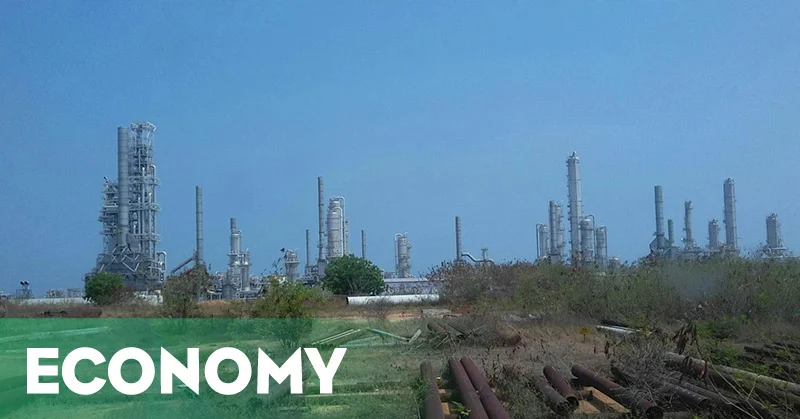
While Ramli’s silence was interpreted by some as a tactical retreat from a politically sensitive topic, the context of the Petral dissolution remains one of the most significant reform initiatives under the administration of President Joko Widodo. Petral, a Singapore-based subsidiary of the state-owned oil giant Pertamina, had long been the subject of public scrutiny and allegations of being a playground for the so-called "oil mafia." The decision to dissolve the entity was a cornerstone of the government’s pledge to increase transparency, reduce the cost of fuel imports, and eliminate middleman markups that had reportedly cost the Indonesian state billions of dollars over several decades.
The Context of the Petral Scandal and the KordaMentha Audit
The controversy surrounding Petral reached a fever pitch in late 2015 when the Ministry of Energy and Mineral Resources, led by Sudirman Said, revealed the results of a forensic audit performed by the international firm KordaMentha. The audit covered the period between 2012 and 2015, focusing on the operations of Petral and its subsidiaries, including Pertamina Energy Service Pte Ltd (PES). The findings were damning, suggesting that a "third party" outside of the formal corporate structure had exerted undue influence over the procurement process.
According to the audit summary, this third party—often referred to in the Indonesian press as the "oil mafia"—was able to manipulate the bidding process for oil imports. By leaking confidential information regarding tender requirements and pricing benchmarks, these external actors ensured that specific trading companies won contracts, often at prices higher than the prevailing market rates. The result was a bloated procurement cost for Pertamina, which ultimately translated into a heavier fiscal burden for the Indonesian government in the form of energy subsidies.
The audit estimated that these irregularities led to a lack of competitive pricing, costing the state millions of dollars in potential savings. The transition from Petral to the Integrated Supply Chain (ISC), an internal division of Pertamina based in Jakarta, was designed to centralize procurement and eliminate the opaque layers of offshore trading that Petral represented.
Chronology of the Dissolution Process
The path to Petral’s end began shortly after President Joko Widodo took office in October 2014. Under the directive of the President, a specialized Task Force for the Reform of the Oil and Gas Governance (Tim Reformasi Tata Kelola Migas), headed by economist Faisal Basri, was established.
In December 2014, the task force officially recommended the dissolution of Petral, arguing that its existence as a middleman in Singapore was no longer justifiable and served only to facilitate rent-seeking behavior. By May 2015, the government and Pertamina management formally announced the start of the liquidation process. The timeline of the dissolution was structured to ensure that ongoing supply contracts were not disrupted, while simultaneously allowing for a deep dive into the company’s financial history.
Between June and October 2015, KordaMentha conducted its forensic investigation. The results were presented to the government in early November 2015. It was against this backdrop of newly released, incriminating data that Rizal Ramli was questioned. His reluctance to comment was particularly striking given his reputation as a "straight-talker" who had previously been vocal about the need to dismantle monopolies and vested interests within the Indonesian economy.
Supporting Data: The Scale of Petral’s Operations
To understand the gravity of the audit, one must look at the sheer scale of Petral’s financial footprint. At its peak, Petral was responsible for procuring approximately 80% of Indonesia’s oil and fuel requirements. With Indonesia being a net importer of oil, the transaction volumes were astronomical.
- Annual Turnover: Petral reportedly managed an annual turnover exceeding $30 billion, making it one of the largest trading entities in Southeast Asia.
- Procurement Volume: The company handled the import of roughly 250 million to 300 million barrels of oil and refined products per year.
- Potential Savings: Following the shift to the Integrated Supply Chain (ISC), Pertamina officials claimed that the company saved approximately $250 million within the first six months of direct procurement. This was achieved by eliminating the "risk premium" and middleman fees that had characterized Petral’s operations.
The KordaMentha audit specifically highlighted that the "third party" had successfully interfered in at least 20% of the contracts reviewed, suggesting that the systemic leakages were not isolated incidents but part of a coordinated effort to siphon funds from the state-owned enterprise.
Official Reactions and Political Dynamics
The silence of Rizal Ramli on November 9 stood in contrast to the more aggressive stance taken by Energy Minister Sudirman Said. Said had been the primary advocate for the audit’s public disclosure, arguing that the people of Indonesia had a right to know how their energy resources were being managed. The tension between the two ministers was a recurring theme in the 2015 cabinet, as they often held differing views on the speed and method of economic reforms.
While Ramli’s portfolio as Coordinating Minister for Maritime Affairs and Resources theoretically placed him in a position of authority over the energy sector, the Petral issue was a lightning rod for political friction. Analysts suggest that Ramli’s decision to avoid the topic may have been an attempt to avoid further internal cabinet conflict or a move to wait for a more comprehensive legal review before making a public pronouncement.
Pertamina’s leadership, meanwhile, focused on the operational transition. Then-President Director of Pertamina, Dwi Soetjipto, emphasized that the dissolution of Petral was not just about closing an office in Singapore, but about changing the corporate culture of Indonesia’s energy procurement. "We are moving toward a more transparent, direct, and accountable system," Soetjipto stated during the audit rollout.
Implications for Indonesia’s Energy Security
The dissolution of Petral and the subsequent audit findings have had far-reaching implications for Indonesia’s energy landscape. First and foremost, it signaled a shift in the government’s tolerance for corruption in strategic sectors. By exposing the mechanisms of the "oil mafia," the administration sought to deter future interference in state procurement.
Secondly, the move had significant economic consequences. The ability of Pertamina to buy directly from National Oil Companies (NOCs) and major producers, rather than through trading intermediaries, improved the company’s cash flow and reduced the national current account deficit. This was a critical component of the government’s broader strategy to stabilize the Indonesian Rupiah, which had faced volatility during that period.
Furthermore, the Petral case served as a litmus test for the rule of law in Indonesia. The audit results were eventually handed over to law enforcement agencies, including the Corruption Eradication Commission (KPK). The investigation into the findings of the KordaMentha audit opened the door for legal proceedings against individuals suspected of benefitting from the fraudulent procurement schemes.
Conclusion: A Turning Point in Governance
The events of November 9, 2015, characterized by Rizal Ramli’s quiet exit from the media spotlight, serve as a snapshot of a pivotal moment in Indonesian history. The Petral scandal was more than a financial dispute; it was a battle for the soul of the nation’s energy sector. The audit proved that the suspicions of the public and the reform task force were well-founded, revealing a complex web of influence that had compromised national interests for years.
While the Coordinating Minister chose to remain silent on that specific afternoon, the momentum for reform continued to build. The dissolution of Petral marked the end of an era of opacity and the beginning of a more rigorous, data-driven approach to energy management. As Indonesia continues to navigate the challenges of energy transition and security, the lessons learned from the Petral audit remain a vital reference point for the necessity of transparency and the constant vigilance required to protect state resources from external manipulation.
The silence of a minister, in this case, did not stall the wheels of justice or reform. Instead, it underscored the high stakes involved when the government finally decides to confront the entrenched interests that have long hindered the nation’s economic potential. The Petral audit remains a landmark case in the ongoing effort to clean up Indonesia’s state-owned enterprises and ensure that the country’s wealth is used for the benefit of all its citizens.