
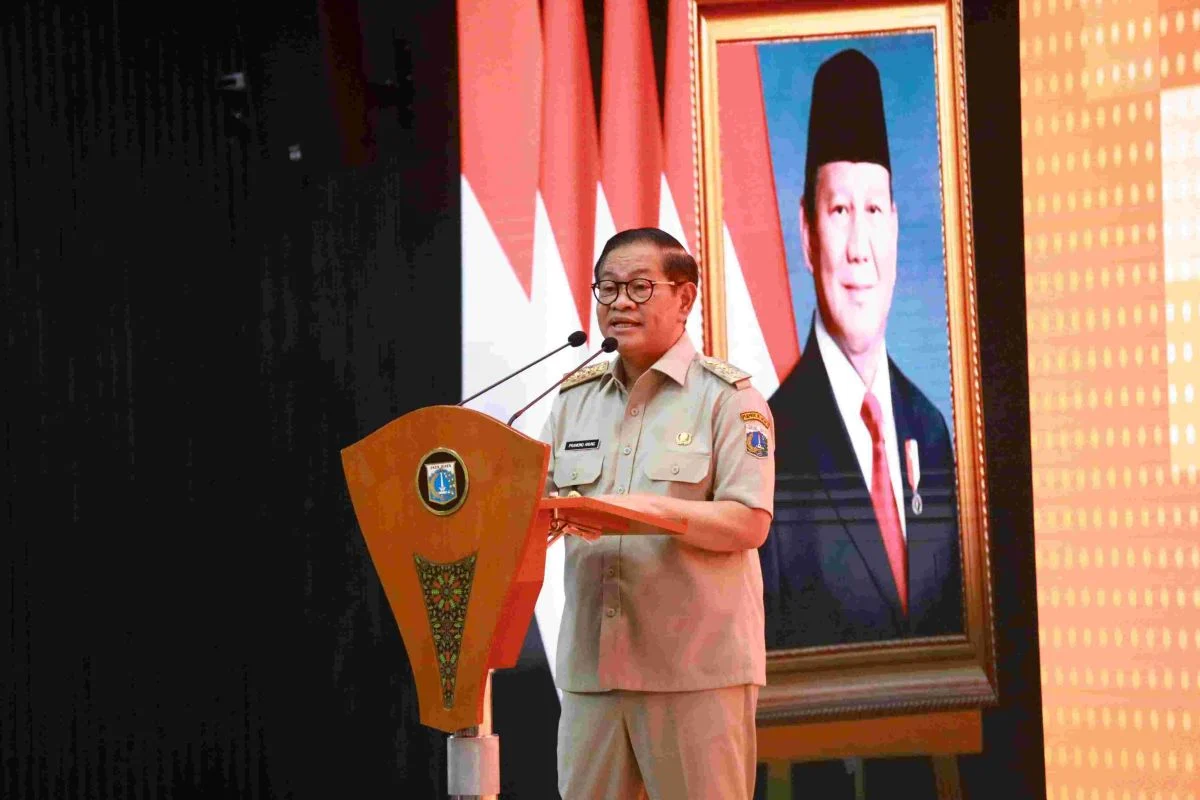
JAKARTA – Governor of DKI Jakarta, Pramono Anung, issued a stringent directive to the city’s Public Infrastructure and Facilities Handling (PPSU) officers and their supervising echelons, urging them to prioritize tangible work on the ground over merely satisfying superiors. The Governor’s unequivocal message, delivered at a pivotal town hall meeting, underscores a critical juncture in Jakarta’s public service delivery, particularly in the wake of a recent scandal involving the alleged misuse of artificial intelligence in managing citizen complaints. This incident, centered in Kalisari, East Jakarta, has cast a shadow over the city’s commitment to transparent and effective governance, prompting a comprehensive re-evaluation of operational protocols and ethical standards within the public sector.
A Stern Call for Real Impact and Accountability
The town hall meeting, held on Wednesday, April 15, 2026, at the historic Gedung Teater Taman Ismail Marzuki, brought together a wide array of Jakarta’s public service personnel. Attendees included PPSU officers, often affectionately known as the "Orange Troops" for their distinctive uniforms and omnipresent role in maintaining the city’s cleanliness and order, alongside lurahs (sub-district heads), camats (district heads), and even city mayors. Governor Anung, addressing the gathered officials, emphasized the imperative for genuine, on-the-ground performance. His address served as a direct response to a burgeoning public outcry and internal investigations regarding the reported use of AI to fabricate responses to citizen complaints in Kelurahan Kalisari.
"The input, opinions, suggestions, and critiques from Jakarta’s citizens are invaluable capital for the DKI Jakarta Provincial Government to implement necessary improvements. Therefore, I demand that there should be no more attempts to merely please superiors; instead, there must be real work conducted in the field," Governor Anung declared, his voice resonating with resolve. This statement highlights a fundamental shift in the administration’s expectations, moving away from a culture of superficial reporting towards one rooted in demonstrable outcomes and direct responsiveness to public needs. The incident in Kalisari, he asserted, represented a severe breach of public trust and a stain on the capital’s reputation, necessitating immediate and thorough remedial action.
The Kalisari AI Scandal: A Deep Dive into Deception
The controversy originated from reports detailing the alleged manipulation of citizen complaint data in Kelurahan Kalisari, East Jakarta, through the unauthorized and unethical application of artificial intelligence. While the exact timeline of the AI system’s implementation for complaint management remains under investigation, initial reports suggest that the system was either designed or subsequently adapted to generate fabricated responses or mark complaints as resolved without actual intervention. This practice, reportedly uncovered through citizen vigilance and subsequent internal probes, created an illusion of efficiency and responsiveness that masked underlying systemic failures in addressing genuine public grievances.
Sources familiar with the investigation suggest that the AI was potentially configured to automatically generate standard "resolution" messages or update complaint statuses based on predetermined triggers, rather than actual field verification. This could have been done to meet performance targets set for local administrative units, inadvertently fostering an environment where superficial compliance superseded authentic problem-solving. The specific nature of the complaints affected ranged from infrastructure issues like damaged roads and clogged drains to waste management and public facility maintenance – precisely the domain of PPSU officers.
The initial reports of irregularities began surfacing in late 2025 and early 2026, when residents of Kalisari noticed that their reported issues remained unresolved despite receiving official notifications of resolution. This discrepancy prompted several citizens to escalate their concerns through various channels, including social media and direct appeals to higher authorities. It was these persistent citizen reports that ultimately triggered a deeper investigation by the Provincial Government, culminating in the shocking discovery of the AI manipulation.
Chronology of a Crisis in Public Trust:
- Late 2024 – Early 2025: Jakarta embarks on further digital transformation initiatives, including exploring AI applications for enhancing public service efficiency, particularly in managing high volumes of citizen complaints.
- Mid-2025: A pilot project or informal integration of AI-assisted complaint management tools is reportedly introduced in select administrative units, including Kelurahan Kalisari, aimed at streamlining workflow and response times.
- Late 2025 – Early 2026: Residents of Kalisari begin to notice discrepancies between official complaint resolution notifications and the persistent reality of unresolved issues on the ground. Complaints about the ineffectiveness of the system begin to emerge through community forums and direct channels.
- March 2026: Growing public dissatisfaction and mounting anecdotal evidence prompt the DKI Jakarta Provincial Government to launch an internal audit and investigation into the complaint handling mechanisms in Kalisari and potentially other areas.
- Early April 2026: The investigation uncovers evidence suggesting the deliberate misuse of AI algorithms to generate false resolution reports, effectively misleading both citizens and supervisory bodies.
- April 15, 2026: Governor Pramono Anung convenes a critical town hall meeting at Taman Ismail Marzuki, addressing PPSU officers, lurahs, camats, and city mayors. He delivers a strong rebuke, condemns the AI manipulation, and issues a stern warning against prioritizing superficial reporting over real work.
- Post-April 15, 2026: The Provincial Government initiates a comprehensive review of all digital public service platforms, mandates ethics training for all personnel involved in complaint management, and promises stricter oversight to prevent future recurrences.
The Vital Role of PPSU and the Pressures They Face
The PPSU, a cornerstone of Jakarta’s urban maintenance, comprises tens of thousands of dedicated personnel deployed across the city’s 267 kelurahans. Their responsibilities are extensive and critical to the daily functioning of the metropolis, encompassing everything from street sweeping, waste collection, and drain cleaning to minor road repairs, graffiti removal, and managing green spaces. These "Orange Troops" are often the first responders to local community issues and represent the most direct interface between the government and its citizens.
The demanding nature of their work, coupled with immense pressure to meet performance metrics often tied to the volume of resolved issues, can create an environment ripe for shortcuts. While the AI misuse was a management-level decision, the Governor’s address implicitly acknowledged the systemic pressures that could lead to such ethical lapses. PPSU officers, while not directly involved in the AI manipulation, are on the front lines, and their work is what truly validates or invalidates the reported resolutions. This incident underscores the need to re-evaluate performance indicators, ensuring they reflect actual problem-solving rather than mere statistical achievements.
Broader Implications for Governance and Digital Transformation
The Kalisari incident extends beyond a single administrative unit; it raises profound questions about the integrity of Jakarta’s public service delivery and the ethical deployment of technology in governance.
- Erosion of Public Trust: When citizens report issues and receive false assurances of resolution, their trust in government institutions is severely damaged. Rebuilding this trust requires not only rectifying the immediate problem but also implementing transparent and verifiable accountability mechanisms.
- Challenges of Digital Transformation: Jakarta, like many global megacities, has invested heavily in "smart city" initiatives and digital platforms to enhance efficiency. The Kalisari case serves as a cautionary tale, highlighting that technology, while powerful, is only as ethical and effective as the human oversight and principles guiding its application. Without robust checks and balances, AI can be weaponized for deception rather than empowerment.
- Accountability and Leadership: Governor Anung’s firm stance demonstrates a commitment to accountability from the highest office. This incident will likely lead to stricter internal audits, potentially disciplinary actions against those responsible for the AI manipulation, and a renewed focus on ethical leadership at all levels of local government.
- Work Culture and Performance Metrics: The pressure to meet targets, often measured quantitatively, can incentivize superficial compliance. The Governor’s call for "real work" suggests a shift towards qualitative assessments and a culture that rewards genuine problem-solving over mere statistical reporting.
- Resource Misallocation: If complaints are falsely marked as resolved, critical resources (manpower, budget, materials) may not be deployed to where they are genuinely needed, leading to persistent urban problems and inefficiency.
Reactions from Related Parties (Inferred)
While the original article focuses solely on the Governor’s statement, a situation of this magnitude would inevitably elicit reactions from various stakeholders:
- City Council Members: Members of the Jakarta City Council would likely express strong condemnation of the incident, demanding a thorough investigation and transparent reporting of findings. A council member from the relevant commission might state, "This incident is unacceptable. We allocate substantial budgets for public services and technology. The misuse of AI to deceive citizens is a betrayal of public trust and demands immediate legislative oversight to ensure such practices are eradicated." They would also call for accountability for the officials involved.
- Public Service Experts/Academics: Experts in public administration and ethical AI would weigh in on the complexities. A professor specializing in e-governance might comment, "This case underscores the critical need for human-centric design in public sector AI. Technology should augment, not replace, human accountability and empathy. Robust ethical guidelines, independent audits, and whistleblower protections are paramount to prevent algorithmic bias or manipulation from undermining democratic processes."
- Citizen Advocacy Groups: Representatives from citizen groups would voice their disappointment but also their determination to hold the government accountable. A spokesperson might say, "For too long, citizens have felt their voices unheard. This AI scandal is a stark reminder that we must remain vigilant. We appreciate the Governor’s strong words, but we demand concrete actions: transparent investigations, restitution for affected communities, and a commitment to truly listening to and serving the people."
- PPSU Officers: While unlikely to be quoted directly for fear of reprisal, many PPSU officers might privately express relief at the Governor’s focus on "real work." Some might feel vindicated, having seen their genuine efforts contradicted by false reports. Others might voice concerns about increased scrutiny and the potential for blame, while hoping for better support and clearer, more realistic performance expectations.
- Lurahs and Camats: Local leaders, under pressure from both citizens and the central administration, would likely issue statements reiterating their commitment to ethical governance and immediate corrective actions. A lurah might state, "We are deeply concerned by the findings and fully support the Governor’s directives. Our priority is to restore trust by ensuring every complaint is genuinely addressed and verified on the ground. We are implementing stricter manual checks alongside digital tools."
Preventative Measures and a Path Forward
To prevent a recurrence, the DKI Jakarta Provincial Government is expected to implement several key measures:
- Enhanced Oversight and Auditing: Regular and independent audits of all digital public service platforms and complaint management systems will be crucial. This includes both technical audits of AI algorithms and operational audits to verify reported resolutions on the ground.
- Ethics Training and Awareness: Mandatory ethics training for all public servants, particularly those involved in data management and technology deployment, will be reinforced. This training will emphasize the importance of data integrity, transparency, and accountability.
- Revised Performance Metrics: A shift away from purely quantitative performance indicators towards more holistic metrics that prioritize qualitative outcomes, citizen satisfaction, and verifiable impact. This may involve incorporating citizen feedback loops directly into performance evaluations.
- Whistleblower Protection: Strengthening mechanisms for public servants and citizens to report irregularities without fear of retaliation, fostering a culture of transparency and honesty.
- Human-Centric AI Deployment: Re-evaluating the role of AI in public services to ensure it genuinely assists human efforts and decision-making, rather than creating avenues for automated deception. This includes clearer guidelines on when and how AI can be used in sensitive areas like citizen complaint resolution.
- Public Communication and Engagement: Transparently communicating the steps being taken to address the issue and actively engaging citizens in the process of improving public services.
Governor Pramono Anung’s resolute message serves as a powerful reminder that at the heart of effective governance lies genuine service and an unwavering commitment to the public good. The Kalisari AI scandal, while damaging, presents a critical opportunity for Jakarta to reinforce its dedication to integrity, accountability, and the authentic pursuit of a truly smart and responsive city. The coming months will be crucial in demonstrating whether the city can transform this crisis into a catalyst for profound and lasting improvements in its public service delivery.
