
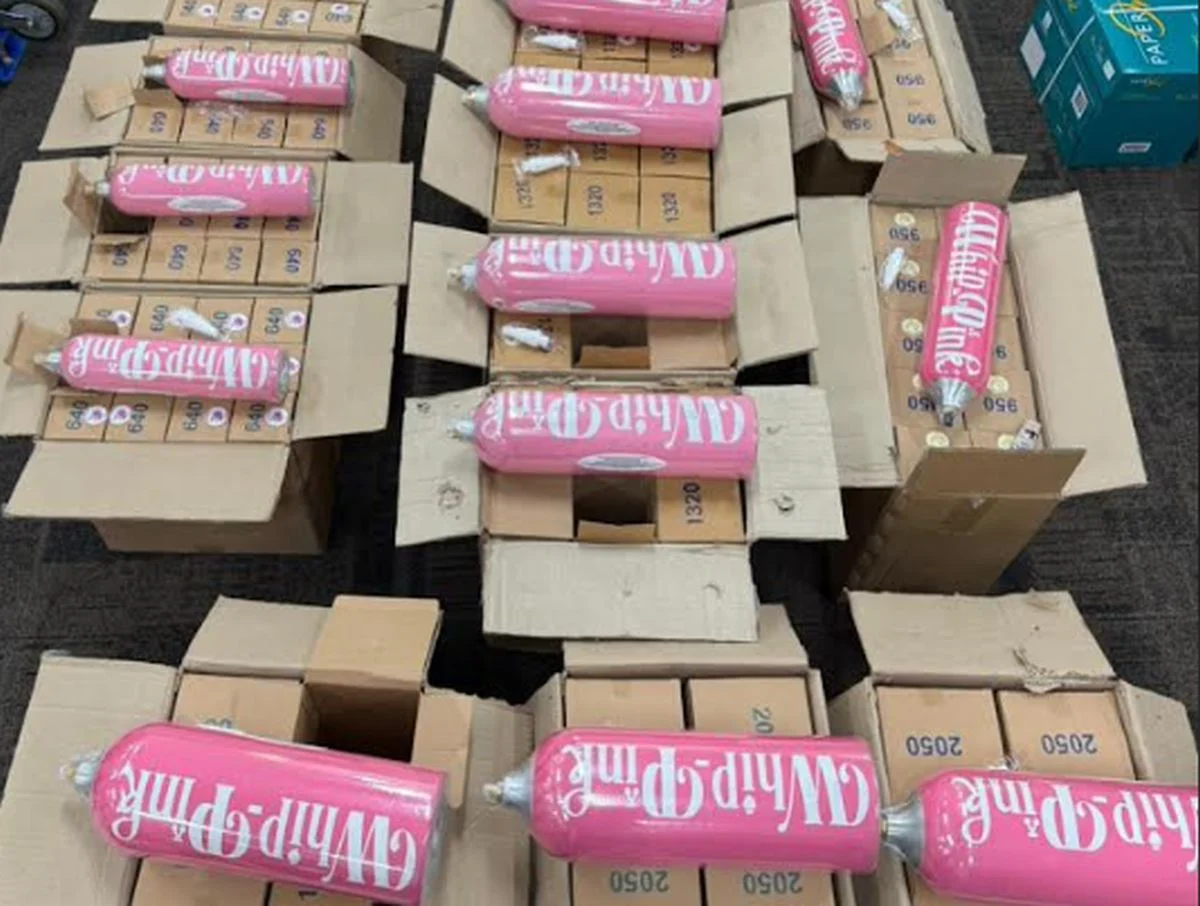
Jakarta, April 15, 2026 – In a significant blow to the illicit trade of recreational drugs, the Directorate of Narcotics Crime (Dittipidnarkoba) of the National Police’s Criminal Investigation Department (Bareskrim Polri) successfully dismantled an illegal production facility for nitrous oxide (N2O), commonly known as ‘laughing gas,’ operating under the brand name ‘Whip Pink’ in Jakarta. The clandestine factory, which had been generating an estimated monthly turnover in the billions of rupiah, was raided following an extensive undercover operation, leading to the apprehension of nine individuals and the seizure of thousands of N2O canisters. This major enforcement action highlights the growing concern over the recreational misuse of N2O and the sophisticated networks behind its illegal distribution.
The Illicit Operation Unveiled: A Deep Dive into the Crackdown
The raid, executed with precision and strategic planning, culminated a meticulous investigation launched by Bareskrim Polri’s elite anti-narcotics unit. According to Brigadier General Eko Hadi Santoso, Director of Narcotics Crime at Bareskrim Polri, the operation was initiated after intelligence reports pointed to a burgeoning market for ‘Whip Pink’ branded N2O products. These products, illicitly packaged and marketed, were suspected of being produced and distributed outside of legal channels, posing significant health risks to consumers.
The initial phase of the investigation involved a covert purchasing operation, a standard yet critical tactic in narcotics enforcement. Undercover officers infiltrated the distribution network, posing as buyers to identify the primary source of the ‘Whip Pink’ gas. This painstaking process, often fraught with risks, allowed investigators to trace the supply chain back to its origin. "Our team from Sub-directorate III, Dittipidnarkoba Bareskrim Polri, conducted an undercover purchase to pinpoint the location of the goods," explained Brigadier General Eko Hadi Santoso during a press briefing on Wednesday, April 15, 2026. This intelligence-gathering effort eventually led them to a nondescript shophouse (ruko) in Jakarta, which served as the operational hub for filling and packaging the dangerous gas.
Upon confirmation of the location and the illicit nature of the activities, Bareskrim officers moved swiftly to execute the raid. The sheer scale of the operation was immediately evident upon entry into the premises. Investigators discovered a sophisticated setup designed for the mass production and packaging of N2O. The raid resulted in the seizure of an impressive inventory of evidence, underscoring the high volume of illegal trade. More than 2,000 N2O canisters were confiscated, encompassing various sizes of filled cylinders ready for distribution, numerous empty cylinders awaiting gas, and specialized filling equipment.
Brigadier General Eko further elaborated on the seized items: "The team also found ‘Whip Pink’ branded N2O gas products of various weights already prepared for circulation, packaging cartons, pink plastic labels bearing the ‘Whip Pink’ brand in different weight variants, stickers for product packaging, hot guns used for sealing, and weighing scales." This detailed list of evidence paints a clear picture of a well-organized criminal enterprise, from the bulk acquisition of N2O to its final packaging and branding for street-level distribution. The presence of specialized equipment and branded materials suggests a deliberate attempt to create a recognizable, albeit illicit, product line, likely targeting a specific demographic of recreational users.
In connection with the illicit operation, a total of nine individuals were apprehended across three different locations linked to the production and distribution network. These individuals are currently undergoing intensive interrogation at the Bareskrim Polri headquarters. Their exact roles within the syndicate—whether they were involved in sourcing raw materials, manufacturing, packaging, logistics, or distribution—are being thoroughly investigated. Brigadier General Eko confirmed, "Sub-directorate III Dittipidnarkoba brought nine individuals secured from three crime scenes, along with evidence from those locations, to the Bareskrim Polri office for further examination." The legal status of these individuals will be determined following a comprehensive case review, which will assess the extent of their involvement and the specific charges to be leveled against them.
The Perilous Appeal of Nitrous Oxide: Understanding the ‘Laughing Gas’ Phenomenon
Nitrous oxide (N2O) is a chemical compound with legitimate applications in various sectors. In medicine, it is widely used as an anesthetic and analgesic, particularly in dental procedures, earning it the moniker ‘laughing gas’ due to its euphoric and pain-reducing effects. It is also utilized as a propellant in whipped cream dispensers and as an oxidizer in rocket propellants and racing car engines. However, its accessibility and the transient euphoric high it provides have unfortunately led to its increasing misuse as a recreational drug globally, including in Indonesia.
The recreational use of N2O typically involves inhaling the gas directly from balloons filled from small canisters (often marketed as ‘whippets’ or, in this case, ‘Whip Pink’) or larger industrial tanks. The immediate effects include a short-lived feeling of euphoria, giddiness, lightheadedness, and sometimes hallucinations or distorted perceptions. These effects usually last only a few minutes, leading users to repeatedly inhale the gas, often in rapid succession. The perceived short duration and relative ease of acquisition contribute to a false sense of safety among users.
However, the misuse of N2O carries significant health risks. Acute dangers include hypoxia (lack of oxygen to the brain), which can lead to dizziness, disorientation, loss of consciousness, and even death, particularly if inhaled in confined spaces or without adequate ventilation. Direct inhalation from pressurized canisters can also cause frostbite to the nose, lips, and vocal cords due to the extreme cold of the rapidly expanding gas.
Long-term and chronic use of N2O can lead to more severe and debilitating health problems. Perhaps the most well-documented is the inactivation of vitamin B12, which is crucial for nerve function and red blood cell formation. This can result in peripheral neuropathy, characterized by tingling, numbness, weakness, and loss of coordination, potentially leading to permanent nerve damage. Other potential long-term effects include anemia, psychiatric symptoms, and even spinal cord degeneration. The risk is compounded when N2O is used in conjunction with other substances, increasing the likelihood of adverse reactions and overdose. The ‘Whip Pink’ branding, likely targeting younger demographics or partygoers, masks these serious health implications behind an innocent-sounding name and appealing packaging.
The Economics of Illicit N2O: Billions in the Shadows
The revelation that the ‘Whip Pink’ factory generated a monthly turnover in the billions of rupiah underscores the lucrative nature of the illegal N2O trade. Such an impressive financial scale points to a sophisticated distribution network and a significant market demand. The profits derived from these operations are substantial because the raw material (industrial-grade N2O) can be relatively inexpensive when purchased in bulk, while the retail price for individual recreational doses (e.g., in balloons or small canisters) is significantly marked up.
The distribution channels for illicit N2O are diverse and often leverage modern technology. Online platforms, including social media applications and encrypted messaging services, are frequently used to advertise and facilitate sales, making it challenging for law enforcement to monitor. Direct sales to entertainment venues such as nightclubs, bars, and private parties are also common, where the anonymity of transactions can be maintained. The ‘Whip Pink’ brand, with its distinct packaging, likely benefited from word-of-mouth marketing within specific social circles, further fueling its demand.
The substantial profits generated by such illicit operations not only enrich criminal syndicates but also pose broader economic challenges. These undeclared revenues bypass taxation, depriving the state of legitimate funds. Furthermore, the existence of such a lucrative black market can attract other forms of organized crime, potentially leading to increased violence and corruption. The Bareskrim’s raid, therefore, not only targets a specific illicit substance but also aims to disrupt the financial underpinnings of organized criminal activity.
Official Responses and Broader Implications
The Bareskrim Polri’s successful raid sends a strong message that law enforcement agencies are vigilant and committed to combating the proliferation of illicit substances, including those like N2O that may not be traditionally classified as ‘narcotics’ but pose significant public health threats. Brigadier General Eko Hadi Santoso emphasized the ongoing efforts to eradicate such operations, stating that intelligence gathering and proactive measures are paramount in staying ahead of evolving criminal tactics. He reiterated the police’s commitment to ensuring public safety and urged citizens to report any suspicious activities related to the production or distribution of illegal substances.
This incident also prompts a broader discussion on regulatory frameworks and public awareness. While N2O has legitimate uses, its easy accessibility in various forms (e.g., whipped cream chargers) makes it vulnerable to misuse. There may be a need for stricter regulations concerning the sale and distribution of N2O, particularly for bulk quantities, to prevent diversion for recreational purposes. Additionally, public health campaigns are crucial to educate the public, especially young people, about the severe health risks associated with recreational N2O use. Parents, educators, and community leaders play a vital role in disseminating this information and fostering an environment where young people understand the dangers and are deterred from experimenting with such substances.
The legal ramifications for the nine arrested individuals are likely to be severe. Depending on the specifics of Indonesian law regarding illicit substances and public endangerment, they could face charges related to illegal production, distribution, and potentially even drug trafficking if N2O is categorized under relevant statutes in the context of recreational misuse. Penalties could include lengthy prison sentences and substantial fines, serving as a deterrent to others considering engaging in similar criminal activities. The ongoing investigation will determine the precise legal framework under which they will be prosecuted, possibly invoking laws related to public health, consumer protection, or even specific drug laws if the interpretation covers non-traditional substances misused for their psychoactive effects.
In a wider context, this bust is indicative of the dynamic nature of drug abuse trends. As traditional illicit drugs become harder to obtain due to intensified law enforcement efforts, criminals and users often turn to ‘novel psychoactive substances’ or readily available chemicals that can produce similar effects. This phenomenon presents a continuous challenge for law enforcement and public health authorities, requiring constant adaptation in strategies, legislation, and public education. The ‘Whip Pink’ factory raid is a critical step in addressing this evolving landscape of substance abuse and protecting the health and well-being of the Indonesian populace. The investigation is ongoing, and Bareskrim Polri remains committed to unraveling the full extent of this network and bringing all responsible parties to justice.
