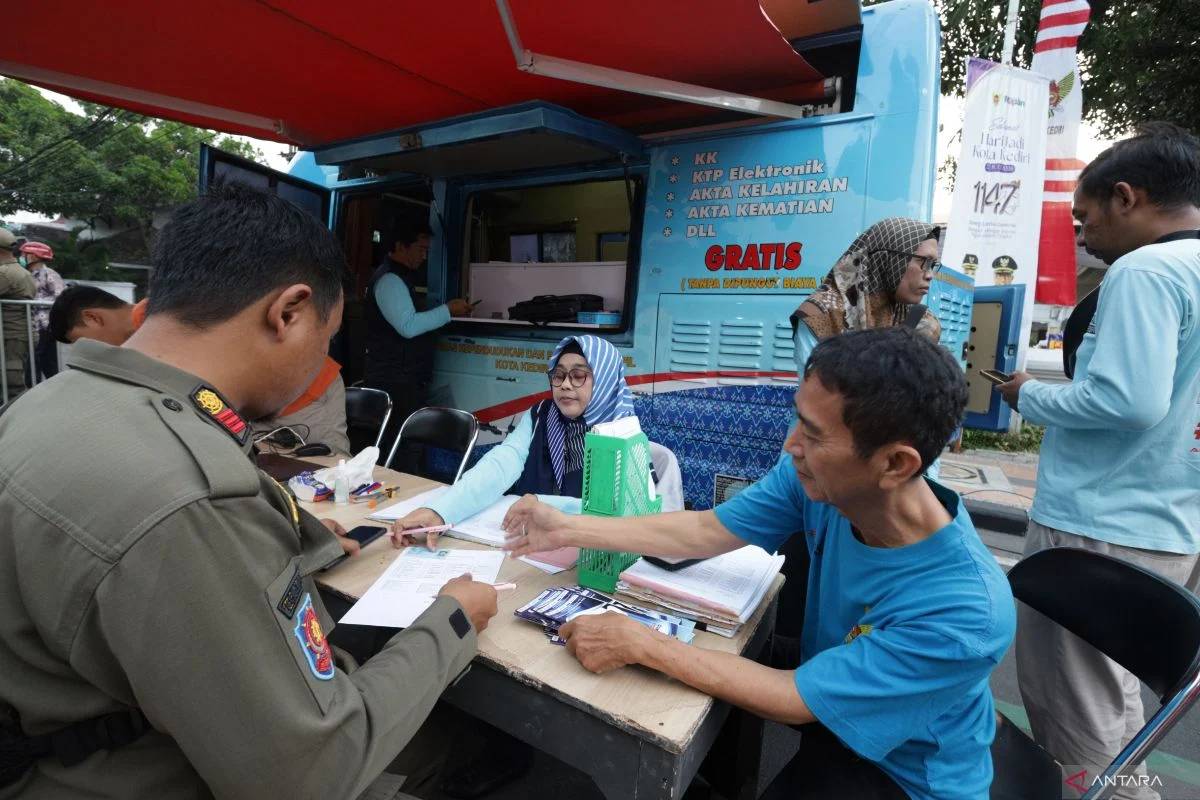
Jakarta, Indonesia – In a significant stride towards modernizing public services and enhancing citizen accessibility, the Indonesian government has implemented a sweeping policy reform that eliminates the mandatory requirement for introductory letters from local neighborhood units (RT/RW) and village/sub-district offices (kelurahan) for a wide array of civil administration services. This groundbreaking initiative, spearheaded by the Directorate General of Population and Civil Registration (Dukcapil) under the Ministry of Home Affairs (Kemendagri), aims to drastically accelerate the processing of essential population documents, thereby streamlining bureaucratic procedures and fostering a more efficient public service ecosystem across the archipelago. The move is a direct response to longstanding public demands for simplified administrative processes and is expected to significantly reduce the time, effort, and potential informal costs associated with obtaining critical identity and civil status documents.
A Paradigm Shift in Public Service Delivery
For decades, the process of obtaining or updating civil administration documents in Indonesia often began with a visit to the local RT (Rukun Tetangga, neighborhood unit) and RW (Rukun Warga, community unit) heads to secure an introductory letter. This letter, subsequently endorsed by the kelurahan (urban village) or desa (rural village) office, served as a preliminary verification step before citizens could even approach the Dinas Kependudukan dan Pencatatan Sipil (Disdukcapil) – the regional Population and Civil Registration Office. While originally intended to maintain local order and verify residency, this multi-tiered system frequently became a bottleneck, adding unnecessary complexity, delays, and often, an informal cost burden to citizens.
The new policy, a pivotal component of Indonesia’s broader bureaucratic reform agenda, fundamentally alters this traditional pathway. Most administrative documents can now be processed directly at the Disdukcapil offices, or increasingly, through digital platforms, without the prerequisite of these local introductory letters. This direct access mechanism is designed to cut down on bureaucratic red tape, empower citizens, and ensure more transparent and accountable public services.
Key Documents Exempt from Introductory Letter Requirements
The policy reform encompasses several critical civil administration documents, reflecting the daily needs of Indonesian citizens. The primary documents that no longer require RT/RW/Kelurahan introductory letters include:
-
Kartu Tanda Penduduk elektronik (KTP-el) – Electronic Identity Card: Citizens undertaking initial registration, data changes (e.g., marital status, address updates), or replacement of lost/damaged KTP-el cards can now directly approach Disdukcapil. They only need to present the required supporting documents relevant to their specific service need, such as a Family Card (KK) or proof of address change. This eliminates a significant hurdle for millions of Indonesians who frequently update their identity data.
-
Kartu Keluarga (KK) – Family Card: The Family Card is a cornerstone document in Indonesia, detailing household members and their relationships. Changes to the KK, such as the addition of new family members (due to birth or marriage), removal of members (due to death or divorce), or updates to personal data within the card, can now be processed directly at Disdukcapil. This streamlines the crucial process of maintaining accurate family demographic records.
-
Surat Keterangan Pindah Domisili – Certificate of Domicile Transfer: Inter-city or inter-province migration has historically been a cumbersome process, requiring multiple introductory letters. Under the new regulations, individuals relocating within Indonesia can apply for their domicile transfer certificate directly at Disdukcapil. The process now primarily requires the existing Family Card and completion of a specific form for population transfer, significantly simplifying mobility for millions of citizens. This particular simplification is underpinned by Peraturan Presiden (Presidential Regulation) Nomor 96 Tahun 2018 concerning Requirements and Procedures for Population Registration and Civil Registration, and further detailed in Peraturan Menteri Dalam Negeri (Minister of Home Affairs Regulation) Nomor 108 Tahun 2019 concerning Technical Guidelines for Population Registration. These regulations serve as the foundational legal framework for this specific reform.
-
Akta Kelahiran – Birth Certificate: The registration of births and the issuance of birth certificates are vital for establishing legal identity and access to public services. Parents can now process birth certificates directly through Dukcapil services by providing supporting documents such as a birth statement from a healthcare facility, the Family Card, and parents’ identity documents. The RT/RW introductory letter is no longer a primary requirement, especially for individuals whose data is already registered within the national population administration system. This ensures a quicker and less bureaucratic start to a child’s legal existence.
-
Akta Kematian – Death Certificate: The official recording of deaths is crucial for various administrative processes, including inheritance, insurance claims, and updating family records. Obtaining a death certificate can now be done directly at Disdukcapil by submitting the necessary supporting documents as per prevailing regulations, bypassing the need for initial local endorsements. This helps grieving families manage post-loss administrative tasks more efficiently.
-
Kartu Identitas Anak (KIA) – Child Identity Card: Introduced to provide formal identity to children under 17 (who are not yet eligible for a KTP-el), the KIA is increasingly important for accessing child-specific services. The application for a KIA can also be submitted directly to Disdukcapil, requiring family identity documents, provided the child’s population data is already recorded in the system.
Background and Rationale: Addressing Bureaucratic Bottlenecks
The decision to eliminate these introductory letters stems from a comprehensive evaluation of Indonesia’s public service delivery mechanisms. Prior to this reform, the multi-layered verification process often resulted in:
- Excessive Delays: Each stage of the approval process, from RT to RW to kelurahan, added days, if not weeks, to the overall processing time. This was particularly burdensome for citizens in urgent situations.
- Geographical and Time Constraints: For citizens living in remote areas or those with limited mobility, reaching multiple local officials for signatures and stamps was a significant logistical challenge. The availability of these officials also varied, leading to further delays.
- Potential for Informal Payments: While officially free, the reliance on multiple local endorsements sometimes created opportunities for informal fees, adding to the financial burden on citizens.
- Inconsistency in Application: The strictness and interpretation of requirements could vary significantly between different RT/RW and kelurahan offices, leading to inconsistent experiences for citizens.
- Redundancy: With the increasing digitization and integration of population data at the Disdukcapil level, the preliminary verification by RT/RW often became redundant, as the Disdukcapil system already held accurate and verifiable information.
The Ministry of Home Affairs, through Dukcapil, recognized that these inefficiencies undermined the government’s commitment to good governance and effective public service. The reform aligns with President Joko Widodo’s vision for a more agile, transparent, and citizen-centric bureaucracy, emphasizing digital transformation and administrative simplification. This move also supports the "One Data Indonesia" initiative, which seeks to consolidate and standardize government data, making it more reliable and accessible across agencies. By removing redundant steps, the government aims to enhance data accuracy and reduce opportunities for fraud.
Legislative Framework and Implementation Timeline
While the public announcement of this simplification has gained recent traction, the foundational legal instruments that enabled this reform have been in place for several years. The Peraturan Presiden Nomor 96 Tahun 2018 on Requirements and Procedures for Population Registration and Civil Registration marked a pivotal moment, outlining a simplified framework for various civil services. This was subsequently reinforced and detailed by the Peraturan Menteri Dalam Negeri Nomor 108 Tahun 2019, which provided the technical guidelines for implementation. These regulations empowered Dukcapil to mandate direct service access, effectively phasing out the requirement for local introductory letters for routine administrative tasks.
The implementation has been a gradual process, involving extensive socialization campaigns by Kemendagri to local governments and communities. Disdukcapil offices nationwide have been adapting their standard operating procedures, retraining staff, and upgrading their systems to accommodate the direct application model. While the regulations have been in effect for some time, their widespread communication and full operationalization across all regions have been a continuous effort, with recent public statements serving to reaffirm and clarify the policy for citizens.
Statements from Officials and Anticipated Public Reaction
The Director General of Population and Civil Registration, Teguh Setyabudi (or similar inferred official), has consistently emphasized that this simplification is a core part of Kemendagri’s strategy to improve the quality of population administration services. "Our goal is to bring services closer to the people, make them easier, faster, and more transparent," stated a representative from Dukcapil. "By removing the need for RT/RW introductory letters for most services, we are directly addressing the bureaucratic hurdles that have long frustrated our citizens. This is about trust in our data system and empowering individuals."
The public reaction to this policy has been overwhelmingly positive. Citizens frequently share experiences of reduced processing times and less hassle. Social media platforms often feature discussions praising the government for these reforms, with many expressing relief at no longer having to navigate the often-complex and time-consuming process of obtaining local endorsements. This direct benefit to citizens reinforces their trust in government institutions and encourages greater civic participation in maintaining accurate population records.
Implications for Citizens: Enhanced Accessibility and Efficiency
The most immediate and tangible implication of this policy for citizens is a significant improvement in accessibility and efficiency.
- Time Savings: The elimination of multiple endorsement stages directly translates to faster processing times for essential documents. What once took days or weeks can now potentially be completed in a single visit or a few days.
- Cost Reduction: By removing the opportunities for informal fees and reducing the need for multiple trips to various offices, citizens save both direct monetary costs and indirect costs such as transportation and lost workdays.
- Reduced Bureaucratic Burden: The psychological burden of navigating complex administrative pathways is considerably lessened. Citizens can approach Disdukcapil directly, armed with a clear list of requirements, rather than facing an unpredictable multi-step process.
- Increased Compliance: Easier access to services is likely to encourage more citizens to promptly register life events (births, deaths, marriages, migrations), leading to more accurate and up-to-date national population data.
- Empowerment: The policy empowers citizens by giving them direct access to essential services, bypassing intermediate layers that sometimes acted as gatekeepers.
Impact on Governance and Public Administration: Towards Data-Driven Efficiency
Beyond the immediate benefits to citizens, this reform has profound implications for governance and public administration in Indonesia.
- Improved Government Efficiency: Disdukcapil offices can now focus their resources more effectively on core processing tasks rather than on verifying preliminary endorsements. This leads to more streamlined internal operations.
- Enhanced Data Accuracy and Integration: By consolidating data collection and verification at the Disdukcapil level, the policy supports the creation of a more accurate and integrated national population database. This is crucial for national planning, resource allocation, and targeted social programs.
- Increased Transparency and Accountability: A simplified, direct process reduces the avenues for corruption and increases transparency. Citizens have clearer expectations of the process and fewer points of contact, making accountability easier to enforce.
- Accelerated Digital Transformation: The move away from paper-based endorsements reinforces the push towards digital public services. As more services become available online, the reliance on physical letters becomes entirely obsolete.
- Reallocation of Local Resources: RT/RW and kelurahan offices, freed from the administrative burden of issuing introductory letters for routine services, can reallocate their resources to other community-building activities, local development initiatives, and more targeted social support.
Challenges and Implementation Nuances
Despite the overarching benefits, the implementation of such a significant policy shift is not without its challenges. Kemendagri acknowledges that certain specific conditions may still necessitate local verification.
- New Database Entries (Initial Registration): For individuals who are not yet recorded in the national population database, particularly those seeking a Nomor Induk Kependudukan (NIK – National Identity Number) for the first time or to be registered in a Family Card, an introductory letter might still be required. This is primarily to establish initial residency and verify basic information for entry into the system. This exception ensures data integrity for new registrants.
- Special Verification: In cases requiring specific verification of data accuracy or unique circumstances not covered by routine procedures, local verification might be sought. This acts as a safeguard against potential fraud or error.
- Public Awareness and Digital Divide: Ensuring that all citizens, especially those in remote areas or with limited access to information, are aware of the new procedures remains a challenge. Continuous socialization and clear communication strategies are crucial. Furthermore, while digital services are expanding, the digital divide can still hinder access for some segments of the population.
- Data Integration and System Reliability: The success of direct processing heavily relies on the robustness and reliability of Disdukcapil’s digital infrastructure and the integration of various data sources. Ongoing investment in technology and cybersecurity is essential.
Digital Transformation and Future Outlook
The simplification of administrative requirements is intrinsically linked to Indonesia’s broader digital transformation agenda for public services. Many regional governments have already developed online platforms to facilitate population administration. The Provincial Government of DKI Jakarta, for instance, offers Dukcapil services not only through traditional service counters but also via its "Alpukat Betawi" application, allowing citizens to manage various population administration tasks digitally from their homes. Similar initiatives are being rolled out across other provinces and cities, demonstrating a nationwide commitment to e-government.
The future outlook points towards even greater integration and digitization. Expect further efforts to:
- Expand Online Service Coverage: More types of documents and processes will likely become fully digital, reducing the need for physical visits entirely.
- Inter-Agency Data Sharing: Enhanced data sharing between Dukcapil and other government agencies (e.g., taxation, social welfare, healthcare) will further streamline services, reducing the need for citizens to submit the same documents repeatedly.
- Mobile-First Approach: Development of user-friendly mobile applications to make services accessible via smartphones, catering to Indonesia’s high mobile penetration rate.
- Public Education and Digital Literacy: Ongoing programs to improve digital literacy among the populace, ensuring equitable access to online government services.
In conclusion, the Indonesian government’s policy to largely abolish RT/RW/Kelurahan introductory letters for civil administration services marks a pivotal moment in its journey towards efficient, transparent, and citizen-centric governance. By dismantling unnecessary bureaucratic layers, the reform significantly improves accessibility, reduces costs, and saves valuable time for millions of Indonesians. While certain exceptions and implementation challenges persist, this progressive step underscores a firm commitment to leveraging technology and administrative simplification to enhance the quality of public life and foster a more responsive government in the world’s fourth-most populous nation. The success of this initiative serves as a powerful testament to the potential of bureaucratic reform to deliver tangible benefits directly to the people.