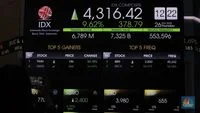
The Indonesia Stock Exchange (BEI) has officially initiated a formal investigation into the trading activities of three specific issuers: PT Capital Financial Indonesia Tbk (CASA), PT Fuji Finance Indonesia Tbk (FUJI), and PT Nusantara Sawit Sejahtera Tbk (NSSS). This regulatory action, framed as a proactive measure to maintain market integrity, follows the detection of highly concentrated trading patterns that deviate from standard retail distribution, raising concerns regarding potential market manipulation or the orchestration of artificial volume.
As part of its core mandate to protect investors and ensure the market remains orderly, fair, and efficient, the Exchange’s surveillance division has flagged these three stocks for an in-depth audit. While the issuance of these notices does not imply a final verdict of guilt or regulatory violation, it serves as a critical warning to market participants that the Exchange is monitoring the flow of capital and the identities of those driving price action in these specific equities.
Chronology and Surveillance Scope
The surveillance efforts cover varying time horizons, tailored to the specific trading anomalies detected in each stock. The BEI’s investigation timeline reveals a systematic approach to identifying the roots of these concentrated activities:
- PT Capital Financial Indonesia Tbk (CASA): The investigation focuses on the period between October 26, 2026, and November 2, 2026. This represents a short-term, high-intensity scrutiny following a surge in activity where six investors, operating through six different brokerage firms, were responsible for approximately 98% of the total trading volume.
- PT Fuji Finance Indonesia Tbk (FUJI): The audit scope spans from March 2, 2026, to October 30, 2026. In this instance, 16 investors utilizing 10 brokerage firms accounted for 87% of the total trading activity over the eight-month period.
- PT Nusantara Sawit Sejahtera Tbk (NSSS): Representing the longest investigation window, the BEI is reviewing data from December 1, 2025, to October 30, 2026. Although the concentration level is lower at 52%, the involvement of 19 investors across 15 brokerage firms suggests a more distributed, yet still highly controlled, group of participants.
Analyzing the Data: Concentration vs. Liquidity
The primary trigger for these investigations is the "concentration ratio," a metric used by regulators to determine if a stock’s liquidity is genuine or manufactured. When a small group of market participants accounts for the vast majority of a stock’s volume, it creates a "siloed" market environment.
In the case of CASA, the 98% concentration figure is particularly alarming for market analysts. Such a high percentage indicates that the price discovery mechanism for CASA was effectively removed from the broader market and placed under the control of a very small cohort. When fewer than ten investors control nearly the entire turnover, the stock becomes highly susceptible to "wash trading"—a practice where the same party buys and sells the same assets to create the illusion of liquidity—or "pump and dump" schemes designed to lure retail investors into buying inflated shares.
While NSSS shows a lower concentration at 52%, the breadth of the network—involving 15 different brokers—suggests a more sophisticated level of coordination. By spreading activity across a higher number of brokerage houses, participants often attempt to evade automated detection systems that look for single-broker dominance. The BEI’s decision to include NSSS in the investigation signals a shift toward more granular, cross-broker surveillance capabilities.
Regulatory Intent and Investor Protection
The Indonesia Stock Exchange has emphasized that these investigations are a routine part of its "Market Surveillance and Investor Protection" function. By publicly disclosing the investigation numbers—specifically Peng-PTE-00001/BEI.WAS/11-2026 (CASA), Peng-PTE-00002/BEI.WAS/11-2026 (FUJI), and Peng-PTE-00003/BEI.WAS/11-2026 (NSSS)—the Exchange is providing transparency to the broader market.
Regulators have explicitly urged investors to exercise caution. The BEI’s statement reads: "The Exchange requests all related parties to consistently monitor the disclosure of information provided by the companies. This guidance is essential for investors to make decisions based solely on verified, official data rather than speculative price movements."
This instruction is a direct response to the risks posed by "herd behavior." When retail investors see a stock rising sharply on high volume, they are often tempted to follow the trend. However, when that volume is artificial, the withdrawal of the "concentrated" parties can lead to a sudden and catastrophic collapse in share price, leaving retail investors holding devalued assets.
Market Implications and Corporate Responsibility
The involvement of multiple brokerage firms in these concentrated activities raises questions regarding the "Know Your Customer" (KYC) and anti-money laundering (AML) protocols currently in place at the brokerage level. Brokerage firms in Indonesia are legally obligated to report suspicious transaction patterns to the Financial Transaction Reports and Analysis Center (PPATK) and the BEI. If it is discovered that these firms failed to flag unusual activity, they may face regulatory sanctions or fines.
For the companies themselves—CASA, FUJI, and NSSS—the investigation puts them in a difficult position. Even if the management of these companies is not directly involved in the trading irregularities, their stock prices are now under a cloud of uncertainty. Investors often flee stocks under investigation to avoid volatility, which can lead to a liquidity crunch even if the company’s underlying fundamentals remain strong.
Analysts suggest that companies under investigation should consider issuing their own statements to clarify whether they have knowledge of any corporate actions or developments that might have spurred such trading activity. Transparency is the only mechanism to mitigate the reputational damage that inevitably accompanies a BEI surveillance notice.
The Broader Landscape of Indonesian Market Surveillance
The Indonesian capital market has been undergoing significant digital transformation. With the rise of retail investment apps and social media-driven stock picking, the BEI has had to upgrade its surveillance tools to keep pace with rapid, coordinated retail movements.
However, the patterns seen in CASA, FUJI, and NSSS are distinct from typical "meme stock" rallies. Instead, they resemble classic market manipulation tactics where specific nodes of capital exert undue influence. The BEI’s proactive stance demonstrates a commitment to ensuring that the Indonesian market remains a safe harbor for institutional and retail investors alike.
Historical precedents show that when the BEI launches such targeted investigations, it is usually followed by a cooling-off period for the stocks involved. In some cases, the investigation leads to temporary trading suspensions (halt) if the volatility becomes unmanageable or if the concentration of power threatens the integrity of the order book.
Conclusion: What Investors Should Expect
As the investigations progress, the market should expect further updates from the BEI. Should the evidence confirm market manipulation, the Exchange has the authority to impose a wide range of penalties, including:
- Administrative Sanctions: Fines and public reprimands against individual investors or brokerage firms.
- Trading Restrictions: Long-term suspension of accounts identified as part of the concentrated group.
- Referral to OJK: If the investigation uncovers evidence of illegal financial practices or fraud, the matter will be referred to the Financial Services Authority (OJK) for criminal investigation.
For now, the status of CASA, FUJI, and NSSS remains "under review." Investors holding these stocks are advised to watch for any further announcements from the Exchange and to base their financial decisions on audited financial reports and official corporate disclosures rather than the high-frequency volume data that initially triggered this regulatory scrutiny. The BEI’s actions underscore a critical reality of the modern market: in an age of high-frequency data, the regulator is watching, and the cost of artificially distorting market prices is higher than ever before.