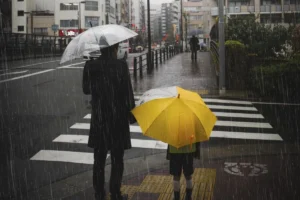
The densely populated and economically vital region of Jakarta, Bogor, Depok, Tangerang, and Bekasi (Jabodetabek) is bracing for a day predominantly characterized by cloudy conditions on Saturday, July 18, 2026, as forecasted by the Meteorology, Climatology, and Geophysics Agency (BMKG). While a widespread sunny outlook is not anticipated, the forecast suggests a generally mild day with the notable potential for light rain specifically in parts of South Jakarta. This nuanced weather pattern holds various implications for the millions of residents navigating their daily routines across this expansive metropolitan area.
According to the official BMKG bulletin, the overarching atmospheric condition across the greater Jabodetabek area will be one of cloud cover, a common phenomenon during transitional periods or when local atmospheric dynamics are at play, even within Indonesia’s typical dry season. Breaking down the forecast for the capital city, the BMKG predicts that Kepulauan Seribu, Jakarta Pusat, Jakarta Utara, and Jakarta Timur will all experience cloudy skies throughout the day. This consistent cloud cover across most of Jakarta suggests a day with subdued sunlight and potentially stable temperatures, mitigating the intense heat often associated with the tropical dry season.
Further into the broader Jabodetabek expanse, the forecast diversifies slightly. Residents in Bogor, specifically Kabupaten Bogor and Kota Bogor, are expected to enjoy a clearer day with predominantly sunny conditions. This distinction for Bogor, often known for its cooler climate and higher elevation, is not uncommon, as localized topographical features can significantly influence microclimates. Conversely, the contiguous urban centers of Kabupaten Bekasi, Kota Bekasi, and Kota Depok are slated to experience the same cloudy conditions as much of Jakarta. Similarly, the Tangerang area, encompassing Kabupaten Tangerang, Kota Tangerang, and Kota Tangerang Selatan, will also be under a blanket of clouds, aligning with the broader regional pattern. The isolated prediction of light rain for South Jakarta, while not indicative of a widespread wet day, serves as a specific alert for residents and commuters in that particular administrative region, suggesting the possibility of brief, localized precipitation that could affect outdoor activities or traffic.
Detailed Regional Breakdown and Diurnal Variation
The progression of weather throughout July 18, 2026, across Jabodetabek is expected to follow a predictable diurnal pattern influenced by the forecasted conditions.
-
Morning (05:00 – 12:00 WIB): The day will commence with a significant presence of cloud cover across most of Jakarta, Bekasi, Depok, and Tangerang. Temperatures are expected to be mild, likely ranging from 24-27 degrees Celsius, providing a relatively cool start to the day. For Bogor, the morning hours are anticipated to be clear, offering pleasant conditions for early risers and outdoor activities. Commuters across the cloudy regions should expect subdued sunlight, potentially affecting visibility slightly but not significantly impacting morning travel, barring the specific areas in South Jakarta where an early shower cannot be entirely ruled out, though less probable than in the afternoon.
-
Afternoon (12:00 – 18:00 WIB): Cloudiness is expected to reach its peak intensity across the majority of the Jabodetabek area. This is the period when the localized light rain in South Jakarta is most likely to manifest. Such rainfall is typically brief, sporadic, and localized, not leading to widespread flooding but potentially causing temporary dampness and slippery road conditions. Temperatures during the afternoon will likely climb to their daily maximums, generally between 29-32 degrees Celsius, although the cloud cover will help temper the direct sun’s intensity. In Bogor, the clear skies are expected to persist, leading to warmer but still comfortable afternoon temperatures, possibly reaching 30-31 degrees Celsius.
-
Evening (18:00 – 24:00 WIB): As the day transitions into evening, the cloud cover across most of Jabodetabek is projected to remain largely consistent, with a gradual cooling of temperatures down to 26-28 degrees Celsius. The chance of light rain in South Jakarta will diminish significantly by late evening. For Bogor, the clear conditions are expected to continue into the night, promising cooler evening temperatures, potentially dropping to 22-24 degrees Celsius, making for a pleasant night. Humidity levels across the entire region are expected to remain moderate to high, typical of a tropical climate. Prevailing winds are generally light and variable, originating primarily from the east or southeast, which is common during the dry season, contributing to the stability of the forecasted weather patterns.
Background and Context: Understanding Jabodetabek’s Climate
Jabodetabek represents the largest metropolitan area in Southeast Asia, home to over 30 million people, and serves as Indonesia’s primary economic, political, and cultural hub. Its diverse geography ranges from the low-lying coastal plains of Jakarta and Tangerang to the higher altitudes and volcanic foothills around Bogor. This geographical variance plays a crucial role in shaping localized weather phenomena.
Indonesia experiences a tropical monsoon climate, characterized by two primary seasons: the wet season (roughly November to April) and the dry season (roughly May to October). July falls squarely within the dry season. During this period, the Intertropical Convergence Zone (ITCZ) typically shifts northward, leading to less rainfall across the Indonesian archipelago. However, "dry season" does not mean entirely rain-free. Local atmospheric instability, sea breezes interacting with urban heat island effects, or localized convective activity can still trigger isolated showers, especially in regions with higher terrain or significant urban development, such as South Jakarta, which is closer to the Bogor highlands.
Macro-climatic phenomena like El Niño or La Niña can significantly influence Indonesia’s weather patterns. While the current forecast for July 18, 2026, appears to align with typical dry season conditions, a strong El Niño event could lead to prolonged drought and higher temperatures, whereas a La Niña might result in wetter-than-average dry seasons. BMKG continuously monitors these global patterns to provide more accurate long-range forecasts, though the immediate daily forecast focuses on synoptic and mesoscale atmospheric conditions. The urban heat island effect, particularly prominent in Jakarta, can also influence local microclimates, sometimes intensifying convective activity or trapping pollutants under a stable cloudy layer, leading to varying air quality conditions. BMKG’s sophisticated monitoring capabilities, including weather satellites, radar networks, and numerous ground-based observation stations spread across the archipelago, are crucial for generating such precise and localized forecasts. These technologies allow for real-time tracking of cloud formation, precipitation, temperature, and wind, providing the data necessary for informed public advisories.
Official Statements and Preparedness Measures

In anticipation of the forecasted cloudy day with localized rain, officials from various agencies are expected to issue standard advisories to the public. Dr. Rina Suryani, Head of Public Information at BMKG, is anticipated to emphasize the importance of staying updated with the latest weather information through official channels. "While the forecast indicates a generally cloudy day, especially for Jakarta and its surrounding areas, the potential for light rain in South Jakarta means residents in that specific zone should be prepared," Dr. Suryani might state. "We advise everyone to carry umbrellas or raincoats as a precaution, especially if commuting or planning outdoor activities in affected areas. Our teams will continue to monitor atmospheric conditions closely throughout the day."
Meanwhile, local government bodies and disaster management agencies are likely to reiterate their preparedness. Mr. Budi Santoso, spokesperson for Jakarta’s Regional Disaster Management Agency (BPBD), typically urges residents to maintain cleanliness in drainage systems to prevent any potential pooling of water, even from light rain. "Although the rain is expected to be light and localized, we always encourage community vigilance regarding environmental cleanliness, particularly in urban areas prone to water stagnation. Our rapid response teams are always on standby for any unforeseen developments," Mr. Santoso might comment, reassuring the public of the city’s readiness.
Transportation authorities are also expected to weigh in. A representative from the Jakarta Transportation Agency could advise commuters to allocate extra travel time, especially during peak hours, citing that even light rain can lead to increased traffic congestion as drivers become more cautious and motorcycle riders seek shelter. "We urge all road users to exercise caution, maintain safe distances, and be aware of potentially slippery surfaces. Public transport remains a reliable option to mitigate any minor inconveniences caused by the weather," the representative might suggest. These statements underscore a proactive approach to managing the daily rhythm of a major metropolis under specific weather conditions.
Broader Implications for Daily Life and Key Sectors
The forecasted cloudy skies and localized light rain for July 18, 2026, carry several implications for the daily life and various economic sectors within Jabodetabek.
-
Commuting and Traffic: For the millions of daily commuters, particularly those relying on motorcycles, the prospect of light rain in South Jakarta means preparing rain gear. While not expected to cause severe disruptions, even minor precipitation can lead to slower traffic flow as drivers reduce speed and visibility is slightly impaired. Public transportation, including the TransJakarta bus rapid transit system, commuter trains (KRL Commuterline), and the MRT/LRT, will likely experience typical ridership, but any minor delays could be exacerbated by cautious road conditions.
-
Public Health: Cloudy skies, especially if persistent, can affect air quality by trapping pollutants closer to the ground, particularly in a city known for its air quality challenges. However, any light rain could offer a brief cleansing effect. Residents are generally advised to stay hydrated, even on cloudy days, given the tropical humidity.
-
Economic Activity: The informal sector, which is a significant part of Jabodetabek’s economy, might experience minor disruptions. Street vendors, motorcycle taxi (ojek) drivers, and construction workers could face temporary lulls during any rainfall. However, the overall impact on the larger economy, including retail and office-based work, is expected to be minimal due to the localized and light nature of the precipitation. In areas like Bogor, with clear skies, outdoor businesses and agricultural activities are unlikely to face any hindrance.
-
Tourism and Recreation: For tourists and locals planning recreational activities, the cloudy forecast might lead to a preference for indoor attractions over outdoor ones in Jakarta and its immediate surroundings. However, the clear skies predicted for Bogor could make it an attractive destination for those seeking outdoor excursions, such as visits to botanical gardens or tea plantations, providing a pleasant escape from the capital’s cloud cover. Coastal areas like Kepulauan Seribu might see slightly reduced appeal if persistent cloudiness obscures the sun.
-
Water Management: While any rain is welcome during the dry season, the forecasted light and localized precipitation is unlikely to have a significant impact on the region’s overall water reserves or management strategies. These systems rely on more substantial and widespread rainfall over catchment areas.
Resident and Business Perspectives
Local residents across Jabodetabek often monitor weather forecasts closely, integrating them into their daily planning. Commuters in South Jakarta, for instance, are accustomed to the city’s dynamic weather and generally prepare for sudden changes. "It’s better to be prepared with an umbrella than caught off guard," remarked a hypothetical resident of South Jakarta, Ms. Sari Dewi, highlighting the pragmatic approach. Small business owners, particularly those operating outdoors, like food stall vendors or roadside retailers, often express relief when heavy rain is not forecasted, as prolonged downpours can severely impact their daily earnings. "Cloudy is fine, as long as it doesn’t pour heavily all day. We can still operate," a hypothetical street vendor in Central Jakarta, Mr. Joko Susanto, might comment. Event organizers for outdoor gatherings would likely have contingency plans in place, but a cloudy day without heavy rain typically allows events to proceed with minor adjustments.
Looking Ahead: Beyond July 18th
BMKG’s continuous monitoring efforts extend beyond a single day, providing valuable insights into evolving weather patterns. While July 18, 2026, is expected to be predominantly cloudy with isolated rain, the agency will continue to issue updates for the coming days, guiding residents and various sectors. The overall outlook for the remainder of the dry season will be closely watched, particularly concerning potential impacts on agriculture and water resources. The importance of climate literacy and access to reliable meteorological information remains paramount for a megacity like Jabodetabek, enabling its vast population and complex infrastructure to adapt effectively to the nuances of its tropical climate.