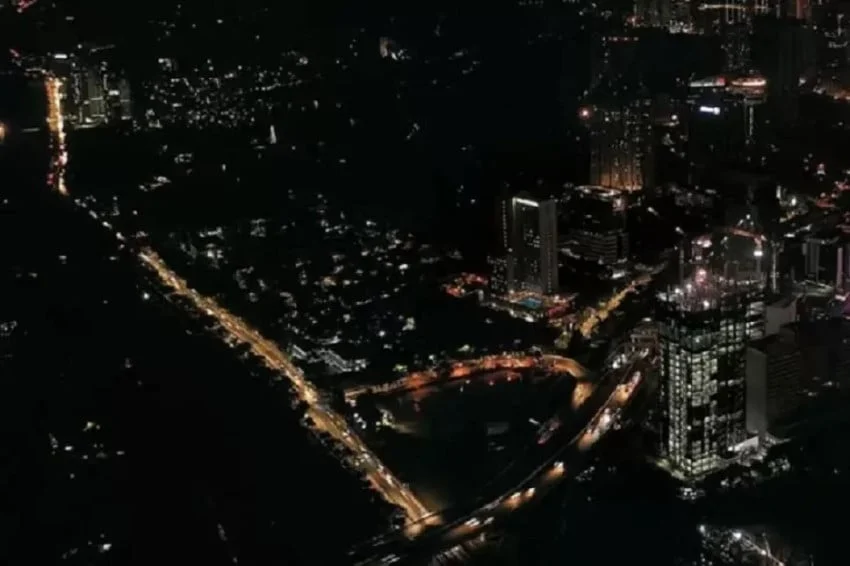
The Jakarta Provincial Government is preparing to implement a temporary, citywide blackout as part of its ongoing environmental campaign. Residents, businesses, and municipal authorities across the Indonesian capital will pause their electricity consumption for a symbolic sixty minutes on Saturday, September 19, 2026. This coordinated blackout is designed to observe World Ozone Day, a global event dedicated to raising awareness about the depletion of the ozone layer and the urgent need to mitigate climate change through energy conservation.
The initiative, announced via the Jakarta administration’s official communication channels, requires households, commercial properties, and public spaces to extinguish non-essential lighting and power sources. While temporary, the citywide measure highlights the growing urgency of urban sustainability initiatives in one of Southeast Asia’s most densely populated and rapidly developing metropolitan areas.
Background and Context of World Ozone Day
World Ozone Day, officially designated as the International Day for the Preservation of the Ozone Layer by the United Nations General Assembly, is commemorated annually on September 16. The date marks the signing of the Montreal Protocol on Substances that Deplete the Ozone Layer in 1987. This landmark environmental treaty was designed to phase out the production and consumption of ozone-depleting substances, such as chlorofluorocarbons (CFCs) and halons, which were historically found in refrigeration, air conditioning, and aerosol propellants.
While the Montreal Protocol has achieved notable success in healing the stratospheric ozone layer, modern environmental observances have expanded to address broader atmospheric concerns, including greenhouse gas emissions, energy efficiency, and urban heat island effects. For a megacity like Jakarta, observing World Ozone Day extends beyond historical protocol achievements. It serves as an immediate, practical exercise in reducing carbon footprints and lowering energy demand. Fossil fuel-reliant power plants heavily supply Jakarta’s electricity grid, meaning that a temporary reduction in power consumption directly translates to a significant, albeit short-term, drop in carbon dioxide emissions and particulate air pollution.
Implementation and Scope of the Jakarta Blackout
The one-hour blackout will be enforced across all five administrative municipalities of Jakarta: Central Jakarta, South Jakarta, East Jakarta, West Jakarta, and North Jakarta, alongside the Thousand Islands regency. The initiative mandates that participating residents and businesses turn off non-essential lights, electrical appliances, and promotional billboards from a designated evening hour.
Municipal authorities have coordinated with building managers, corporate office complexes, shopping centers, and residential associations to ensure maximum compliance. Essential infrastructure, including hospitals, police stations, fire departments, and public transportation networks, will remain fully operational to guarantee public safety and continuity of critical services. Streetlights along major thoroughfares and iconic landmarks may also experience targeted shutdowns, echoing previous successful environmental campaigns conducted by the provincial government.
Chronology of Jakarta’s Energy Conservation Campaigns
Jakarta’s upcoming September 19 event is part of a broader, established pattern of municipal environmental policies aimed at curbing energy waste and combating climate change.
In preceding years, the Jakarta Provincial Government has systematically utilized targeted blackouts as both a policy instrument and a public awareness tool. The administration frequently designates specific dates throughout the year—often aligning with global observances such as Earth Hour in March or World Environment Day in June—to execute coordinated power reductions.
The administrative groundwork for the 2026 World Ozone Day campaign began months in advance, involving inter-agency coordination between the Jakarta Environmental Agency (Dinas Lingkungan Hidup), the Jakarta Information, Communication, and Statistics Department, and regional state-owned electricity enterprises such as PT PLN (Persero). Planning sessions focused on determining the precise hourly window for the shutdown, launching public service announcements across digital and traditional media, and securing voluntary commitments from major commercial real estate developers operating within the central business district.
Official Responses and Stakeholder Perspectives

The initiative has garnered support from municipal officials, environmental organizations, and urban planners, who view the symbolic blackout as an effective educational tool, despite its limited direct impact on overall annual energy consumption.
A spokesperson for the Jakarta Environmental Agency emphasized that the primary objective of the campaign is behavioral modification rather than immediate grid relief. "While turning off lights for a single hour will not permanently solve global climate change, it serves as a powerful reminder of our collective responsibility," the official noted in a recent statement. "Urban energy consumption is a major driver of carbon emissions in our city. By participating in this global movement, Jakarta demonstrates its commitment to international climate goals and encourages citizens to adopt energy-saving habits in their daily lives."
Environmental NGOs have largely welcomed the measure, though some advocacy groups continue to urge the local government to complement symbolic actions with structural, long-term policy reforms. Recommendations from civil society organizations frequently include accelerating the transition of public buses to electric fleets, expanding solar panel installations on government buildings, and enforcing stricter energy-efficiency standards for commercial high-rises.
Economic and Environmental Implications
From an analytical standpoint, coordinated citywide blackouts yield both immediate and deferred impacts. On the environmental front, a one-hour reduction in electricity demand across millions of households and commercial units results in a measurable, quantifiable decrease in fossil fuel combustion at regional thermal power plants. This temporary reduction prevents thousands of metric tons of greenhouse gases and sulfur dioxide from entering the atmosphere over the course of the sixty-minute window.
Furthermore, the initiative provides valuable empirical data for energy providers. PT PLN frequently utilizes such controlled demand-reduction periods to study grid behavior, analyze baseline residential load curves, and assess the logistical feasibility of large-scale demand-response management systems.
Economically, the direct financial savings for individual households and businesses during the one-hour blackout are nominal. However, the indirect economic implications are significant. The campaign serves as a platform for promoting energy-efficient technologies, encouraging building owners to invest in smart-lighting systems, automated HVAC controls, and LED retrofits. Energy audits conducted in the wake of such awareness campaigns often reveal substantial opportunities for long-term cost reductions through optimized power usage.
Challenges and Public Reception
Despite widespread institutional support, implementing a citywide blackout in a dynamic megacity presents notable logistical challenges. Public reception among residents is generally mixed. While environmentally conscious citizens and local communities often embrace the initiative as a community-building exercise that fosters local solidarity and reduces light pollution, some business owners express concerns regarding potential disruptions to evening commerce, particularly in the hospitality and retail sectors.
To mitigate these concerns, the Jakarta Provincial Government has emphasized that participation in residential areas is largely voluntary, though strongly encouraged, while commercial compliance relies heavily on pre-arranged agreements with building management associations. Public safety remains a primary concern for local law enforcement agencies. Consequently, the Jakarta Metro Police have announced plans to increase patrols during the blackout hour to prevent opportunistic crime and ensure traffic safety in areas where street lighting is temporarily dimmed.
Looking Forward: Jakarta’s Broader Climate Strategy
The September 19 blackout is one component of Jakarta’s comprehensive, long-term climate action strategy, which aligns with Indonesia’s national commitment to achieving net-zero emissions by 2060 or sooner. The provincial administration has set ambitious targets to reduce greenhouse gas emissions by 30 percent by 2030, relative to a business-as-usual scenario, and to achieve complete climate neutrality across municipal operations over the subsequent decades.
Achieving these targets requires a multifaceted approach that extends far beyond one-hour symbolic events. Ongoing municipal efforts focus on expanding the Mass Rapid Transit (MRT) and Light Rail Transit (LRT) networks, revitalizing pedestrian infrastructure, enforcing stringent vehicle emission standards, and transitioning municipal waste management systems toward renewable energy generation, such as waste-to-energy conversion plants.
As Jakarta prepares to go dark for sixty minutes on September 19, 2026, the event will serve as both a moment of global solidarity and a local litmus test for public engagement in environmental stewardship. As the city navigates the dual pressures of rapid urbanization and intensifying climate vulnerability, initiatives like World Ozone Day underscore the critical intersection between individual behavioral change and systemic municipal policy in shaping a sustainable urban future.