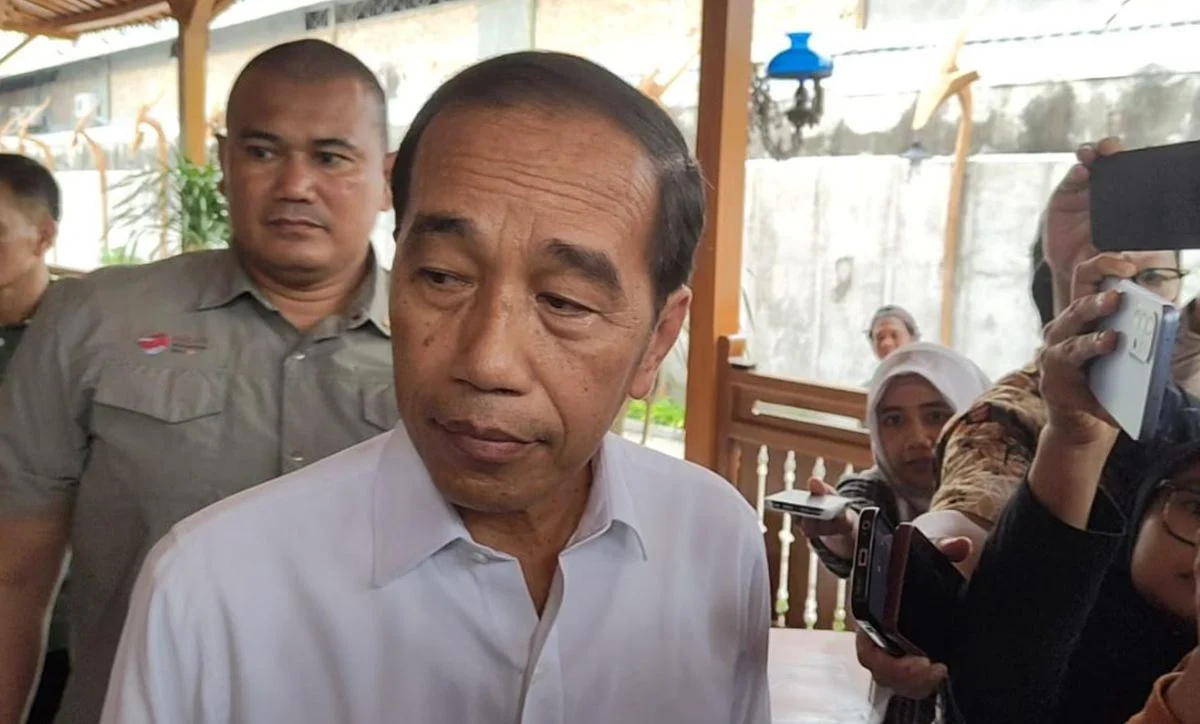
The seventh President of the Republic of Indonesia, Joko Widodo, is scheduled to appear today, Thursday, November 5, 2026, at the East Jakarta District Court to provide testimony in the high-profile criminal defamation and forgery case involving Roy Suryo and Tifauzia Tyassuma, better known as Dokter Tifa. The proceedings, which have garnered significant national attention, center on allegations regarding the authenticity of Jokowi’s academic credentials—a narrative that has persisted in the digital sphere for several years.
The Legal Context and Judicial Process
The appearance of a former head of state in a district court as a witness for the prosecution marks a significant moment in the Indonesian legal landscape. Jokowi, who concluded his second term in 2024, is appearing in his capacity as the complainant in a case where the defendants are accused of spreading misinformation and engaging in defamation regarding his educational background.
According to the schedule set by the Public Prosecutor (JPU) during the previous hearing on October 28, 2026, Jokowi will testify in two separate sessions. The court has opted to maintain separate dockets for Roy Suryo and Dokter Tifa, despite the overlapping nature of the charges and the shared witness list. The sessions are expected to be conducted under high-security protocols, given the prominence of the individuals involved.
Joining Jokowi on the witness stand will be AKBP Syarif Muhammad Fitriansyah, a former aide-de-camp to the president. Syarif’s testimony is expected to provide logistical and administrative corroboration regarding the president’s activities and the handling of his official documents during his tenure.
Chronology of the Dispute
The legal entanglement began following a series of social media posts and public statements made by the defendants, which questioned the legitimacy of the diploma issued by Gadjah Mada University (UGM) to Joko Widodo. While the university has repeatedly confirmed the authenticity of the degree through official statements, the defendants persisted in their claims, leading to criminal complaints filed by the legal representatives of the former president.
- Mid-2022: Initial viral claims regarding the alleged forgery of the presidential diploma began circulating on various social media platforms.
- October 2022: Gadjah Mada University held a press conference confirming that the diploma held by Joko Widodo is authentic and consistent with their archival records.
- Late 2024: Following the transition of power, the legal process against the primary detractors gained momentum as the judiciary sought to resolve the long-standing allegations of defamation.
- October 28, 2026: The Public Prosecutor officially requested the court to summon Joko Widodo and his former aide to testify in the cases against Roy Suryo and Dokter Tifa.
- November 4, 2026: The former president arrived in Jakarta to prepare for his court appearance.
Expectations and Legal Strategy
Rivai Kusumanegara, legal counsel for Joko Widodo, stated on November 1, 2026, that there have been no elaborate preparations for the testimony. The legal strategy is straightforward: to provide a factual account of the events and the personal impact of the allegations. "The President will present his testimony based on his direct experience and the facts as they occurred," Rivai noted.
Legal experts observing the trial suggest that the prosecution’s goal is to establish the "material truth" of the allegations. By bringing the former president into the courtroom, the state is effectively forcing a confrontation between the unsubstantiated claims made by the defendants and the direct evidence provided by the subject of those claims.
For the defense, the proceedings present a challenge. They must reconcile their previous public assertions with the evidence presented in a court of law, where perjury carries significant legal consequences. The defense teams are expected to cross-examine the former president, likely focusing on the administrative processes of diploma issuance and the digital footprint of the statements made by their clients.
Sociopolitical Implications
The trial is more than a simple dispute over academic documents; it represents a broader struggle over information integrity in the digital age. The persistent spread of misinformation regarding public officials has been a significant point of concern for Indonesian policymakers and civil society groups.
Analysts point out that this case serves as a test for the Indonesian judicial system in handling cases of "digital defamation." The outcome of the trial could set a precedent for how the courts address the proliferation of conspiracy theories that target the legitimacy of government institutions and individuals. If the prosecution successfully proves that the defendants engaged in malicious fabrication, it may serve as a deterrent against the unchecked spread of disinformation.
Conversely, the trial has also sparked discussions about the balance between freedom of expression and the protection of reputation. While critics of the former president argue that public figures must be open to scrutiny, the prosecution argues that the line is crossed when scrutiny transitions into the dissemination of demonstrably false information aimed at damaging credibility.
Security and Procedural Protocols
The East Jakarta District Court has implemented stringent security measures for the duration of the proceedings. Given the sensitivity of the case and the status of the witnesses, the court has restricted access to the courtroom to authorized personnel, including the legal teams, media representatives, and family members of the involved parties.
AKBP Syarif Muhammad Fitriansyah, who arrived in Jakarta with the former president, confirmed that the transition has been managed according to standard security protocols for former heads of state. The court’s decision to schedule both testimonies on the same day, despite the separate legal files, reflects a desire to expedite the judicial process and minimize the logistical burden of coordinating security for a high-profile witness.
Analysis of the Evidence
The evidence presented by the prosecution is expected to include both digital documentation—such as the disputed social media posts—and the formal records from the academic institutions involved. The prosecution aims to demonstrate a clear pattern of intent, where the defendants knowingly propagated false narratives despite being presented with official rebuttals from the university.
Legal observers are particularly interested in the testimony of the former aide, AKBP Syarif. As an individual who was in close proximity to the president throughout the relevant period, his testimony could provide critical context regarding the president’s reaction to the disinformation campaigns and whether these campaigns had tangible impacts on his official duties or personal well-being.
Conclusion: A Landmark Moment for the Judiciary
As the courtroom doors open today, the eyes of the public are fixed on the East Jakarta District Court. The appearance of Joko Widodo signifies a rare intersection of political legacy and judicial accountability. Regardless of the final verdict, the trial will undoubtedly be recorded as a pivotal chapter in the post-presidency life of the seventh leader of Indonesia.
The proceedings will continue throughout the day, with the court expected to adjourn once the testimonies are concluded. The judiciary’s ability to conduct these hearings with transparency and impartiality will be closely watched, as the nation looks to see how the legal system resolves a dispute that has been defined by the polarization of the digital information era. For the defendants, the day marks a critical point of reckoning, while for the former president, it is a final, formal step in addressing the claims that shadowed his later years in office.