The landscape of Indonesian law enforcement has been thrust into a period of profound turbulence following the exposure of an expansive illegal wiretapping operation. As the nation grapples with the fallout of a scandal involving high-ranking police officials and the surveillance of the President, a poignant juxtaposition emerged at the State Palace on November 10, 2026. While the integrity of the National Police, or Polri, is under intense public scrutiny, the state officially honored the late General (Ret.) Hoegeng Iman Santoso—the nation’s most iconic symbol of police integrity—by posthumously awarding him the title of National Hero.
The Anatomy of the Wiretapping Scandal
The current crisis originated from reports alleging that former National Police Chief, General Listyo Sigit, and a cohort of three other high-ranking generals orchestrated a clandestine surveillance operation. This illegal network did not limit its reach to political adversaries; it reportedly compromised the privacy of President Prabowo Subianto, alongside prominent business leaders, influential political figures, and members of the press.
The magnitude of this breach has prompted immediate action from the Mabes Polri (National Police Headquarters). A specialized task force has been commissioned to conduct an exhaustive internal investigation, led by the Head of the Criminal Investigation Agency (Kabareskrim), Commissioner General Asep Safrudin. The severity of the evidence has already led to decisive administrative measures, most notably the dishonorable discharge of Inspector General Ahrie Sonta, who was dismissed following a rigorous ethics trial. Legal analysts suggest that this is merely the beginning of a protracted legal process that could reshape the hierarchy and internal oversight mechanisms of the Indonesian police force.
A Beacon of Integrity in Turbulent Times
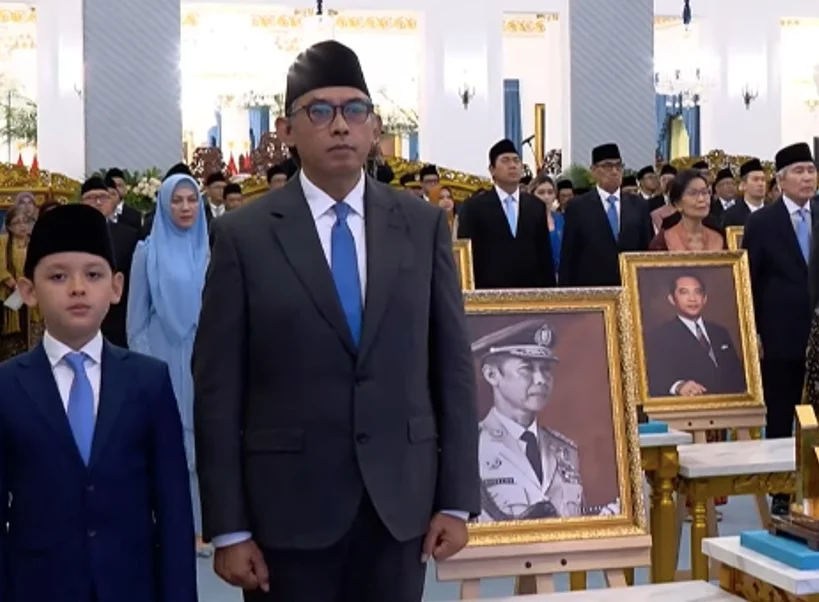
In a ceremony at the State Palace on Tuesday, November 10, 2026, President Prabowo Subianto conferred the title of National Hero upon 19 individuals who have made significant contributions to the Republic of Indonesia. Among these distinguished recipients was General (Ret.) Hoegeng Iman Santoso.
For many observers, the timing of this recognition serves as a stark reminder of the ethical standards that once defined the institution. Hoegeng, who served as the Chief of the Indonesian National Police from 1968 to 1971, remains a legendary figure in Indonesian history, revered for his uncompromising refusal to accept bribes and his steadfast commitment to the rule of law. His tenure is often cited as the "Golden Era" of the Indonesian police force, a time when personal integrity outweighed political expediency.
Krisnadi Ramajaya Hoegeng, representing the family, expressed profound gratitude during the ceremony. "We are deeply moved and grateful for this honor. It is a moment of great pride for our family, and honestly, it is an acknowledgment that we did not expect, yet we accept with the utmost humility," Krisnadi stated. He emphasized that the recognition is not merely a tribute to his grandfather’s past, but a call to action for the current generation to uphold the values of honesty and transparency that Hoegeng lived by.
The Historical Context: The Hoegeng Legacy
To understand why the designation of Hoegeng as a National Hero is so significant during this current scandal, one must examine the contrast between his tenure and the modern challenges faced by Polri. Hoegeng was known for his "simple living" philosophy, often rejecting luxury and refusing to be influenced by powerful interests. In the late 1960s, he famously investigated high-profile cases involving influential figures, demonstrating that no one was above the law.
His resignation in 1971 is often interpreted by historians as a consequence of his refusal to compromise his principles in the face of political pressure. For decades, the public has held him up as the ultimate benchmark for what a police officer should be. In the context of the current wiretapping scandal, the government’s decision to honor him is being viewed by political analysts as a strategic move to restore public trust in the police force and reinforce the importance of ethical leadership.

Chronology of Events: From Discovery to Recognition
The progression of events leading up to this moment has been rapid and impactful:
- Late October 2026: Initial reports surface regarding unauthorized surveillance targeting the executive branch and private citizens.
- Early November 2026: Mabes Polri confirms the formation of a special task force to investigate the extent of the wiretapping operation.
- November 8, 2026: Public disclosure regarding the involvement of high-ranking police officials, leading to the immediate suspension and detention of key suspects, including Inspector General Ahrie Sonta.
- November 9, 2026: Ethics hearings conclude, resulting in the dishonorable discharge of involved officers, signaling a "clean-up" within the institution.
- November 10, 2026: President Prabowo Subianto hosts the National Hero awarding ceremony, officially designating General Hoegeng Iman Santoso as a national hero.
The Broader Impact on National Security
The surveillance scandal has raised critical questions about the balance between national security and the right to privacy. The fact that the President himself was targeted indicates a significant failure in institutional cybersecurity and internal security protocols.
Economically, the scandal has sent shockwaves through the business community. With business leaders reportedly among those wiretapped, there is growing concern regarding the security of corporate data and the potential for extortion or political leverage. Transparency International and other watchdog organizations have called for a comprehensive reform of the police intelligence apparatus to ensure that such surveillance operations are subject to strict judicial oversight.
From a political standpoint, the scandal serves as a litmus test for President Prabowo’s administration. By swiftly allowing the police to investigate their own high-ranking officers and simultaneously honoring a figure of incorruptible integrity, the administration is attempting to project an image of institutional accountability. However, critics argue that institutional reform must go deeper than just the removal of individuals; it requires a systemic overhaul of the police’s intelligence-gathering mandate and the implementation of a civilian-led oversight board.
Institutional Challenges and Future Reforms
The task force led by Commissioner General Asep Safrudin is currently facing the difficult challenge of rebuilding credibility. The investigation must answer several key questions: To what extent did the wiretapping operation influence policy decisions? Who authorized the use of sensitive surveillance technology? And what safeguards will be put in place to prevent a recurrence?
Experts in constitutional law argue that the scandal underscores the urgent need for a new Law on the National Police that clearly defines the boundaries of surveillance. Currently, the Indonesian police operate under a broad mandate that, if abused, can lead to the very situation the country is now facing.
As the investigation proceeds, the legacy of General Hoegeng will undoubtedly serve as the moral compass for the discourse. The public is looking for more than just the punishment of the guilty; they are demanding a return to the ethos that Hoegeng championed—one where the police serve the people, not the interests of a political elite.
Conclusion: A Nation at a Crossroads
The dual narrative of a modern, high-tech surveillance scandal and the posthumous honoring of an old-school, incorruptible hero perfectly encapsulates the current state of Indonesia. The nation is caught between a past that valued integrity above all else and a present where technology and power dynamics have made corruption more sophisticated and harder to detect.
As the state moves forward with the prosecution of the involved generals, the ceremony at the State Palace serves as a poignant reminder of what is at stake. The designation of Hoegeng as a National Hero is not just a historical footnote; it is a profound political statement. It acknowledges that while the nation may stumble, its aspirations remain tied to the virtues of those who served with honor. Whether this moment will lead to a genuine renaissance of integrity within the police force remains to be seen, but the public, bolstered by the memory of Hoegeng, will likely settle for nothing less than total accountability.