JAKARTA — The Indonesian National Police (Polri) has officially established a dedicated special investigative team to examine potential treason charges tied to a high-profile illegal wiretapping scandal involving former National Police Chief General Listyo Sigit Prabowo and several associated figures. The ongoing inquiry focuses on allegations that the former top law enforcement official and his inner circle orchestrated unauthorized surveillance targeting President Prabowo Subianto.
The special task force, operating under the direct command of the Criminal Investigation Agency (Bareskrim), is led by Bareskrim Chief Commissioner General Asep Safrudin. The decision to escalate the investigation from standard procedural reviews to a full-scale probe into state security violations marks a critical escalation in one of the most sensitive political and institutional scandals in modern Indonesian history.
During a press briefing at the National Police Headquarters in Jakarta, the Head of the Public Relations Division of the Indonesian National Police, Inspector General Johnny Eddizon Isir, provided formal updates regarding the scope and mandate of the newly formed investigative unit.
"Regarding the information and the potential related to the alleged act of treason, as we have conveyed in previous press releases, the National Police Chief always listens and responds, and a team has been formed chaired by the Bareskrim Chief who is currently conducting in
-depth investigations," Inspector General Isir stated.
The formation of the special team underscores the gravity with which the current administration and police leadership are treating the security breach. As institutional investigations widen, legal experts, political analysts, and civil society organizations are closely monitoring the developments, given the unprecedented nature of a former national police chief facing scrutiny over national security offenses involving a sitting head of state.
Institutional Response and the Call for Public Oversight
Addressing media representatives, Inspector General Isir emphasized that the process of probing complex allegations such as treason requires meticulous evidence gathering, forensic digital analysis, and comprehensive legal verification. Because of these procedural necessities, Isir noted that the investigation will require a considerable amount of time to ensure that all findings are legally airtight and withstand judicial scrutiny.
"Naturally, the process of deepening the investigation and inquiry will take time to process. Let us support each other and monitor it together," Isir said. "I know that our friends in the media want to get information and certainty as quickly as possible, but as I mentioned, it takes a process. What we want to ensure is that a team led by the Bareskrim Chief is actively working."
The police leadership has sought to balance transparency with the operational confidentiality required for high-level national security investigations. By inviting public oversight, Polri aims to maintain institutional credibility and counter potential narratives of bias or cover-ups within the police force. Analysts view this open posture as a strategic effort to reassure the public that the rule of law applies equally, even to those who formerly held the highest positions of authority within the security apparatus.
Background Context: The Anatomy of the Wiretapping Scandal
The investigation into alleged treason does not exist in a vacuum; it builds upon a rapidly unfolding series of disciplinary and criminal actions within the national police force over recent months. The wiretapping scandal first broke into public awareness following internal intelligence reports that detected unauthorized electronic surveillance mechanisms directed at high-ranking government officials, culminating in targeted surveillance breaches surrounding President Prabowo Subianto.
Illegal wiretapping of a sitting head of state represents a severe violation of national security, constitutional protocols, and statutory law. Under Indonesian law, interception of communications is strictly regulated and restricted to authorized law enforcement agencies operating under specific judicial warrants for criminal investigations. The circumvention of these legal safeguards by high-ranking security officials suggests a severe institutional breach and an abuse of intelligence capabilities.
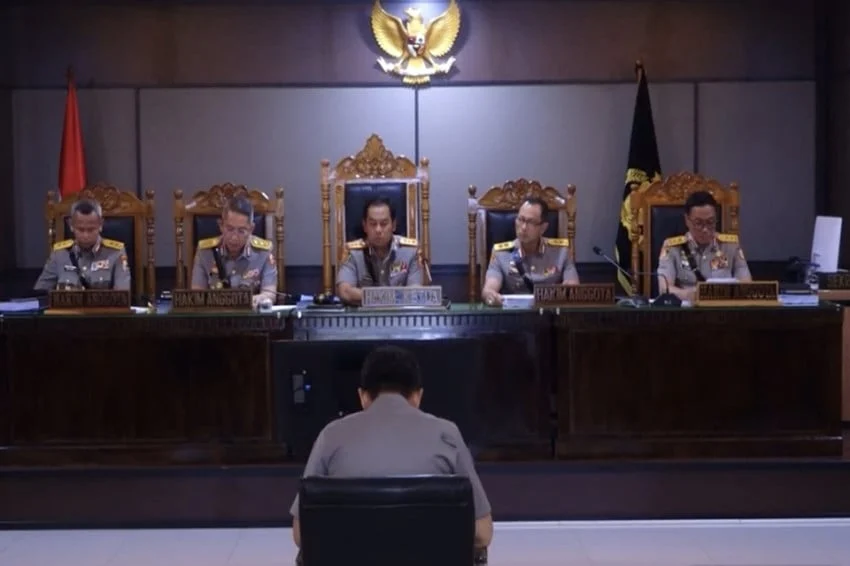
The scandal has already claimed several high-profile casualties within the police hierarchy. Most notably, the police organization recently made headlines with the dishonorable discharge of Brigadier General Ahrie Sonta, who was formally dismissed from the National Police following findings linking him directly to the illegal wiretapping operations. The dismissal of such a senior officer signaled that the internal purge and investigative net would likely extend far beyond mid-level operators to the highest echelons of the former police leadership.
Chronology of Key Events
The trajectory of the investigation reveals a rapid acceleration of institutional measures taken by Polri to address the crisis:
- Initial Detection and Internal Audit: Security audits within the presidential palace and associated state communication networks flag anomalies, pointing toward sophisticated, unauthorized electronic surveillance.
- Discovery of Internal Complicity: Internal security and intelligence units trace the source of the wiretapping operation, identifying active-duty and former high-ranking police personnel involved in the scheme.
- Disciplinary Actions and Dismissals: Polri initiates administrative and ethical hearings, leading to high-profile disciplinary measures, including the dishonorable discharge of Brigadier General Ahrie Sonta.
- Formation of the Special Investigative Team: In response to mounting public pressure and the discovery of broader implications, the National Police Headquarters establishes a special task force led by Bareskrim Chief Commissioner General Asep Safrudin.
- Expansion into Treason Inquiries: Investigators begin examining whether the unauthorized surveillance of the head of state transcends traditional espionage or abuse of power, potentially constituting a threat to state security and treason under the Criminal Code.
Legal Implications of Alleged Treason
The potential inclusion of treason charges—known legally as makar under the Indonesian Criminal Code (KUHP)—significantly raises the legal stakes for General Listyo Sigit Prabowo and any co-conspirators. Historically, makar provisions have been applied to actions intended to overthrow the government, assassinate the president or vice president, or detach territory from the republic.
Legal scholars point out that applying treason charges in the context of illegal wiretapping against a president requires establishing clear intent (mens rea) to undermine, destabilize, or coerce the legitimate government. If prosecutors and investigators can demonstrate that the intercepted intelligence was intended to be used for political coercion, blackmail, or subversion of state authority, the legal threshold for treason could be met.
Furthermore, the involvement of former top law enforcement officials complicates the judicial process. Investigators must navigate jurisdictional questions, potential resistance from institutional loyalists, and the complex challenge of securing classified digital forensics. The Bareskrim-led task force faces the formidable task of conducting a transparent, objective investigation that establishes accountability without triggering institutional instability within the police force itself.
Reactions from Political Observers and Civil Society
The unfolding scandal has generated extensive debate across Indonesia’s political landscape. Representatives from various political parties in the House of Representatives (DPR) have called for a comprehensive, uncompromised investigation. Lawmakers emphasized that no individual, regardless of their past rank or influence, is above the law, particularly when national security and the sanctity of the presidency are compromised.
Civil society organizations focusing on law enforcement reform, anti-corruption, and human rights have similarly voiced their perspectives. Many view the current crisis as a critical stress test for institutional integrity within Polri. For years, reformers have advocated for stronger civilian oversight of intelligence and police operations. The current scandal highlights the urgent need for structural reforms to prevent the misuse of advanced surveillance technology by state actors for personal or political agendas.
At the same time, human rights advocates stress the importance of adhering strictly to due process rights throughout the investigation. While the gravity of the allegations demands a rigorous response, legal experts underscore that all suspects, including former General Listyo Sigit Prabowo, retain the right to presumption of innocence until proven guilty in a court of law.
Broader Ramifications for National Security and Institutional Reform
The investigation into the former National Police Chief and his associates carries profound long-term implications for Indonesia’s state institutions. First and foremost, it highlights vulnerabilities in the security architecture protecting high-ranking state officials. The realization that state intelligence and surveillance apparatuses could potentially be turned inward against the executive branch necessitates a comprehensive overhaul of counter-intelligence protocols and cybersecurity measures within the government.
Second, the scandal deals a severe blow to public trust in the National Police. Polri has spent years working to improve its public image, professionalize its ranks, and implement internal reforms under the Presisi framework. The revelation that senior leaders may have engaged in illegal wiretapping and potential treason threatens to undermine these reform efforts, making transparency and accountability from the current police leadership paramount.
As the special investigative team under Bareskrim continues its deep-dive inquiry, the eyes of the nation remain fixed on the proceedings. The outcomes of this investigation will not only determine the legal fate of those directly implicated but will also set a crucial precedent for how the Indonesian state handles internal subversion, abuse of power, and accountability at the highest levels of law enforcement.