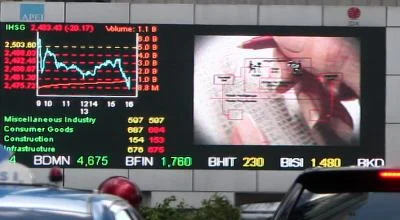
PT Bursa Efek Indonesia (BEI) along with its consolidated subsidiaries officially reported a notable financial contraction for the 2011 fiscal year, marked by a 19.4 percent decline in net income. According to the comprehensive consolidated statement of profit or loss for the period ending December 31, 2011, the national stock exchange operator recorded a net profit of Rp299.825 billion. This figure represented a significant drop compared to the previous fiscal year in 2010, during which the exchange accumulated a net profit of Rp358.041 billion.
The financial report, published by the exchange management, highlighted a complex interplay between expanding operational revenues and significantly escalated operational expenditures. While top-line growth demonstrated resilience amid a dynamic macroeconomic climate, escalating corporate outlays placed heavy downward pressure on the final bottom-line profitability. Financial analysts and market observers closely scrutinized the figures, pointing to the expanding scale of Indonesia’s capital market infrastructure investments as a primary catalyst for the rising cost structures during that period.
Financial Overview and Revenue Growth
A deeper examination of the consolidated financial statements reveals that the contraction in net profit occurred despite a healthy expansion in total revenues. For the fiscal year ending December 31, 2011, PT Bursa Efek Indonesia and its subsidiaries generated a total revenue of Rp699.32 billion. This represented an increase from the Rp667.16 billion recorded at the close of the 2010 fiscal year.
The growth in revenue was largely driven by transaction activities, listing fees, and various capital market services facilitated by the exchange throughout the year. However, this top-line momentum was heavily counterbalanced by a surge in operational expenses. In 2010, the company’s total operating expenses stood at Rp371.3 billion. By the end of 2011, these expenditures had risen sharply to Rp445.21 billion, representing a substantial year-on-year increase. This steep escalation in corporate costs directly eroded the operating margins, ultimately leading to the double-digit percentage decline in the final net profit figures.
Asset Expansion Amid Profit Contraction
Despite the reduction in annual net earnings, the financial health of the stock exchange remained robust in terms of overall asset accumulation. The consolidated balance sheet indicated that the total assets of PT Bursa Efek Indonesia experienced steady growth over the course of the 2011 fiscal year. Total assets expanded to Rp3.763 trillion by December 31, 2011, showing an upward trajectory from the Rp3.555 trillion recorded at the end of the corresponding period in 2010.
This asset growth reflected ongoing capital expenditures, investments in technological infrastructure, and the strengthening of the institution’s balance sheet capacity. Market analysts noted that the ability of the exchange to grow its asset base during a period of contracting net income demonstrated long-term strategic positioning, particularly as the Indonesian capital market prepared for broader technological upgrades and regional integration initiatives within the Association of Southeast Asian Nations (ASEAN) economic community.
Broader Economic Context and Macroeconomic Pressures in 2011
To fully understand the financial performance of PT Bursa Efek Indonesia in 2011, it is essential to examine the broader macroeconomic and geopolitical landscape of that era. The year 2011 was characterized by high volatility in global financial markets, driven largely by the ongoing Eurozone sovereign debt crisis, fluctuating global commodity prices, and shifting monetary policies in major advanced economies.
Domestically, Indonesia maintained relatively strong macroeconomic fundamentals, supported by robust domestic consumption and strong foreign direct investment inflows. Bank Indonesia maintained a generally accommodative monetary policy stance for much of the early part of the year before shifting toward tighter policy measures to curb rising inflationary pressures. For the Indonesian capital market, 2011 was a year of contrasting fortunes. While the Jakarta Composite Index (IHSG) experienced periods of strong performance and capital inflows, it was simultaneously exposed to sudden bouts of capital flight triggered by external global shocks.
To manage these challenges, PT Bursa Efek Indonesia implemented several strategic initiatives aimed at bolstering market liquidity, enhancing investor protection, and upgrading trading infrastructure. These initiatives, while crucial for the long-term development of the exchange, required substantial financial investments, which directly contributed to the higher operational expenses noted in the annual financial report.
Chronology of Financial Reporting and Corporate Disclosures
The release of the 2011 financial statements followed standard regulatory timelines mandated by the Financial Services Authority (Otoritas Jasa Keuangan or OJK, formerly operating under Bapepam-LK regulations at the time) and corporate governance best practices for public and quasi-public institutions in Indonesia.
Throughout January and February 2012, internal auditors and independent public accounting firms conducted comprehensive audits of the consolidated financial records of PT Bursa Efek Indonesia and its subsidiaries. The audit process verified the accuracy of revenue streams, expense allocations, and asset valuations. Following the completion of the audit, the board of directors and the board of commissioners reviewed the comprehensive consolidated statement of profit or loss. On March 31, 2012, the official financial figures were formally published, providing transparency to shareholders, listed companies, brokerage firms, and the general public regarding the operational and financial standing of the national exchange operator.

Analysis of Operational Expenses and Capital Investments
The core driver behind the 19.4 percent reduction in net profit was the aggressive expansion of operational expenses, which grew from Rp371.3 billion to Rp445.21 billion. Industry experts and financial commentators pointed to several key areas driving this expenditure growth:
Technological Upgrades and System Resilience: In the wake of increasing global trading volumes and the necessity for high-frequency trading capabilities, BEI invested heavily in upgrading its core trading engines, surveillance systems, and disaster recovery centers. Ensuring system reliability and preventing technical disruptions required substantial capital and operational outlays.
Human Capital and Institutional Development: Expanding the capacity of the national stock exchange necessitated the recruitment of specialized personnel, professional training programs, and enhanced governance frameworks to meet international regulatory standards.
Investor Education and Market Expansion Campaigns: Throughout 2011, PT Bursa Efek Indonesia actively pursued regional expansion strategies, opening new representative offices across various provinces in Indonesia. The objective was to increase retail investor participation outside of major financial hubs like Jakarta. While successful in expanding the investor base, these promotional and infrastructural activities incurred significant operational costs.
Regulatory Compliance and Risk Management: Enhanced regulatory mandates, increased monitoring of brokerage houses, and strengthened clearing and settlement safeguards also contributed to the rising administrative and operational cost burden.
Implications for the Indonesian Capital Market
The financial results reported by PT Bursa Efek Indonesia for the 2011 fiscal year offered critical implications for the trajectory of the country’s financial sector. While a decline in net profit might typically raise concerns for commercial enterprises, analysts emphasized that an exchange operator functions uniquely as public market infrastructure rather than a traditional profit-maximizing corporation.
The increase in operating expenses was largely interpreted as a necessary reinvestment into the market ecosystem. By upgrading technology, expanding regional reach, and strengthening regulatory oversight, BEI laid the foundational groundwork for subsequent years of exponential growth in market capitalization, daily trading values, and total listed issuers. Furthermore, the growth in total assets from Rp3.555 trillion to Rp3.763 trillion underscored the underlying financial stability of the institution, ensuring that it retained adequate capital buffers to weather potential external economic shocks.
Stakeholder and Market Reactions
Following the publication of the financial report on March 31, 2012, reactions from market participants, securities firms, and institutional investors remained generally sanguine. Brokerage executives acknowledged the pressure on the exchange’s bottom line but viewed the expenditure growth as a justified cost of modernization.
Listed companies and market analysts alike recognized that a well-funded, technologically advanced exchange is vital for maintaining market integrity and attracting foreign portfolio investments. Discussions among market stakeholders following the release focused on how the exchange planned to optimize its cost structures in future fiscal years while maintaining momentum on infrastructural enhancements. Management anticipated that as newly implemented systems reached full operational maturity, economies of scale would eventually help stabilize operating margins and support sustainable long-term profitability.
Conclusion and Outlook Beyond 2011
The financial disclosures for the year ending December 31, 2011, marked a transitional period for PT Bursa Efek Indonesia. Balancing the imperatives of revenue generation, cost management, and systemic investment proved to be a complex challenge in an evolving macroeconomic environment. Although net profit experienced a contraction of 19.4 percent down to Rp299.825 billion, the concurrent growth in top-line revenue to Rp699.32 billion and total assets to Rp3.763 trillion demonstrated underlying operational resilience.
Ultimately, the strategic expenditures undertaken during 2011 positioned PT Bursa Efek Indonesia to better serve the expanding needs of the Indonesian economy, paving the way for deeper capital market penetration, enhanced technological security, and sustained institutional growth in the years that followed.