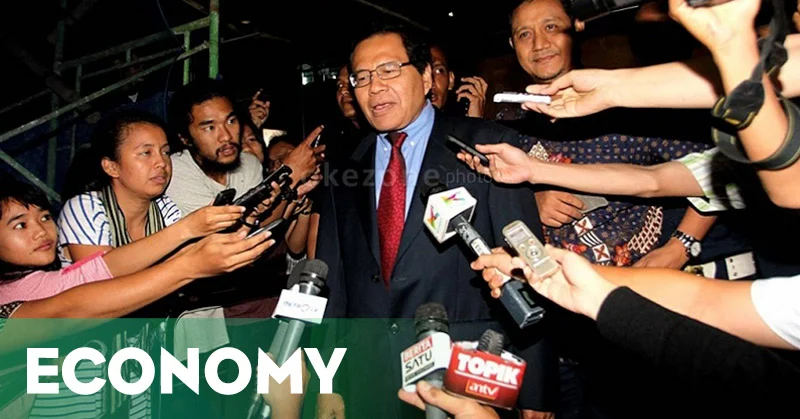
The ongoing restructuring and cleanup of Indonesia’s oil and gas governance reached a significant milestone when the Ministry of Energy and Mineral Resources formally announced the dissolution of Pertamina Energy Trading Limited, commonly known as Petral. Despite overseeing the energy and maritime sectors as the Coordinating Minister for Maritime Affairs and Resources, Rizal Ramli noticeably declined to comment on the development when approached by journalists in Jakarta.
The decision to dismantle Petral and its subsidiary, Pertamina Energy Service Pte Ltd (PES) based in Singapore, followed extensive audits and investigations that uncovered systemic inefficiencies, undue third-party interference, and lack of transparency in crude oil and refined petroleum product procurement processes. While the Ministry of Energy and Mineral Resources spearheaded the public announcement and defended the policy shift as a crucial step toward national energy sovereignty and fiscal transparency, the coordinating minister responsible for the broader portfolio maintained a strict silence.
Following a high-level meeting on energy diversification and decentralization held at his office, Ramli sidestepped inquiries from reporters regarding the final dissolution of the trading arm. Instead of addressing the media, he raised both hands in a dismissive gesture, offered a brief smile, and departed the premises. Staff members accompanying the minister explained that he was required to travel immediately to the State Palace to attend an official state reception for visiting Italian President Sergio Mattarella.
The reticence of a high-ranking economic coordinator regarding such a monumental structural reform generated considerable speculation and media attention, highlighting the political sensitivities and complex bureaucratic dynamics surrounding the eradication of entrenched oil trading cartels in Indonesia.
Background and Context of the Petral Controversy
To fully understand the weight of the Petral dissolution and the cautious stances adopted by various government officials, it is essential to examine the historical context of the entity. Established as a trading subsidiary of Indonesia’s state-owned oil and gas giant, PT Pertamina (Persero), Petral was originally intended to secure crude oil imports and manage international shipping logistics efficiently. Over the years, however, the Singapore-based trading arm transformed into a controversial entity plagued by allegations of inefficiency, corruption, and mafia-style control over Indonesia’s energy supply chain.
For decades, Indonesia relied heavily on crude oil and fuel imports to meet domestic demand, a vulnerability exacerbated by declining domestic production and aging refinery infrastructure. Petral served as the primary intermediary for these massive energy purchases. Critics, energy experts, and anticorruption watchdogs frequently argued that the reliance on a foreign-based subsidiary insulated transactions from domestic regulatory oversight, such as the Supreme Audit Agency (BPK) and the Corruption Eradication Commission (KPK).
Reports surfaced detailing how third-party brokers and shadowy intermediaries managed to insert themselves into procurement tenders, artificially inflating fuel import costs for the Indonesian public. The phrase "Petral mafia" became a staple in national political discourse, symbolizing the deep-seated vested interests that drained state coffers and undermined the financial health of Pertamina. When President Joko Widodo took office with a mandate to reform state enterprises and eliminate economic inefficiencies, reforming or abolishing Petral emerged as a top priority for his administration.
Chronology of Events Leading to the Dissolution
The dismantling of Petral was not an overnight decision but rather the culmination of years of investigative reporting, political pressure, and institutional audits. The timeline of events leading up to the November 2015 announcement illustrates the systematic approach taken by the government:
In late 2014, shortly after President Joko Widodo assumed office, the newly appointed management of PT Pertamina initiated a comprehensive governance review of its subsidiaries, with a specific focus on Petral. Public pressure mounted as economists and energy analysts presented data showing that Indonesia was paying a premium for imported fuel due to opaque trading mechanisms.
By early 2015, the Ministry of Energy and Mineral Resources, led by Minister Sudirman Said, partnered with the state audit agency BPK to conduct a formal audit of Petral and its Singaporean subsidiary, PES. The audit findings, released in mid-2015, confirmed long-standing suspicions. Investigators revealed that third-party entities had extensive influence over crude oil and petroleum product procurement, bypassing direct negotiations with national oil companies and driving up costs.
In May 2015, the government took the decisive step of freezing Petral’s operations, shifting its trading functions back to Jakarta under Pertamina’s Integrated Supply Chain (ISC) division. This transition was designed to bring greater transparency, accountability, and direct oversight to the procurement process, eliminating the need for offshore intermediaries.
Finally, in November 2015, the formal dissolution process was announced to the public, officially closing the chapter on Petral’s decades-long history. It was amidst this backdrop of institutional transition and administrative reorganization that Coordinating Minister Rizal Ramli chose to withhold public commentary, prioritizing diplomatic engagements over immediate media statements regarding the energy sector overhaul.
Official Responses and Institutional Reactions
The dissolution of Petral elicited diverse reactions from government agencies, political figures, and industry stakeholders. While the Ministry of Energy and Mineral Resources championed the move as a victory for transparency, other officials maintained a more measured approach.
Minister of Energy and Mineral Resources Sudirman Said emphasized that closing Petral was a necessary measure to clean up the oil and gas sector and restore public trust in state-owned enterprises. According to the ministry, routing all procurement through Pertamina’s domestic supply chain division would save the country substantial sums of money by cutting out unnecessary broker commissions. The ministry maintained that international energy suppliers preferred dealing directly with national authorities rather than through opaque offshore subsidiaries.
Conversely, some political observers and economic analysts noted that reforming the energy sector involved navigating a complex web of political alliances and business interests. Figures like Rizal Ramli, known for his outspoken criticisms of economic monopolies and neoliberal policies throughout his career, were expected by many to vocally support the eradication of the trading cartel. His decision to remain silent on the specific day of the formal announcement sparked debate among journalists and political commentators.
Some analysts suggested that Ramli’s silence might have been a strategic choice to avoid friction within the cabinet, given that the jurisdiction over Pertamina and its subsidiaries officially fell under the Ministry of Energy and Mineral Resources and the Ministry of State-Owned Enterprises, rather than directly under his coordinating portfolio. Others pointed out that as a senior economic minister, maintaining diplomatic decorum ahead of a major state visit took precedence over impromptu press briefings on sector-specific corporate restructurings.
Broader Economic Impact and Implications
The elimination of Petral and the subsequent restructuring of Indonesia’s energy procurement system carried profound implications for the nation’s macroeconomic stability, fiscal health, and energy security.
First and foremost, the shift from Singapore-based trading to domestic oversight under Pertamina’s Integrated Supply Chain aimed to enhance pricing transparency. By dealing directly with National Oil Companies (NOCs) and major global producers rather than third-party brokers, Pertamina could negotiate more favorable terms for crude oil and refined fuel imports. This direct procurement model reduced the risk of price manipulation and ensured that import costs more accurately reflected global market benchmarks like Mean of Platts Singapore (MOPS).
Second, the reform served as a psychological and structural turning point in the fight against corruption within state-owned enterprises. For decades, the perception that state assets were being siphoned off through poorly regulated foreign subsidiaries damaged public confidence in governance. Dismantling Petral signaled to domestic and international investors that the Indonesian government was serious about enforcing corporate governance standards, improving transparency, and dismantling entrenched rent-seeking networks.
However, industry experts also pointed out the operational challenges associated with the transition. Taking over international trading functions required building robust internal capacity within Pertamina, managing complex shipping logistics, and maintaining strong relationships with global financial institutions and suppliers. Ensuring that the ISC division operated with the highest levels of integrity and professional competence remained an ongoing challenge for the state enterprise.
Conclusion
The refusal of Coordinating Minister Rizal Ramli to comment on the dissolution of Petral in November 2015 highlighted the intricate political and bureaucratic landscape surrounding Indonesia’s energy reforms. While the Ministry of Energy and Mineral Resources moved forward with dismantling the controversial trading arm to purge third-party interference and restore fiscal transparency, the broader implications of the decision continued to reverberate across the nation’s economic sectors.
By shifting import procurement back to domestic oversight, the Indonesian government sought to secure a more transparent, cost-effective, and accountable energy supply chain. Although political dynamics and ministerial jurisdictions influenced how individual officials communicated the change, the closure of Petral ultimately marked a definitive shift toward cleaner governance in Indonesia’s vital oil and gas industry.