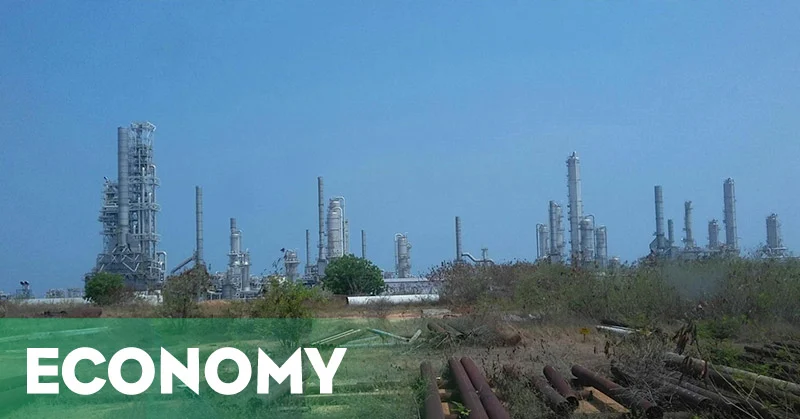
President Joko Widodo conducted an official inspection of the PT Trans Pacific Petrochemical Indotama (TPPI) refinery located in Tuban, East Java, marking a significant milestone in Indonesia’s ongoing efforts to achieve domestic energy security and reduce its heavy reliance on foreign fuel imports. The high-profile visit brought together key figures from the nation’s energy sector, underscoring the critical national importance of bringing the long-dormant facility back online.
President Joko Widodo was accompanied by State-Owned Enterprises (SOE) Minister Rini Soemarno, Pertamina President Director Dwi Soetijpto, and Director General of Oil and Gas IGN Wiratmaja Puja. The delegation arrived at the sprawling coastal facility to witness firsthand the operational revival of the plant, which is managed and operated by state energy giant PT Pertamina (Persero). The restart of the TPPI Tuban refinery represents a transformative achievement for Indonesia’s macroeconomic stability, carrying profound implications for the state budget, foreign exchange reserves, and the domestic supply chain of refined petroleum products.
Background Context and the Dormancy of TPPI Tuban
The journey toward the reactivation of the TPPI Tuban refinery was neither swift nor straightforward, characterized by years of financial turbulence, legal complexities, and logistical hurdles. Established as a strategic petrochemical and refining asset, TPPI faced severe financial distress in the years following its inception. Global oil price fluctuations, coupled with internal corporate debt restructuring issues and operational misalignments, eventually forced the facility to suspend its production activities.
For a considerable period, the multi-million-dollar infrastructure sat underutilized, representing a vast pool of untapped potential in a country that was increasingly dependent on imported fuel to meet soaring domestic energy demands. Indonesia’s transition from a net oil exporter to a net importer in the early 2000s placed immense fiscal pressure on successive governments. The reliance on imported Premium gasoline (RON 88) and other refined petroleum products exposed the nation’s trade balance to the volatile swings of international crude oil prices.
Recognizing the strategic folly of letting a world-class refining facility lie idle while billions of dollars flowed out of the country for fuel imports, the administration under President Joko Widodo made the revitalization of domestic refining capacity a top national priority. Through a coordinated intervention involving the Ministry of State-Owned Enterprises, regulatory bodies, and PT Pertamina, a rescue and integration plan was formulated. This plan aimed to clear financial roadblocks, restructure liabilities, and integrate TPPI into Pertamina’s downstream supply chain, ultimately paving the way for the facility’s triumphant return to active service.
Operational Impact and Substantial Financial Savings
The primary driver behind the government’s intense focus on the TPPI Tuban refinery lies in its immense production capacity and the corresponding relief it brings to Indonesia’s current account deficit. According to Wianda Pusponegoro, who served as the Vice President of Communication for Pertamina during the operational revival, the restart of the facility delivers immediate and quantifiable economic benefits.
The refinery possesses the capability to significantly slash the volume of imported fuel required by Southeast Asia’s largest economy. Specifically, the facility is capable of reducing national imports of Premium gasoline (RON 88) by an impressive 20 percent. With a total production output reaching approximately 61,000 barrels per day of petroleum products, the refinery alters the domestic supply dynamics, shifting the burden away from foreign suppliers and placing it firmly within domestic industrial control.
The financial implications of this production volume are monumental. When calculated using a conservative benchmark oil price of USD 60 per barrel for gasoline, the operation of the Tuban plant translates to staggering foreign exchange savings. Analysts and corporate officials estimate that the refinery saves the country approximately USD 1.2 billion annually, which equates to roughly Rp 16 trillion based on prevailing exchange rates at the time.
These savings directly alleviate pressure on the state budget, freeing up critical fiscal space that can be redirected toward infrastructure development, social welfare programs, education, and healthcare initiatives. Furthermore, the reduction in fuel import dependency shields the Indonesian rupiah from sudden depreciation pressures often triggered by high foreign currency demand for energy purchases on the global spot market.
Strategic Integration with PT Pertamina (Persero)

The successful reintegration of the TPPI Tuban facility into Indonesia’s energy architecture highlights the expanding role of PT Pertamina (Persero) as the backbone of national energy sovereignty. Managing a facility of this magnitude requires deep technical expertise, robust supply chain logistics, and substantial working capital—all of which Pertamina brought to the table following the government mandate to take operational control.
Under the leadership of then-President Director Dwi Soetijpto, Pertamina mobilized its technical teams to conduct comprehensive safety audits, mechanical overhauls, and supply chain alignments. The integration process involved linking the Tuban refinery with Pertamina’s existing network of upstream crude suppliers and downstream distribution channels. This ensured a steady stream of feedstock to the refinery and an efficient evacuation route for the refined products to markets across Java and beyond.
The synergy between TPPI’s petrochemical processing capabilities and Pertamina’s extensive marketing network created a holistic ecosystem. Beyond producing automotive fuels like gasoline, the facility also plays a vital role in manufacturing petrochemical products such as paraxylene and benzene. These petrochemical outputs serve as essential raw materials for domestic manufacturing industries, particularly the textile and packaging sectors, thereby fostering secondary economic multiplier effects across multiple industrial verticals.
Official Perspectives and Stakeholder Reactions
During the inspection tour, President Joko Widodo emphasized that infrastructure projects of national strategic importance must not be allowed to stall due to bureaucratic red tape or administrative negligence. The head of state reiterated his administration’s commitment to cutting through institutional roadblocks to ensure that national assets deliver tangible benefits to the public.
State-Owned Enterprises Minister Rini Soemarno echoed the President’s sentiments, stressing that the revitalization of TPPI Tuban was a testament to the resilience and capability of Indonesian state-owned enterprises. She noted that coordinating multidisciplinary teams across government ministries, regulatory agencies, and corporate entities was a complex undertaking, but the ultimate payoff justified the rigorous coordination efforts.
Industry observers and energy experts have generally lauded the move, viewing it as a pragmatic step toward insulating the domestic economy from external oil shocks. By shifting production onshore, Indonesia not only secures its immediate energy needs but also enhances its resilience against geopolitical tensions that frequently disrupt global maritime trade routes and oil supply chains.
Broader Macroeconomic Implications and Future Outlook
The reinstatement of the TPPI Tuban refinery extends far beyond balance sheet calculations; it serves as a cornerstone for broader macroeconomic stability in Indonesia. A stable domestic energy supply chain is a fundamental prerequisite for sustained industrial growth and foreign direct investment. Manufacturers and logistics providers operate with greater confidence when energy costs and fuel availability are insulated from extreme global volatility.
Moreover, the successful turnaround of TPPI Tuban established a operational blueprint for handling other distressed state assets. It demonstrated that with decisive political will, sound corporate governance, and strategic asset integration, dormant infrastructure could be transformed into profitable, value-generating enterprises.
As the refinery continues its steady output of 61,000 barrels per day, attention within energy circles naturally shifts toward the future. The success at Tuban has amplified calls for further investments in Indonesia’s downstream refining sector, including the ongoing Refinery Development Master Plan (RDMP) and the construction of new Grass Root Refineries (GRR). These long-term capital expenditure projects aim to expand national refining capacity even further, ensuring that Indonesia moves closer to total self-sufficiency in energy production.
Ultimately, the presidential inspection of the TPPI Tuban refinery on that November morning in 2015 stands as a defining moment in Indonesia’s contemporary economic history. It encapsulated a decisive policy shift toward resource nationalism based on operational efficiency, fiscal prudence, and strategic asset optimization—principles that continue to guide the nation’s energy policy trajectory today.