State-owned electricity
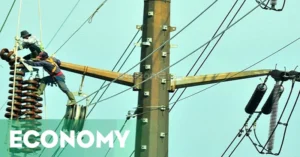
enterprise PT PLN (Persero) has officially expressed its strong support and appreciation for President Joko Widodo’s strategic initiative to promote investment opportunities in Indonesia’s power sector during his diplomatic visit to the United States. The move, which involved pitching large-scale energy projects directly to American investors and leadership, has been lauded as a vital step toward bridging a massive infrastructure funding gap that domestic financial mechanisms alone cannot overcome.
The endorsement from PLN highlights the immense capital requirements needed to fulfill the government’s ambitious electrification goals across the archipelago. As Indonesia seeks to rapidly expand its power generation capacity, modernize its grid systems, and bring reliable electricity to millions of underserved citizens in remote and outer regions, the administration’s aggressive international diplomacy is increasingly viewed as the linchpin of the nation’s energy strategy.
Background Context of the Presidential Visit and Energy Diplomacy
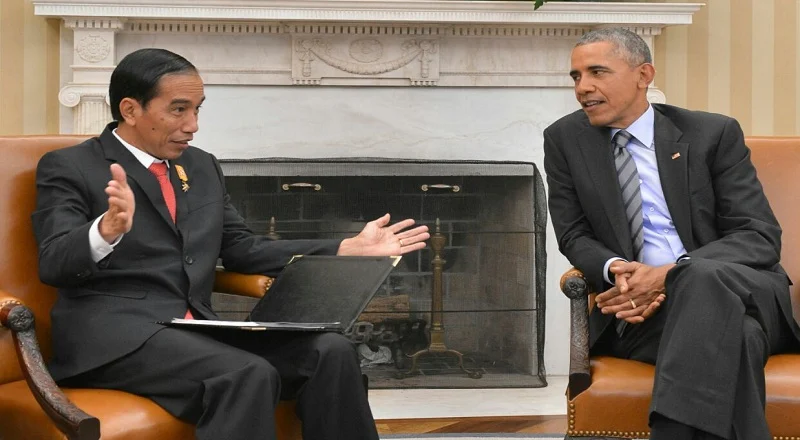
The diplomatic engagement in question took place during President Joko Widodo’s official state visit to Washington, D.C., where he met with then-U.S. President Barack Obama and various high-ranking government officials, as well as prominent business leaders and representatives from major multinational corporations. While bilateral talks traditionally cover a wide array of diplomatic, security, and trade issues, the energy sector emerged as a central pillar of economic cooperation.
At the time, Indonesia was embarking on one of the most aggressive infrastructure development cycles in its modern history. At the forefront of this agenda was the 35,000-megawatt (MW) electricity infrastructure program—a monumental undertaking announced by the Jokowi administration to prevent imminent power shortages, accommodate rapid industrialization, and stimulate regional economic growth. However, realizing a project of this unprecedented magnitude required a paradigm shift in how infrastructure funding was secured, moving away from exclusive reliance on the state budget toward robust public-private partnerships and foreign direct investment (FDI).
Recognizing the hesitation that international investors sometimes face regarding regulatory frameworks, currency volatility, and bureaucratic red tape in emerging markets, President Jokowi used the global stage to personally vouch for Indonesia’s economic stability and investment-friendly reforms. By directly marketing the country’s vast power sector potential to the American business community, the Indonesian head of state sought to build institutional confidence and attract the multi-billion-dollar commitments necessary to jumpstart stalled or capital-starved projects.
The Staggering Financial Realities of Indonesia’s Power Sector
Speaking on the sidelines of a groundbreaking ceremony at the Modern Cikande Industrial Estate in Serang, Banten, Nasri Sebayang, who served as PLN’s Director of Regional Business for Central Java, elaborated on the sheer scale of the financial challenge facing the utility giant. He emphasized that domestic revenue streams and the national budget (APBN) are fundamentally inadequate to shoulder the burden of nationwide power infrastructure development within the targeted timeframe.
"We have money, but it is not enough to build everything within five years. The state budget alone does not even reach IDR 150 trillion each year, right? We need IDR 1,200 trillion, just for electricity. Therefore, we must certainly invite the participation of private investors from abroad," Sebayang explained to members of the press.
To put these figures into perspective, Indonesia’s state budget is perpetually allocated across numerous competing national priorities, including education, healthcare, defense, civil servant remuneration, and nationwide social assistance programs. Infrastructure development—while heavily prioritized by the Jokowi administration—must compete for these finite public funds. Consequently, when evaluated against the staggering IDR 1,200 trillion (approximately $80 to $90 billion USD depending on historical exchange rates) required exclusively for the power sector over a medium-term horizon, the national budget can realistically cover only a fraction of the total cost.
This financial bottleneck created an urgent imperative to look outward. Without substantial foreign capital injection, the state electricity monopoly would be unable to construct the necessary coal-fired, gas-fired, geothermal, and hydroelectric power plants, let alone the transmission lines required to distribute power from generation hubs to consumption centers.
Addressing the Infrastructure Deficit and Regional Disparities
Beyond the raw macroeconomic numbers, the push for foreign investment is intrinsically tied to issues of social equity and regional development. During the early years of the Jokowi administration, Indonesia’s electrification ratio—while improving—still revealed stark disparities between the densely populated islands of Java and Bali, and the outer islands such as parts of Sumatra, Kalimantan, Sulawesi, Maluku, and Papua.
While urban centers enjoyed relatively stable power supplies, hundreds of remote and rural communities remained either entirely off the grid or dependent on inefficient, high-cost, diesel-powered microgrids that operated for only a few hours a day. This energy poverty served as a major impediment to local economic productivity, educational advancement, and healthcare delivery.
Nasri Sebayang pointed out that presidential initiatives aimed at courting global capital directly accelerate the growth and expansion of the national power grid. By bringing in experienced international energy developers and institutional investors, Indonesia could leverage advanced engineering capabilities, project management expertise, and swift capital mobilization to bridge regional disparities much faster than would otherwise be possible through domestic efforts alone.
Furthermore, a robust power infrastructure is the absolute bedrock of industrialization. As Indonesia sought to move up the global value chain by processing its abundant raw mineral resources domestically—such as nickel, bauxite, and copper—the demand for reliable, high-capacity industrial electricity skyrocketed. Industrial zones, such as the Modern Cikande Industrial Estate where Sebayang made his remarks, require uninterrupted power supplies to maintain continuous manufacturing and processing operations. Any shortfall in power generation directly threatens investor confidence in Indonesia’s manufacturing sector as a whole.
Strategic Implications of US-Indonesia Energy Cooperation
The alignment between executive-level diplomacy and operational-level execution by state enterprises like PLN illustrates a coordinated, whole-of-government approach to economic development. When the head of state acts as the chief marketer for national infrastructure, it sends a powerful signal to international markets that foreign investments enjoy the highest level of political backing and administrative protection.
From the perspective of American investors, participation in Indonesia’s energy sector offered lucrative long-term opportunities backed by power purchase agreements (PPAs) with PLN. For decades, U.S. firms specializing in energy technology, engineering, procurement, construction (EPC), and financial services have looked to Southeast Asia as a primary engine of global growth. By engaging directly with the U.S. market, Indonesia positioned itself as a prime destination for Western capital, diversifying its pool of foreign partners beyond traditional regional lenders and Asian state-backed developers.
However, navigating foreign investment in Indonesia’s power sector has historically presented distinct challenges. Investors routinely cite regulatory uncertainty, land acquisition complexities, and shifting environmental compliance standards as hurdles to project execution. By publicly championing these investments, the presidential administration assumed a proactive role in mitigating these bureaucratic bottlenecks, signaling to agencies like PLN, the Ministry of Energy and Mineral Resources (MEMR), and the Investment Coordinating Board (BKPM) that streamlining investment approvals was a matter of utmost national priority.
Long-term Impact on Indonesia’s Energy Transition and Grid Modernization
Looking back at the mid-2010s inflection point, the strategy of aggressively courting international capital laid the groundwork for subsequent shifts in Indonesia’s energy landscape. While initial efforts heavily emphasized rapid capacity addition—frequently relying on conventional fossil fuels to meet immediate baseline demand—the influx of global partnerships eventually catalyzed discussions around sustainable financing and green technology transfer.
As global financial markets evolved and international pressure mounted regarding climate change and carbon emissions, the relationships forged with Western economies during this era helped pave the way for subsequent multilateral agreements. Frameworks such as the Just Energy Transition Partnership (JETP) and various bilateral clean energy initiatives trace their conceptual roots back to the proactive diplomatic outreach established during the mid-2010s.
Ultimately, PLN’s public endorsement of President Jokowi’s international investment tours underscores a fundamental economic reality of modern developing nations: state-led enterprises cannot achieve large-scale infrastructural transformation in isolation. By successfully bridging domestic capital shortfalls with international liquidity, the administration’s economic diplomacy helped avert potential energy crises, supported industrial expansion, and brought the nation closer to achieving total electrification. The collaborative dynamic between executive diplomacy and operational implementation remains a textbook case study in how emerging economies leverage global partnerships to overcome domestic infrastructure constraints.