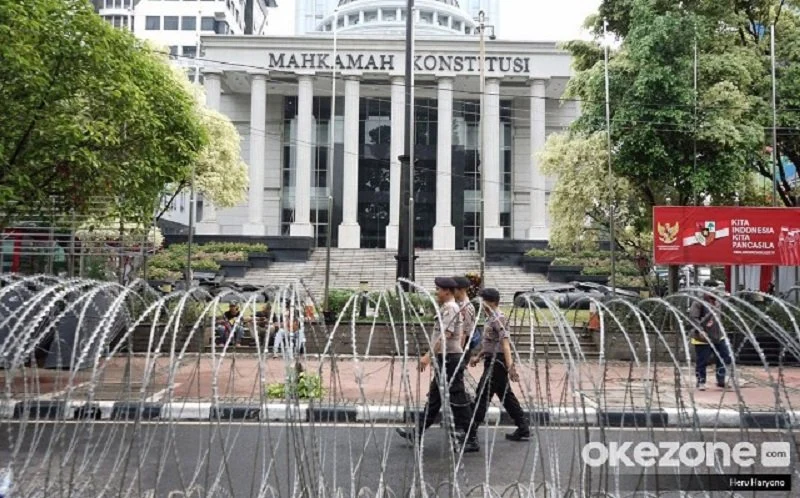
The Indonesian Mahkamah Konstitusi (Constitutional Court) has delivered a landmark ruling that prohibits telecommunication operators from declaring unused internet data quotas as expired. This decision, widely welcomed by consumer advocates and legislators, affirms that purchased internet data is a consumer right with economic value, necessitating robust legal protection. The ruling is expected to usher in a new era of consumer fairness and transparency within the nation’s burgeoning digital landscape.
Hj. Ida Nurlaela Wiradinata, a member of Commission VI of the House of Representatives (DPR RI) representing the Indonesian Democratic Party of Struggle (PDI Perjuangan), has expressed strong support for the Constitutional Court’s verdict. She emphasized that this decision is not merely a technical adjustment to telecommunication regulations but a significant step forward in safeguarding the interests of consumers in the digital age.
"Internet data quotas that have been paid for are the right of the consumer, not unilateral profit for the operator," stated Ida. "The Constitutional Court’s ruling must serve as a momentum to strengthen consumer protection and create fairer business competition."
Background and Chronology of the Ruling
The legal challenge that led to this pivotal ruling stemmed from long-standing consumer grievances regarding the practice of unused data expiring. Consumers frequently found themselves losing the remaining portions of their purchased data plans simply because the associated active period ended, often with limited recourse or alternative options provided by operators. This practice, perceived by many as inequitable, fueled a growing demand for regulatory intervention.
While the exact timeline of the legal proceedings is not detailed in the initial report, such cases typically involve petitions filed by individuals or consumer groups, followed by rigorous legal examination and deliberation by the Constitutional Court. The court’s decision, announced recently, signifies the culmination of this process, affirming the fundamental rights of consumers in contractual agreements for digital services.
Supporting Data and the Economic Significance of Data
The economic implications of this ruling are substantial, both for consumers and the telecommunications industry. Internet data has become an indispensable commodity in modern life, essential for education, work, communication, and access to information. The value of unused data, therefore, represents a tangible financial asset for consumers who have already paid for it.
Indonesia’s digital economy is experiencing exponential growth. According to various reports, internet penetration in Indonesia continues to rise, with a significant portion of the population relying on mobile data for their online activities. This growing reliance underscores the importance of fair practices in data provisioning. For instance, a study by We Are Social and Hootsuite in early 2023 indicated that over 77% of the Indonesian population had internet access, with mobile phones being the primary device for internet usage. This translates to millions of individuals potentially affected by data expiry policies.
The average cost of mobile data packages in Indonesia, while varying by provider and package size, represents a significant monthly expenditure for many households. When unused data expires, consumers effectively forfeit money spent on a service they did not fully utilize, creating a financial loss. The Constitutional Court’s ruling acknowledges this economic reality and seeks to rectify this perceived injustice.
Analysis of Implications for Consumers and Operators
The Constitutional Court’s decision is poised to bring about several key implications:
- Enhanced Consumer Purchasing Power: Consumers will now have greater confidence that their investment in data plans is protected. This could lead to more strategic purchasing of data, knowing that any unused portion will be available for future use.
- Increased Transparency and Fairness: The ruling necessitates a shift towards more transparent business models by telecommunication operators. They will be compelled to clearly communicate data policies and provide options that respect consumer rights.
- Potential for New Service Models: Operators may need to develop innovative service schemes that allow for the rollover or transfer of unused data. This could involve offering longer validity periods, flexible data pooling options, or mechanisms for consumers to utilize their remaining data in different ways.
- Reduced Consumer Dissatisfaction: The elimination of data expiry is likely to significantly reduce a major source of consumer frustration and complaints within the telecommunications sector.
For telecommunication operators, the ruling presents a challenge to their existing business models but also an opportunity to adapt and build stronger customer loyalty. The focus will likely shift from maximizing short-term revenue through data expiry to fostering long-term customer relationships based on trust and equitable service.
Legislative and Official Responses
Ida Nurlaela Wiradinata’s statement highlights the legislative branch’s endorsement of the Constitutional Court’s decision. Her remarks underscore a broader sentiment within the DPR RI that this ruling aligns with the government’s commitment to consumer protection and fair market practices.
"Internet data quotas that have been paid for are the right of the consumer, not unilateral profit for the operator," Ida reiterated, emphasizing the principle that consumers should not be penalized for not fully utilizing a purchased good or service within a predetermined, and often restrictive, timeframe.
She further elaborated on the need for operators to adapt their business strategies: "The telecommunication business actors must adjust their business models in the future to continue upholding the principles of fairness, transparency, and a balance of rights and obligations between service providers and consumers."
The DPR member from the West Java X electoral district called for concrete action from the government and regulatory bodies. "We hope that the government and regulators will mandate telecommunication operators to provide service schemes that offer consumers choices to continue utilizing their purchased data quotas transparently and fairly," she stated. This indicates a call for proactive regulatory oversight to ensure the effective implementation of the court’s decision.
Call for Strict Oversight and Future Outlook
Beyond the immediate implications, Ida also stressed the critical need for rigorous monitoring of the ruling’s implementation. She warned against the potential for new, exploitative business practices to emerge under the guise of compliance. "Ida also requested strict oversight of the implementation of the Constitutional Court’s decision so that it does not lead to new business practices that actually harm consumers," the original report stated.
This call for oversight suggests that the government, likely through the Ministry of Communication and Information Technology (Kominfo) and the Indonesian Telecommunications Regulatory Agency (BRTI), will be expected to play a crucial role in ensuring telecommunication companies adhere to the spirit and letter of the ruling. This may involve issuing new regulations, guidelines, or conducting audits to verify compliance.
The Constitutional Court’s decision marks a significant victory for consumer rights in Indonesia. It serves as a powerful reminder that in an increasingly digitalized world, the principles of fairness, transparency, and the protection of consumer assets remain paramount. As the telecommunications industry adapts to this new legal landscape, the focus will undoubtedly be on how effectively operators can implement these changes while continuing to provide valuable and accessible digital services to the Indonesian populace. The long-term success of this ruling will hinge on sustained vigilance and a commitment from all stakeholders to uphold consumer welfare in the evolving digital economy.