WhatsApp, the ubiquitous messaging platform owned by Meta, has rolled out a significant update introducing four key features designed to enhance user experience across a range of devices and scenarios. The most impactful change, particularly for iPad users, is the introduction of a fully standalone WhatsApp application for the tablet, allowing for direct account creation and management without reliance on a paired smartphone. This marks a pivotal moment in WhatsApp’s accessibility, addressing a long-standing request from its vast user base. Beyond the iPad enhancement, the update also brings a revamped in-car messaging experience through Apple CarPlay and Android Auto, improved PDF handling within the app, and a new way to share music directly to WhatsApp Status. These features are currently being deployed in a phased rollout to users globally.
The Dawn of a Standalone iPad App: Unchaining WhatsApp from the Smartphone
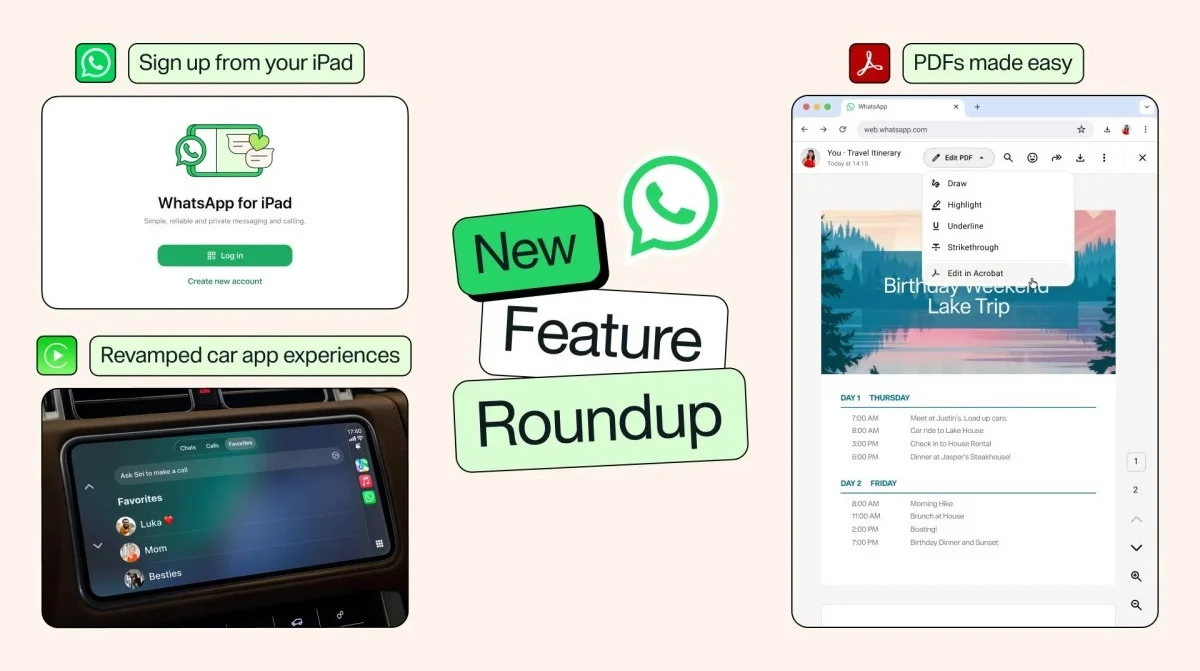
For years, WhatsApp’s presence on tablets has been a secondary affair, often requiring a linked smartphone to function. This limitation significantly curtailed its utility for users who preferred to use their tablets as their primary communication device or for those who wished to keep their phone separate from their messaging activities. The new update fundamentally alters this paradigm by enabling users to create and manage a WhatsApp account directly on their iPad. This means the entire registration process, from initial setup to ongoing usage, can now be completed independently on the tablet.
This development is more than just a convenience; it’s a strategic move by Meta to broaden WhatsApp’s reach and integrate it more seamlessly into users’ digital lives. The ability to register directly on an iPad eliminates the often-clunky process of "WhatsApp Web" or secondary device linking, which, while functional, lacked the full autonomy of a native application. The implications are significant for a platform that boasts over two billion monthly active users worldwide. By offering a truly native and independent experience on a popular tablet platform, WhatsApp is poised to capture a larger segment of the tablet user market, further solidifying its position as a dominant communication tool. This standalone capability addresses the growing trend of tablet-first or tablet-centric computing for many individuals.
Revolutionizing In-Car Communication: Seamless Integration with Apple CarPlay and Android Auto
The way users interact with their vehicles and their digital devices is constantly evolving, and WhatsApp’s latest update is directly addressing this trend. The messaging giant has significantly enhanced its integration with both Apple CarPlay and Android Auto, offering a more intuitive and safer hands-free experience for drivers. Previously, in-car messaging capabilities might have been more rudimentary, but the new features allow users to engage with WhatsApp conversations in a far more comprehensive manner directly from their car’s infotainment system.
Users can now not only listen to incoming messages but also respond to them using voice commands. This extends to initiating calls, reviewing call history, and even contacting favorite contacts, all without needing to physically handle their smartphone. This hands-free functionality is crucial for driver safety, reducing distractions and minimizing the risk of accidents. The ability to access and manage WhatsApp conversations so effectively within the car environment underscores the platform’s commitment to providing a connected and convenient experience, recognizing that a significant portion of communication happens on the go. This is particularly relevant as in-car technology becomes increasingly sophisticated, with a growing demand for seamless integration of personal devices. Data from Statista indicates a steady increase in the adoption of connected car technologies, making these WhatsApp enhancements timely and impactful.
Enhanced PDF Functionality: Direct Viewing and Annotation within WhatsApp
Beyond communication and device integration, WhatsApp is also streamlining document handling. The update introduces an improved ability to interact with PDF files directly within the application. Previously, users might have had to download a PDF to their device and then open it with a separate application. Now, PDFs can be opened and viewed directly within WhatsApp without the need for an initial download. This immediate access is a significant time-saver and a much-welcomed convenience for users who frequently share and receive documents.
Furthermore, the enhancement goes beyond mere viewing. Users can now perform basic editing functions directly on these PDFs within WhatsApp. This includes the ability to highlight specific sections of text and add annotations. This feature is invaluable for collaborative work, study groups, or any situation where quick feedback or emphasis on certain parts of a document is required. Imagine a student receiving a study guide and being able to highlight key definitions or a professional receiving a proposal and marking up specific clauses for discussion – all within the familiar WhatsApp interface. This level of in-app document manipulation reduces the friction typically associated with file sharing and editing, making WhatsApp a more robust tool for productivity.
Sharing Your Soundtrack: Music Integration with WhatsApp Status
In a move designed to add another layer of personal expression to its features, WhatsApp is enabling users to share the music they are currently enjoying directly to their Status. This integration primarily benefits users of popular music streaming services like Apple Music and Spotify. When a user is listening to a song on either of these platforms, they can now share it to their WhatsApp Status directly through the respective app’s share screen functionality.
This feature allows users to give their friends and followers a glimpse into their musical tastes and current mood. It transforms the Status feature from a purely visual or text-based medium into a more dynamic and auditory one. The ability to seamlessly share a song provides a new avenue for connection and conversation, as friends can react to shared tracks, discover new music, and engage with each other’s personal soundtracks. This is a subtle yet effective way to enhance social interaction on the platform, tapping into the universal appeal of music. With the rise of social media as a platform for personal branding and expression, this music-sharing feature aligns perfectly with user desires to share their experiences and interests.
Background and Chronology: The Evolution of WhatsApp Features
The introduction of these four features is not an isolated event but rather a continuation of WhatsApp’s ongoing commitment to evolving its platform and meeting user demands. The journey towards a standalone iPad app has been a long time coming. For years, rumors and user requests have swirled around the possibility of a native iPad application, a feature that competitors like Telegram and Signal have offered for some time. Meta’s acquisition of WhatsApp in 2014 signaled a significant investment in the platform’s future, and the gradual introduction of new functionalities, from end-to-end encryption to group video calls, has demonstrated a sustained effort to innovate.
The development of the standalone iPad app likely involved significant architectural changes to WhatsApp’s backend and client applications. Traditionally, WhatsApp operated on a model where a primary phone number was linked to a single active device, with other connected devices acting as mirrors or extensions. The shift to a truly independent iPad app signifies a move towards a more flexible, multi-device architecture that can support independent registration and operation. This aligns with Meta’s broader strategy of interoperability and cross-platform functionality within its messaging services.
The improvements to in-car communication have also been a gradual process. As automotive technology has advanced, so too has the expectation for seamless integration with mobile devices. Early iterations of car infotainment systems often offered basic calling and messaging, but the sophistication of voice assistants and touch interfaces has paved the way for richer, more contextual interactions. WhatsApp’s proactive updates to its CarPlay and Android Auto interfaces reflect an understanding of these evolving user needs and a commitment to safety and convenience for drivers.
The enhancement of PDF handling and music sharing to Status are examples of more granular feature improvements aimed at enriching specific user workflows and social interactions. These updates often arise from analyzing user behavior, feedback, and identifying pain points within the existing application. The ability to share music, for instance, taps into the social sharing culture prevalent across many digital platforms, making WhatsApp’s Status feature more engaging and reflective of users’ daily lives.
Supporting Data and Market Context
The global messaging app market is fiercely competitive, with WhatsApp consistently holding a dominant position in many regions. As of early 2024, WhatsApp reported over 2 billion monthly active users, making it the most popular messaging application worldwide. This update is strategic in maintaining and expanding that user base.
The growth of tablet usage is another significant factor. While the smartphone remains the primary computing device for many, tablets have carved out a substantial niche, particularly for media consumption, content creation, and as secondary devices for productivity. According to IDC, tablet shipments are projected to see a steady increase in the coming years, underscoring the market opportunity for a fully functional WhatsApp app on these devices.
The connected car market is also experiencing robust growth. Reports suggest that the global connected car market size was valued at over $60 billion in 2023 and is expected to grow at a CAGR of over 15% from 2024 to 2030. This trend highlights the increasing importance of integrating mobile communication services into the automotive experience.
Potential Implications and Broader Impact
The introduction of a standalone iPad app is likely to have the most profound impact. It could lead to increased engagement from a segment of users who have previously found WhatsApp on tablets to be an unsatisfactory experience. This could translate into more time spent on the platform, more frequent usage, and potentially a reduction in the reliance on other messaging apps for tablet-based communication. For iPad users who use their devices for work, study, or even as a primary communication hub, this feature is a game-changer.
The enhanced in-car experience directly addresses safety concerns and user convenience. By making it easier and safer to interact with WhatsApp while driving, the platform can further embed itself into the daily routines of its users. This could also influence user choice when selecting a messaging app for their primary communication needs, as safety and seamless integration are increasingly important factors.
The PDF and music sharing features, while perhaps less transformative than the iPad app, contribute to a more robust and engaging user experience. Improved document handling makes WhatsApp a more versatile tool for professional and academic use. The music-sharing feature adds a social dimension that can foster greater connection and interaction among users, keeping the platform dynamic and relevant in a social media landscape that constantly seeks new ways to share and express.
These updates demonstrate Meta’s continuous effort to refine and expand WhatsApp’s capabilities. By addressing long-standing user requests, enhancing integrations with other platforms and devices, and introducing new avenues for personal expression, WhatsApp is solidifying its position as a central hub for communication in an increasingly connected world. The phased rollout ensures that the platform can manage the influx of new functionalities and user activity smoothly, ultimately aiming to deliver a consistently high-quality experience to its massive global user base.