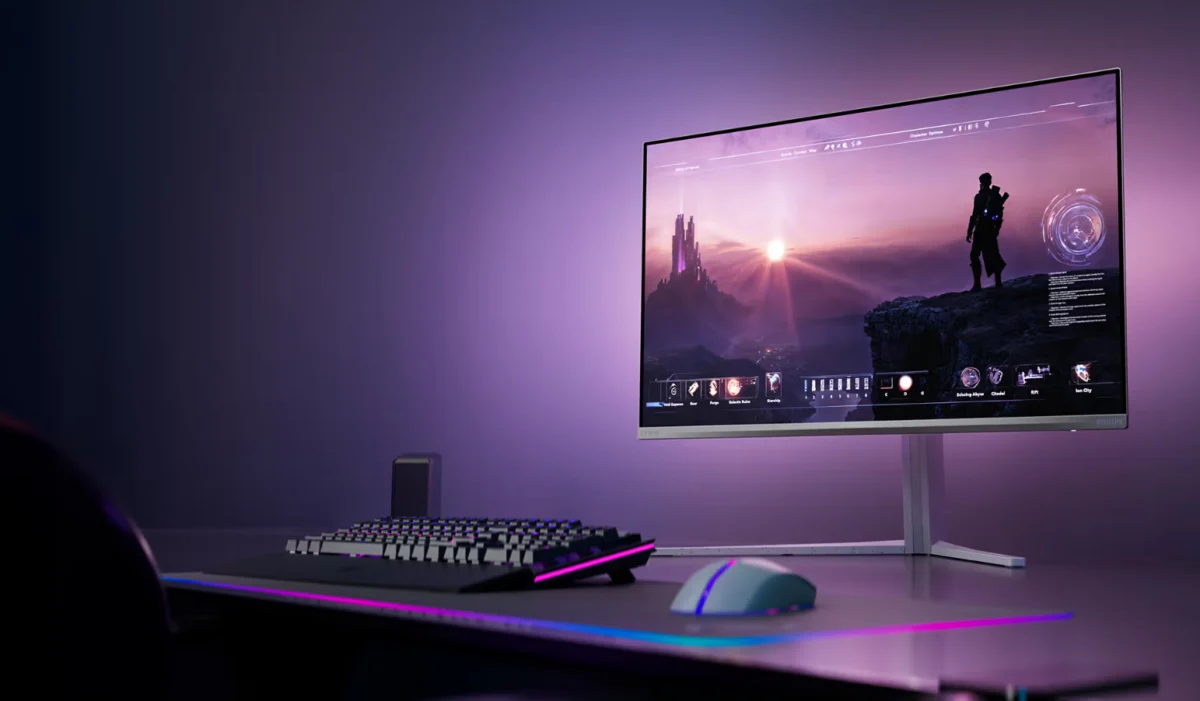
The landscape of gaming displays is undergoing a significant transformation, with OLED technology steadily evolving from a niche premium feature into a highly sought-after component for gamers prioritizing unparalleled image quality. While earlier OLED monitors often focused on extreme refresh rates, the market is now witnessing a discernible shift towards models that strike a sophisticated balance between visual fidelity, robust performance, and accessible pricing. This evolving market dynamic appears to be the foundational philosophy behind Philips’ latest offering, the Evnia 32M2N6901A gaming monitor.
A New Contender in the Premium Gaming Display Arena
The Philips Evnia 32M2N6901A represents a strategic move by the company to capture a segment of the gaming market that values both cutting-edge display technology and pragmatic cost considerations. This new gaming monitor boasts a 32-inch QD-OLED panel, delivering a crisp 4K resolution (3840 x 2160 pixels) and a fluid 165Hz refresh rate. This specific combination suggests a deliberate focus on providing an immersive and visually rich experience for modern AAA gaming titles, rather than exclusively catering to the ultra-high refresh rate demands of competitive esports. Philips has positioned this monitor with a price point of £649.99, which translates to approximately US$868, with an anticipated availability starting in August. This pricing strategy is particularly noteworthy, as it aims to make high-end OLED technology more attainable for a broader spectrum of serious gamers.
Balancing Speed with Superior Visuals
While a 165Hz refresh rate might be perceived as "only" by those chasing the bleeding edge of esports performance, the Evnia 32M2N6901A is far from a compromise in other critical areas. The QD-OLED panel itself is a significant technological achievement, offering an exceptionally fast 0.03ms response time. This near-instantaneous pixel response is crucial for eliminating motion blur and ghosting, ensuring that fast-paced action remains sharp and clear. Furthermore, the monitor has achieved DisplayHDR True Black 400 certification, a standard that guarantees a minimum peak brightness of 400 nits and, more importantly, exceptional contrast ratios and deep, true blacks characteristic of OLED technology. This enables the display to render colors with remarkable vibrancy and accuracy, with the signature perfect blacks that OLED is renowned for, creating a more dynamic and lifelike visual experience.
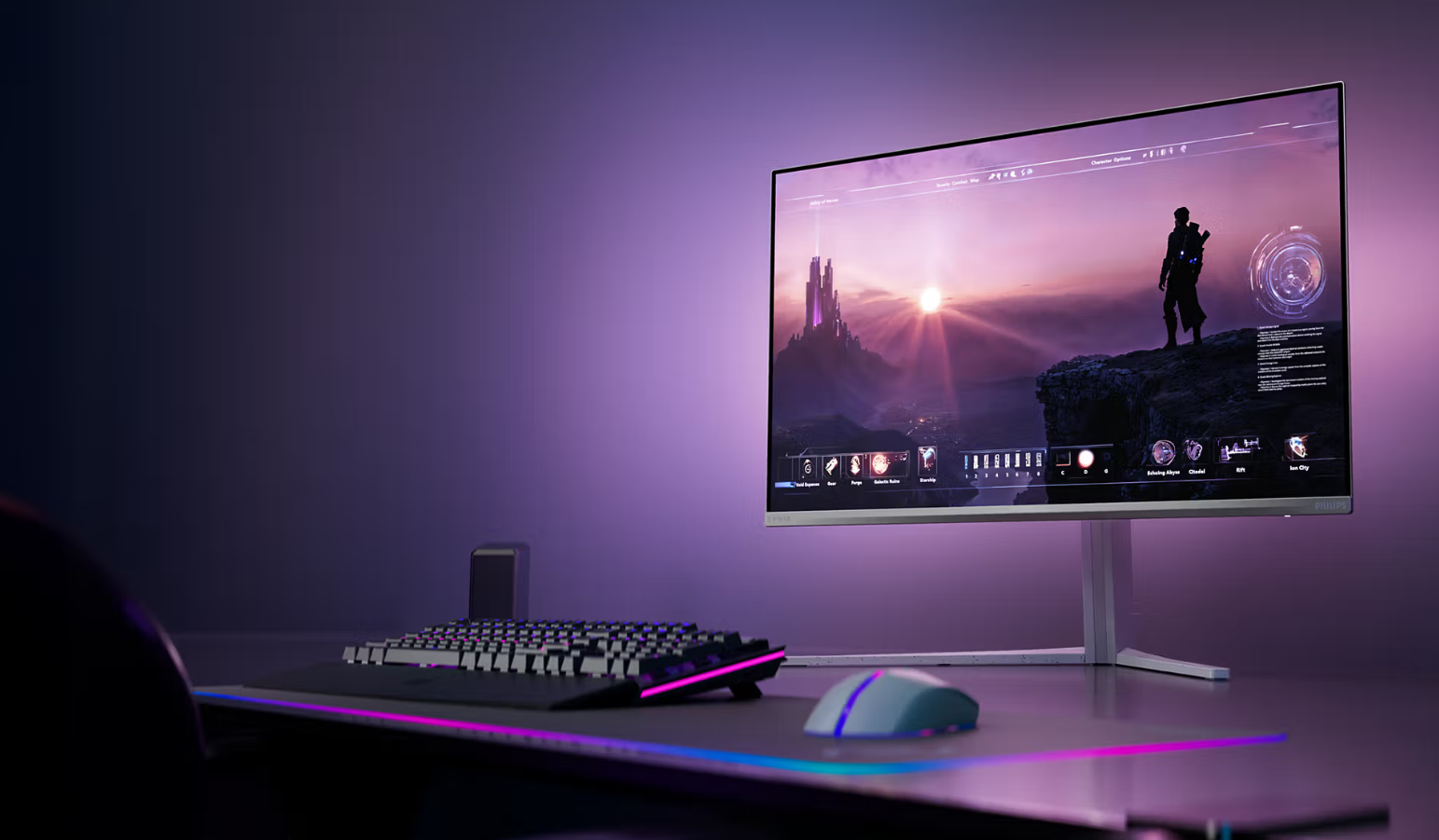
Philips has also integrated its proprietary AI Ambiglow technology into the Evnia 32M2N6901A. This innovative feature enhances immersion by dynamically adjusting the RGB lighting located on the rear of the monitor. The lighting intelligently syncs with the dominant colors displayed on the screen, creating an ambient halo effect that extends the visual experience beyond the confines of the display itself. This can significantly deepen immersion, particularly in visually rich games and cinematic content, by subtly extending the on-screen environment into the user’s peripheral vision.
Comprehensive Connectivity and Versatility
Beyond its display capabilities, the Evnia 32M2N6901A is engineered for comprehensive connectivity and multi-device integration. The monitor comes equipped with a robust array of ports, including two HDMI 2.1 ports, which are essential for current-generation gaming consoles and high-bandwidth PC connections, and a DisplayPort 1.4. For seamless integration with laptops and other productivity devices, it features a USB Type-C port that supports up to 90W of Power Delivery, allowing users to charge their laptops while simultaneously using the monitor as a display. A built-in USB hub further simplifies connectivity by providing additional ports for peripherals. The inclusion of a KVM switch is another thoughtful addition, enabling users to easily switch control between multiple computers using a single keyboard and mouse. Completing the package are a pair of integrated 5W speakers, offering a convenient audio solution for users who may not always opt for external sound systems. This extensive connectivity suite positions the Evnia 32M2N6901A not just as a dedicated PC gaming monitor, but also as a versatile hub for users who frequently connect consoles, laptops, or a combination of several devices, minimizing cable clutter and streamlining workflow.
A Shift in Market Strategy and Consumer Expectations
The introduction of the Philips Evnia 32M2N6901A underscores a notable evolution in the premium monitor market. Historically, 4K OLED monitors were often positioned at the very high end of the price spectrum, typically featuring ultra-high refresh rates of 240Hz or even 360Hz. These specifications, while impressive, came with a prohibitive cost that limited their accessibility to a select group of enthusiasts. The current trend, exemplified by Philips’ new offering, indicates a strategic pivot towards more "sensible" refresh rates in the 165Hz range. This adjustment allows manufacturers to retain the core benefits of OLED technology – superior contrast, color accuracy, and fast response times – while significantly reducing the manufacturing costs and, consequently, the retail price.
This approach aligns more closely with the practical realities faced by the majority of gamers. For most users, particularly those playing demanding new titles at 4K resolution, achieving frame rates consistently exceeding 200 FPS can be a challenge, even with high-end PC hardware. Therefore, a 165Hz refresh rate offers a substantial upgrade in fluidity and responsiveness over standard 60Hz or 144Hz displays, without demanding an unrealistic level of graphical horsepower. This makes the Evnia 32M2N6901A a more pragmatic and value-oriented choice for a broader segment of the gaming community.

The Significance of Balanced Innovation
Philips’ strategic decision with the Evnia 32M2N6901A highlights a broader principle in technological innovation: progress is not solely defined by pushing the absolute highest specifications. In many instances, achieving greater market relevance and consumer appeal comes from finding an optimal equilibrium between cutting-edge features, performance, and price. By focusing on the core strengths of QD-OLED technology and combining them with a refresh rate that is both high-performing and achievable for many gaming setups, Philips has crafted a product that is likely to resonate with a significant portion of the gaming audience. This approach democratizes access to premium display technology, allowing more gamers to benefit from the visual enhancements that OLED offers without necessitating an extreme financial investment.
The market’s response to such offerings will likely influence future product development cycles. If the Evnia 32M2N6901A proves successful, it could encourage other manufacturers to adopt similar strategies, further diversifying the market and making advanced display technologies more accessible. This would represent a positive development for consumers, fostering greater competition and innovation within the gaming monitor space.
Consumer Reception and Future Outlook
The question of whether a 4K QD-OLED 165Hz monitor like the Evnia 32M2N6901A fits within an individual’s budget for a new gaming monitor is a personal one, contingent on financial capacity and gaming priorities. However, the emergence of such products signals a maturing market where the benefits of advanced display technologies are becoming more democratized. This trend is further underscored by Philips’ recent release of their triple-mode gaming monitors, which also aim to offer competitive features at accessible price points.
The gaming monitor industry is dynamic, with manufacturers continually striving to meet the evolving demands of gamers. The Evnia 32M2N6901A is a compelling example of this evolution, demonstrating a thoughtful approach to product development that balances technological prowess with market realities. As OLED technology continues to mature and become more cost-effective, consumers can anticipate even more exciting and accessible options in the future, further enhancing the gaming experience for a wider audience. The industry’s trajectory suggests a future where the breathtaking visual quality of OLED is not a luxury reserved for the few, but a standard attainable by many.