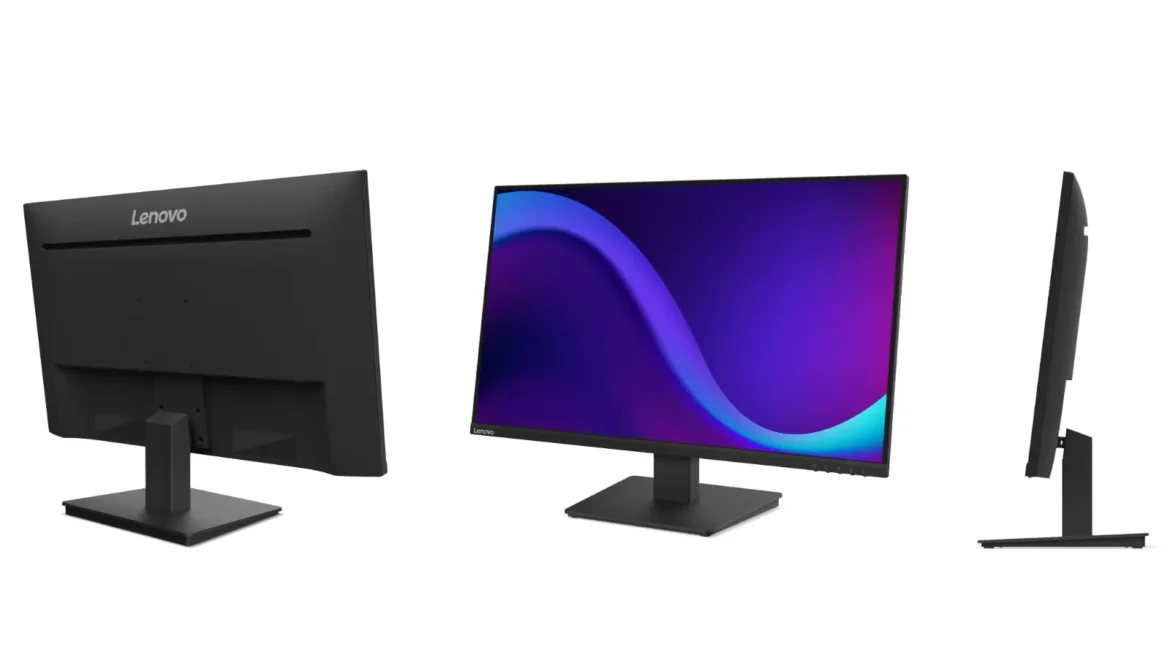
Lenovo has officially broadened the scope of its affordable display portfolio by introducing a significantly larger form factor to its entry-level "e" SKU series. Historically, this product line has been strictly associated with compact 24-inch displays designed for general office productivity and budget-conscious consumers, a prominent example being the previously released L24-4e. However, shifting market demands for expansive screen real estate at an accessible price point have prompted the technology giant to unveil the Lenovo L32-4e. This new iteration retains the cost-effective ethos of its predecessors while scaling up the physical dimensions to a sprawling 32-inch panel, aimed at users seeking immersive viewing experiences without a hefty price tag.
Evolution of the Budget Display Market and Background Context
The budget desktop monitor segment has undergone a profound transformation over the past half-decade. What was once a market defined by rudimentary 60Hz TN panels with washed-out colors and severely limited ergonomic adjustments has now evolved into a highly competitive arena. Consumers today expect high refresh rates, accurate color reproduction, and modern adaptive sync technologies even within entry-level pricing tiers.
Lenovo’s strategic expansion of the "e" series directly responds to the blurring lines between professional workflows, home-office setups, and casual multimedia consumption. With remote work and hybrid learning models becoming permanent fixtures of the global workforce, the demand for expansive multi-window workspaces has surged. By introducing a 32-inch option into its budget category, Lenovo is targeting users who require large canvases for document side-by-side comparisons, spreadsheet management, and multimedia viewing, yet lack the budget to invest in high-end professional or ultra-wide gaming monitors.
Detailed Technical Specifications of the Lenovo L32-4e
Achieving a competitive price point for a 32-inch display inevitably requires strategic compromises in hardware component selection. The Lenovo L32-4e transitions away from the In-Plane Switching (IPS) technology utilized in smaller models like the L24-4e, opting instead for a Vertical Alignment (VA) panel. While VA panels generally offer inferior viewing angles compared to IPS alternatives, they excel in static contrast ratios, making them exceptionally well-suited for dark-room viewing and deep black levels.
The monitor features a native Full HD resolution of 1920 by 1080 pixels within a standard 16:9 aspect ratio. Although some purists might argue that a 1920×1080 resolution spread across a 32-inch diagonal results in a lower pixel density (PPI), it remains a deliberate choice to maintain low manufacturing costs and ensure compatibility with modest, entry-level computing hardware that cannot handle higher gaming resolutions.
Key performance and visual metrics of the Lenovo L32-4e include:

- Panel Type: Vertical Alignment (VA)
- Resolution: Full HD (1920 x 1080 pixels)
- Aspect Ratio: 16:9
- Maximum Brightness: 300 nits
- Static Contrast Ratio: 4,000:1, delivering deep blacks and high visual contrast
- Color Gamut Coverage: 99% sRGB color space
- Color Depth: 8-bit via a 6-bit + Frame Rate Control (FRC) dithering technique
- Refresh Rate: Up to 144Hz for fluid motion handling
- Adaptive Sync: AMD FreeSync support to eliminate screen tearing and stuttering
- Response Time: 4 milliseconds Gray-to-Gray (GtG) when operating in Extreme Mode
Despite the panel technology shift, the inclusion of a 144Hz refresh rate and AMD FreeSync elevates the L32-4e above standard office-only displays. This capability ensures that casual gamers and users navigating high-frame-rate user interfaces will experience significantly smoother visual transitions, reducing motion blur during fast-paced sequences or everyday cursor movements.
Connectivity and Ergonomic Compromises
To maintain strict cost controls, Lenovo has implemented notable limitations regarding physical connectivity and ergonomic flexibility. Users evaluating the L32-4e must carefully assess their hardware ecosystem, as the monitor features a stripped-down input selection consisting strictly of one HDMI 1.4 port and a legacy VGA port.
Notably absent from the specification sheet are modern standards such as DisplayPort connectivity, an integrated USB hub for peripheral passthrough, and a standard 3.5mm audio jack for external speakers or headphones. This minimalist I/O configuration means that users relying on modern graphics cards or laptops lacking native HDMI outputs will require active adapters, and audio routing must be handled directly through the host computer rather than an integrated monitor pass-through.
Ergonomically, the included factory stand offers only basic functionality, limited strictly to a tilt adjustment range of -5 to +22 degrees. Height adjustment, swivel, and pivot functionalities are entirely omitted. Fortunately, Lenovo has integrated a standard 100 x 100 mm VESA mount pattern on the rear chassis, allowing users to easily bypass the stock stand and attach the display to aftermarket desk arms or wall mounts for personalized positioning.
Market Implications and Industry Outlook
The official listing of the Lenovo L32-4e on the company’s global product specification pages signals an imminent market rollout, though specific pricing tiers and regional release schedules remain undisclosed by corporate representatives. Industry analysts suggest that keeping the product positioned as an ultra-budget solution will be critical to its success, especially given the fierce competition from regional and white-label display manufacturers offering similar specifications.
The introduction of this monitor highlights a broader industry trend toward democratization of large-format displays. Historically, consumers desiring a screen size of 32 inches or greater were forced to invest in 4K resolution panels or specialized curved gaming displays costing significantly more. By offering a 1080p resolution at this scale paired with a high refresh rate, Lenovo is carving out a distinct niche for budget-constrained users who prioritize physical screen real estate and smooth motion over ultra-sharp pixel density.
As the global hardware market navigates fluctuating component costs and shifting consumer spending habits, products like the Lenovo L32-4e provide a clear indicator of how manufacturers plan to capture value at the entry-level tier. By carefully balancing feature sets—upgrading screen size and refresh rate while economizing on panel resolution, connectivity, and materials—Lenovo continues to refine its strategy for capturing market share across diverse consumer demographics. Further announcements regarding pricing, regional availability, and official launch dates are expected to follow in the coming weeks.