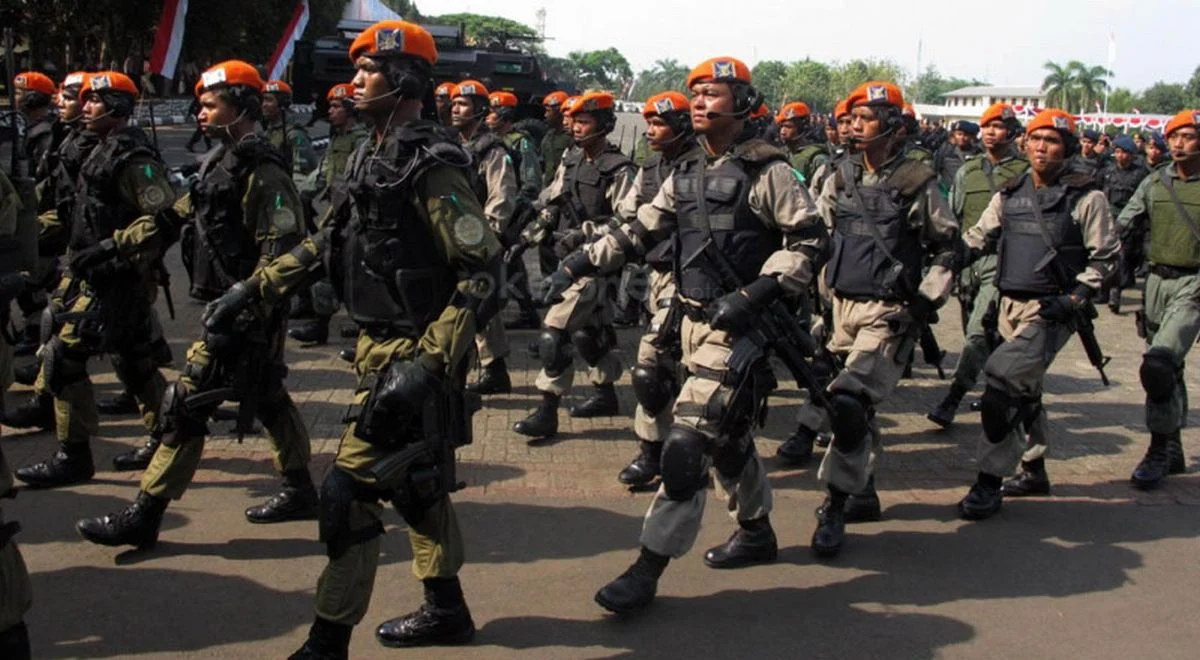
The Baret Jingga, or the "Orange Beret," is more than just a piece of military headgear; it is a profound symbol of courage, historical resilience, and the elite status of the Komando Pasukan Gerak Cepat (Kopasgat), the specialized ground force of the Indonesian Air Force (TNI AU). For decades, this vibrant color has distinguished these airborne specialists from their counterparts in other military branches, serving as a visual testament to their operational history that dates back to the very dawn of Indonesia’s independence. To understand why this color was chosen and what it represents today, one must look back at the chaotic and heroic days of 1947, when the survival of the young Republic depended on the audacity of its airborne pioneers.
The Historical Genesis of the Airborne Force
The origins of the Kopasgat—previously known by various names such as PGT (Pasukan Gerak Cepat) and Korpaskhas—are inextricably linked to the military necessity of the Indonesian National Revolution. Following the proclamation of independence in 1945, the newly formed Angkatan Udara Republik Indonesia (AURI) faced the monumental task of securing vast, often isolated territories against Dutch colonial forces.
In October 1947, the strategic situation in Kalimantan reached a critical juncture. The resistance forces in the region were struggling to coordinate effectively with the central government in Yogyakarta. Recognizing the urgent need for a cohesive command structure and specialized logistical support, Pangeran Mohammad Noor, the Governor of Kalimantan, issued an urgent appeal to AURI leadership. He requested a team of paratroopers who could infiltrate the dense, challenging terrain of Kalimantan to organize local guerrilla units and, crucially, establish a reliable radio communication link between the resistance in the jungle and the capital.
The response from the AURI leadership was decisive. Then-Chief of Staff of the Air Force, Air Commodore Suryadi Suryadarma, tasked the legendary Major Udara Tjilik Riwoet with the mission. This operation was not merely a military deployment; it was a pioneering feat of air power. On October 17, 1947, the first airborne operation in the history of the Indonesian military was executed. Thirteen personnel, including Tjilik Riwoet, parachuted into the interior of Kalimantan. This event remains a foundational pillar in the identity of the Kopasgat, establishing the precedent that the force was born out of a requirement for high-stakes, rapid-response operations.
Evolution of the Orange Identity
While the operation in 1947 laid the tactical foundation, the adoption of the Baret Jingga as an official, standardized symbol took place later as the force professionalized. The color orange was chosen for several symbolic and practical reasons. In the spectrum of military heraldry, orange represents the fiery spirit, the dawn of a new era, and the vigilance of the sky.
The selection of orange serves as a distinct marker of the "Air Force Ground Force" (Pasukan Khas). Unlike the green berets of the Army’s Infantry or the red berets of the Special Forces Command (Kopassus), the orange beret serves to bridge the gap between the ground-based nature of the unit and its affiliation with the skies. It signifies a soldier who is trained to deploy from the clouds to dominate the ground. Over the decades, the beret has evolved from a simple identifier to a badge of honor that requires rigorous physical and mental qualification, typically earned only after completion of the grueling "Commando" training cycle.
Chronology of Institutional Development
The transition from a rag-tag group of volunteers in 1947 to the modern, highly sophisticated Kopasgat of 2026 has been marked by significant institutional milestones:

- 1947: The first airborne operation in Kalimantan, setting the precedent for Indonesian paratrooper capability.
- 1952: Formalization of the Pasukan Pertahanan Pangkalan (Paskhas) to protect vital air force installations.
- 1960s: Integration of various specialized air force units into a cohesive regiment structure.
- 1980s-1990s: Expansion of capabilities to include search and rescue (SAR), counter-terrorism, and specialized combat air traffic control (Combat ATC).
- 2022: A major rebranding and reorganization occurred, officially changing the name from Korpaskhas to Kopasgat, emphasizing the "Gerak Cepat" (Rapid Movement) capability in line with modern multi-domain warfare.
The Significance of the Baret Jingga in Modern Warfare
In the contemporary strategic environment, the Kopasgat is tasked with roles that far exceed basic base defense. They are the "force multipliers" of the TNI AU. Their modern capabilities include:
- Airfield Seizure: The ability to parachute into hostile or austere environments, capture an enemy runway, and facilitate the landing of follow-on aircraft.
- Specialized Air Defense: Deploying sophisticated ground-based air defense systems to protect critical infrastructure.
- Combat Search and Rescue (CSAR): Executing high-risk recovery missions for downed aircrews in enemy territory.
- Intelligence, Surveillance, and Reconnaissance (ISR): Operating deep behind enemy lines to provide real-time data to the Air Force command.
The Baret Jingga serves as a psychological anchor for these soldiers. In every theater, from disaster relief operations in remote islands to high-level security duties, the orange beret acts as a signal of reliability. Military analysts often note that the specific color serves a utilitarian purpose as well—it is a high-visibility color that, while seemingly counter-intuitive for stealth, establishes immediate command presence and ensures clear identification of friendly forces during the chaotic initial phases of an airborne assault.
Official Perspective and Cultural Legacy
The leadership of the TNI AU consistently emphasizes that the Baret Jingga is a heavy responsibility. Every candidate who earns the right to wear the beret is reminded that they are carrying the legacy of the 1947 Kalimantan mission. The philosophy behind the color is rooted in "Ksatria" (knightly) values: intelligence, agility, and unwavering loyalty to the state.
During formal anniversaries, such as the commemoration of the 1947 operation, current Kopasgat leadership often highlights that the spirit of the original paratroopers remains the standard for modern training. The rigor of their current selection process, which includes long-distance navigation, survival skills, and specialized combat training, ensures that the orange beret remains an elite designation.
Implications for Future Readiness
As Indonesia continues to modernize its military under the "Minimum Essential Force" (MEF) framework and looks toward future technological integration, the role of Kopasgat is expanding. The force is currently investing in unmanned aerial systems (UAS) integration and enhanced cyber-defense training for its tactical units.
The importance of the Baret Jingga today is found in the synthesis of history and future-proofing. While the equipment has moved from basic parachutes and rifles to sophisticated drones and precision-guided weapons, the fundamental identity of the force—the "Rapid Movement" aspect—remains the same. The color orange continues to remind both the public and the personnel of the necessity of rapid intervention in a sprawling archipelagic nation.
In conclusion, the Baret Jingga is the visual narrative of the Indonesian Air Force’s ground capability. It is a link to the pioneering days of 1947, a symbol of the elite training required to bridge the gap between air and ground, and a commitment to the defense of the nation. For the soldiers of the Kopasgat, the beret is not just a uniform requirement; it is a promise of competence, speed, and courage, forged in the jungles of Kalimantan and carried into the complex technological battlefield of the 21st century.