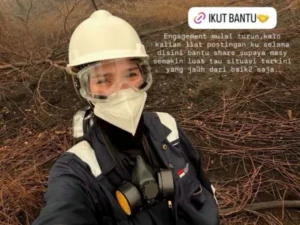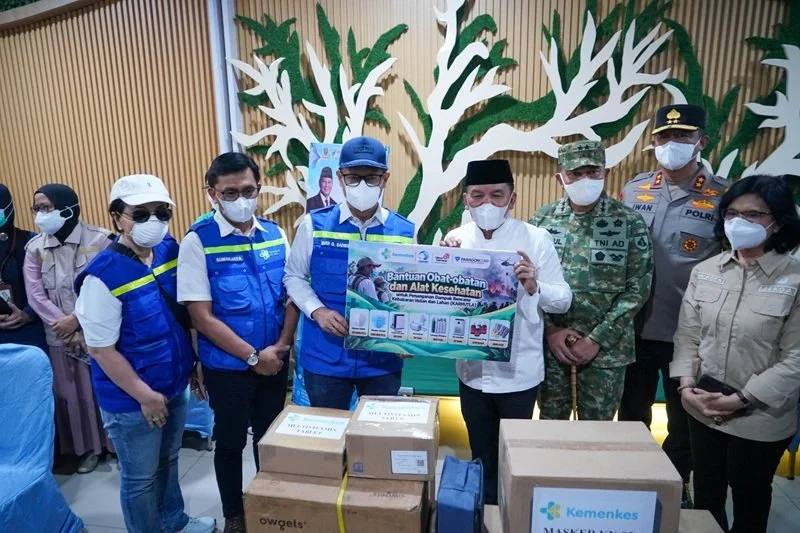
The Ministry of Health of the Republic of Indonesia has intensified its emergency response to the worsening air quality in Central Kalimantan by dispatching an additional 137,000 N95 respirator masks to Palangka Raya. This logistical intervention comes as part of a broader national strategy to mitigate the severe respiratory health risks posed by ongoing forest and land fires (karhutla) that have blanketed the region in hazardous smoke. The delivery serves as a critical stopgap measure to safeguard public health while medical facilities in the affected areas manage an influx of patients suffering from acute respiratory infections.
The Escalating Crisis in Central Kalimantan
The forest and land fires currently ravaging parts of Central Kalimantan are a recurrent environmental challenge, often exacerbated by seasonal climatic shifts and human-induced land clearing. In late October 2026, air quality indices (AQI) in Palangka Raya reached critical levels, prompting urgent concern from health authorities. The particulate matter (PM2.5) concentration in the atmosphere has consistently exceeded safety thresholds set by the World Health Organization (WHO), posing a direct threat to the lungs and cardiovascular systems of the local population.
The Ministry of Health’s intervention is not an isolated event but rather a component of a multi-agency operation involving the National Disaster Management Agency (BNPB) and local provincial governments. The decision to prioritize N95 masks—which provide superior filtration against fine particulate matter compared to standard surgical masks—reflects the severity of the smog currently affecting the provincial capital.
Chronology of the Emergency Response
The trajectory of the government’s response can be traced back to early October 2026, as dry conditions accelerated the spread of fires in peatland areas.
- Early October 2026: Increased fire activity is detected by satellite monitoring systems across Central Kalimantan. Local health centers (Puskesmas) report a gradual rise in patients presenting with coughs, eye irritation, and respiratory distress.
- Mid-October 2026: Air quality in Palangka Raya reaches "Unhealthy" and "Very Unhealthy" levels. The Ministry of Health begins coordinating with provincial health offices to assess the stockpile of medical supplies.
- October 23, 2026: Minister of Health Budi Gunadi Sadikin conducts an on-site visit to Palangka Raya. During this visit, he assesses the readiness of regional hospitals and evaluates the effectiveness of the local health response.
- October 25-26, 2026: The central government authorizes the distribution of 137,000 N95 masks, ensuring that high-risk groups and frontline responders receive immediate protection.
Supporting Data and Resource Allocation
To date, the central government has demonstrated a robust commitment to addressing the supply chain requirements of the affected regions. According to official data from the Ministry of Health, the total volume of masks distributed across various fire-impacted regions has surpassed 1.2 million units.
The distribution breakdown is as follows:
- Total distribution: 1,210,230 masks.
- Standard medical 3-ply masks: 1,001,680 units.
- High-filtration masks (KN95/N95): 208,550 units.
The government has set a target of distributing 500,000 masks per affected province. This systematic approach is designed to prevent a "supply cliff," where regional stockpiles might be exhausted before the fire season concludes. Beyond the masks, the Ministry is also providing specialized nebulizers, oxygen concentrators, and essential medications to regional hospitals to ensure that those already suffering from respiratory complications can receive timely treatment.
Official Directives and Public Health Recommendations
During his visit on October 23, Minister Budi Gunadi Sadikin emphasized that the government’s role extends beyond the mere provision of medical supplies; it also includes the dissemination of evidence-based health guidance. The Minister strongly urged the public to exercise extreme caution, specifically targeting those deemed to be at the highest risk.
"The situation requires collective vigilance," the Minister noted during his address in Palangka Raya. He specifically advised that infants, toddlers, pregnant women, and the elderly—who are most susceptible to the adverse effects of smoke inhalation—should strictly limit outdoor activities. In instances where going outside is unavoidable, the use of a proper N95 mask is not merely a recommendation but a necessity.

The Ministry has also instructed local health authorities to establish "breathing houses" (rumah singgah oksigen) in areas where air quality is most severely compromised. These facilities serve as clean-air shelters equipped with air purifiers and medical oxygen, providing a refuge for citizens who may not have access to clean indoor environments at home.
Analysis: Broader Implications for Public Health Policy
The recurring nature of Indonesia’s forest and land fires presents a systemic challenge to the national healthcare system. While the rapid distribution of masks is an effective emergency response, health policy analysts argue that the long-term impact of air pollution on the population remains a significant concern.
Chronic exposure to PM2.5 can lead to long-term respiratory conditions, such as asthma, chronic obstructive pulmonary disease (COPD), and reduced lung capacity in children. Therefore, the Ministry’s current efforts represent only the "first line of defense." The long-term strategy must integrate public health initiatives with environmental policy—specifically addressing the root causes of the fires through stricter land-use regulations and better fire-suppression technology.
Furthermore, the coordination between central and regional governments serves as a litmus test for the resilience of the national health emergency infrastructure. The ability to pivot resources from a centralized national stockpile to specific regional health centers in a matter of days indicates a maturation of Indonesia’s disaster response protocols compared to previous years.
Challenges in Distribution and Compliance
Despite the successful delivery of logistics, authorities face ongoing challenges in ensuring that the masks reach the most remote areas. Accessing village-level populations in the interior of Kalimantan requires coordination with local administrative units, which often have limited resources.
Moreover, public compliance remains a variable factor. While education campaigns have been launched via social media and local radio, the Ministry acknowledges that there is a need for continuous public awareness programs to ensure that the masks are worn correctly and that residents understand the health risks associated with the "invisible" threat of fine particulate matter.
Looking Ahead
As the dry season continues, the Ministry of Health remains on high alert. The department has stated that it will continue to monitor the air quality indices in real-time and remains prepared to deploy further logistical support should the situation deteriorate.
In addition to physical medical supplies, the Ministry is also increasing the capacity of local healthcare workers to conduct epidemiological surveillance. By tracking the number of patients seeking treatment for respiratory issues, health officials can identify "hotspots" of health concern, allowing for a more surgical and efficient allocation of medical personnel and equipment.
The government’s message to the residents of Palangka Raya and surrounding areas is clear: while the fires are a complex environmental crisis, the health of the citizens remains the primary objective. Through the synergy of government support, medical supply distribution, and community compliance with health protocols, authorities hope to minimize the long-term health consequences of this year’s fire season. As the smoke persists, the focus remains steadfast on protecting the most vulnerable and ensuring that no individual is left without the necessary protection to breathe safely.