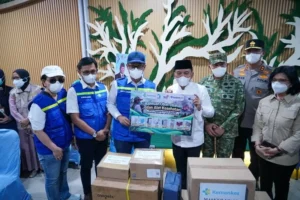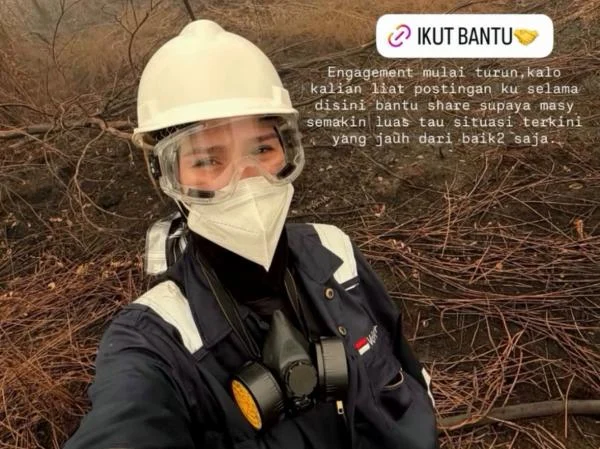
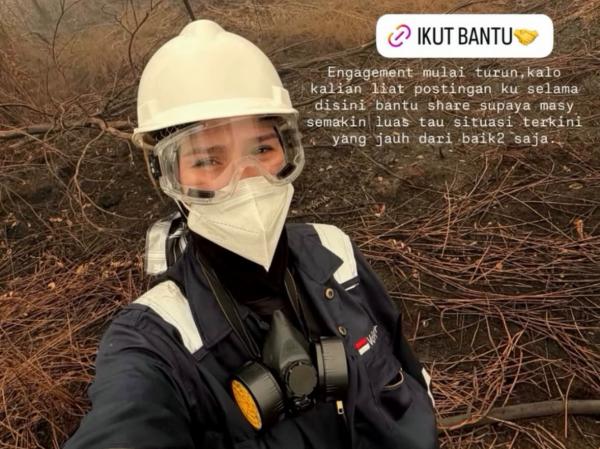
The noble mission of public figures engaging in humanitarian relief efforts occasionally exposes them to unexpected and hazardous situations. This reality recently struck actress and activist Zaskia Adya Mecca, who faced an unsettling security scare while operating as a volunteer in Central Kalimantan. Known for her active involvement in social causes, the wife of renowned film director Hanung Bramantyo traveled directly to the heartland of the region to assist local communities battling severe forest and land fires, locally known as kebakaran hutan dan lahan (karhutla). However, what was intended to be a straightforward humanitarian deployment took a tense turn when her convoy was reportedly stalked by unidentified individuals en route to a primary hotspot zone.
The incident has since triggered widespread concern among her family members back in Jakarta, particularly given the volatile nature of disaster zones and the logistical challenges inherent in remote relief missions. As environmental crises continue to plague parts of Indonesia during dry seasons, the safety of civilian volunteers remains a critical concern for both organizing bodies and the families of those who put themselves on the front lines.
Unidentified Pursuers Shadow Relief Convoy
The unsettling event came to light through statements provided by Haykal Kamil, Zaskia’s younger brother, who spoke to media representatives regarding the safety of the relief team. According to Haykal, the family in Jakarta received direct communication from Zaskia’s party while they were navigating the roads toward a designated hotspot in Palangka Raya.
The convoy realized they were being methodically followed by an unknown vehicle carrying unidentified passengers. Despite efforts to ascertain who was trailing them, the motives and identities of the individuals remain completely opaque. The uncertainty surrounding the pursuers added an intense layer of psychological stress to an already high-pressure environment.
"I do not know who they were or what their intentions were in following Zaskia and her team, but she communicated directly with us to report that someone was tailing them," Haykal Kamil explained during an interview with Starpro.
For a relief mission operating in a region recovering from or actively combating environmental disasters, unwanted surveillance introduces severe security risks. Haykal emphasized that the family maintained a constant state of anxiety, primarily because the volunteer delegation consisted predominantly of women navigating unfamiliar and potentially isolated terrain.
"The family constantly requested updates, especially considering that the team members on the ground are women," Haykal added, highlighting the natural protective instincts of relatives monitoring loved ones operating in remote disaster areas.
The Backdrop of Central Kalimantan’s Karhutla Crisis
To fully understand the gravity of Zaskia Adya Mecca’s deployment, one must examine the recurring environmental catastrophe of forest and land fires in Central Kalimantan. Every year, prolonged dry spells, compounded by elements of climate variability and traditional land-clearing practices, transform vast swathes of carbon-rich peatlands into tinderboxes. The resulting blazes release dense, hazardous haze that affects millions of residents, disrupts regional transportation, and severely compromises public health.
Humanitarian organizations, independent NGOs, and public figures frequently mobilize to supplement government efforts. Volunteers like Zaskia typically distribute essential supplies—such as specialized masks, eye drops, clean water, and portable oxygen units—to vulnerable populations trapped in smoke-choked villages. Entering these zones requires navigating rugged infrastructure, remote plantations, and sometimes politically or economically sensitive areas where commercial interests clash with environmental advocacy.
While the primary hazards of such missions are typically environmental—ranging from toxic air quality index (AQI) levels to sudden shifts in wind directions that trap firefighting units—security threats involving human actors are exceedingly rare. This makes the alleged stalking incident an alarming outlier that has drawn the attention of both public observers and security analysts monitoring civil society operations in disaster zones.
Security Protocols and the Vulnerability of Civilian Volunteers
The incident involving Zaskia Adya Mecca underscores a broader conversation regarding the safety protocols required for public figures and civilian volunteers entering high-risk disaster environments. When celebrities leverage their immense social media followings to draw attention to forgotten crises—such as the recurring karhutla in Sumatra and Kalimantan—they amplify the voices of affected locals. However, this high profile can also make them targets of unwanted attention.
In remote regions, the presence of external actors investigating environmental degradation can sometimes cause friction with local vested interests, illegal land-clearing syndicates, or corporate entities sensitive to public scrutiny. Although there is no official confirmation linking the stalkers to specific commercial or political interests, security experts note that unknown vehicles tailing relief convoys often signal attempts at intimidation or surveillance by local power brokers who view outside intervention with suspicion.
Humanitarian logistics experts generally advise that high-profile volunteer missions coordinate closely with local law enforcement, regional disaster management agencies (BPBD), and community leaders before embarking on field visits. Maintaining continuous satellite communication, utilizing marked escort vehicles, and establishing rigid check-in schedules are standard measures designed to mitigate risks in volatile or unpredictable areas.

Family Anxiety and Public Reaction
Back in the national capital, the primary sentiment among the extended family was one of palpable relief when the team completed their mission objectives and safely departed the danger zone. Nevertheless, the ordeal has prompted discussions among public figures regarding the logistical realities of philanthropy.
Zaskia Adya Mecca has long been recognized for her philanthropic endeavors, frequently participating in disaster relief, educational campaigns, and humanitarian missions across the archipelago. Her decision to travel personally to Central Kalimantan was driven by a desire to witness the plight of the victims firsthand and deliver aid directly where it was most needed.
Public response to the news of the stalking incident has been largely supportive, with fans and humanitarian advocates praising her courage while expressing outrage over the security breach. Social media channels have seen an influx of comments urging authorities to look into the matter, although the lack of concrete identification plates or direct confrontation has thus far limited the capacity for formal legal investigations.
Broader Implications for Environmental Activism in Indonesia
The challenges faced by Zaskia Adya Mecca and her team serve as a microcosm of the risks associated with environmental and humanitarian work in remote Indonesian provinces. As climate change exacerbates the frequency and intensity of forest fires, the demand for non-governmental intervention will inevitably rise. Ensuring that volunteers can operate safely without fear of intimidation is paramount to maintaining the flow of vital aid to marginalized communities.
Furthermore, this event highlights the delicate balance between public awareness campaigns and operational security. While transparency and real-time social media updates are vital tools for modern fundraising and advocacy, they can inadvertently broadcast the precise locations of relief teams to malicious actors. Moving forward, humanitarian organizations and celebrity advocates alike are likely to reevaluate their digital footprint and security arrangements when deploying to sensitive regions.
As the situation continues to settle, Zaskia Adya Mecca has largely shifted her focus back to her family and ongoing professional commitments, though the memory of the Kalimantan relief mission will undoubtedly carry a more complex significance. For now, the incident remains a stark reminder that humanitarian heroism often demands confronting not only the raw elements of nature, but also the unpredictable and sometimes unsettling realities of human behavior in the field.